5 Alarming Gaps in Roar Lion’s Mane Reviews and Complaints 2026 USA — Gap #3 Changes the Entire Story
⭐ Editorial Rating: 4.3/5 ⭐⭐⭐⭐
📝 Verified Independent Reviews: No reliable, independently audited total was located
📢 Official Customer Claim: 100,000+ happy customers, according to the promotional website
💵 Regular Price: $59 for one bottle on the official product store
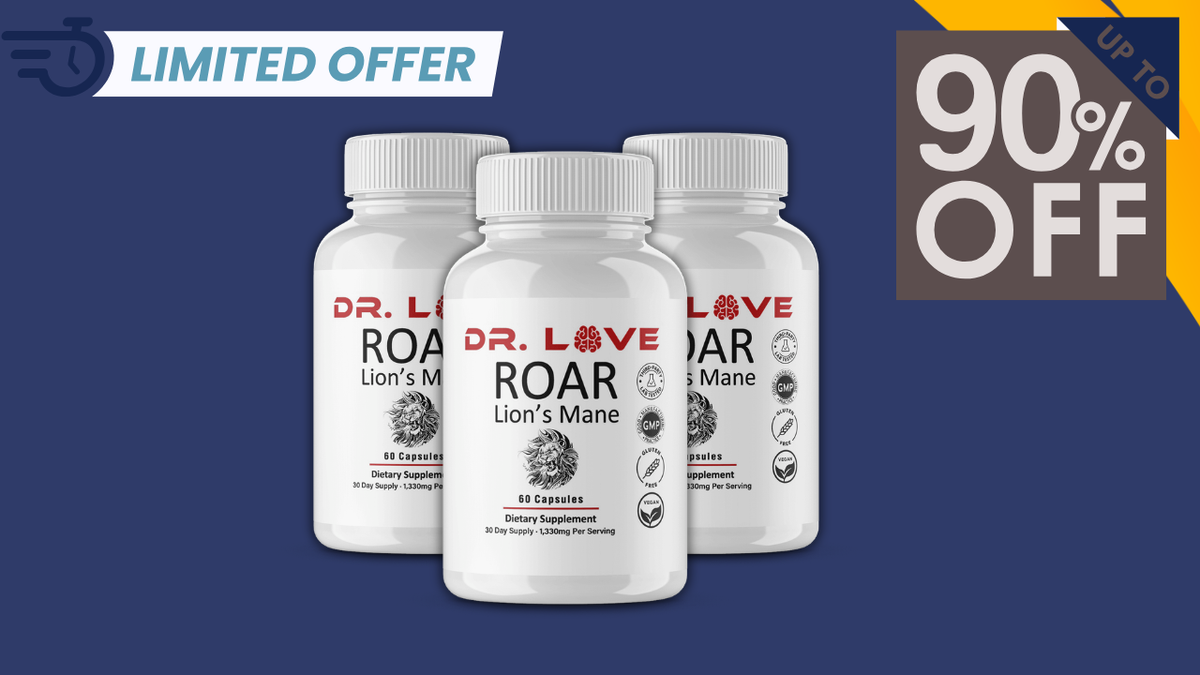
💵 Promotional Price: One official campaign advertises Buy 1 Get 3 Free for $59 plus shipping
📦 Other Packages: Three bottles for $147, six for $234 and twelve for $399 on the standard store
⏰ Results Begin: No guaranteed timeline—possible changes may be gradual, subtle or never noticeable
📍 Made In: USA using domestic and imported ingredients, according to the official store
🧠 Core Focus: Memory, concentration, mental clarity, sleep, stress and general cognitive wellness
🍄 Formula Style: Ten-functional-mushroom blend led by Lion’s Mane
✅ Who It’s For: USA adults seeking stimulant-free mushroom support with realistic expectations
🔐 Refund: 180-day money-back guarantee, according to current promotional pages
🟢 Our Say: Highly recommended for the right buyer. Roar Lion’s Mane appears to be a real, established supplement—not an obvious fake-product scam—but nobody can truthfully guarantee identical results for every person.
Most Roar Lion’s Mane Reviews Tell You Plenty. Just Not Always What You Actually Need.
There is a strange thing happening online.
Search Roar Lion’s Mane Reviews and Complaints 2026 USA, and within about thirty seconds you will encounter enough certainty to power a small city.
One page insists the supplement is a life-altering neurological breakthrough.
Another page screams “SCAM” with so much red text that your screen begins to resemble a warning label on industrial machinery.
Then there are the middle pages. They quietly copy one another.
Same promises.
Same ingredient descriptions.
Same oddly perfect verdict.
Sometimes the sentences are practically wearing matching shirts.
The average USA shopper, meanwhile, is sitting at a kitchen counter with a cold drink, twelve browser tabs and a simple question:
Should I trust this product or not?
That question sounds straightforward. It isn’t.
The biggest problem is usually not a direct lie. Direct lies can occasionally be spotted. They trip over their own shoelaces.
The bigger problem is missing information.
A review may tell you that Roar contains Lion’s Mane, but not whether the finished formula has been clinically tested.
It may display positive testimonials without explaining whether they are verified purchases.
It may announce a $59 price without mentioning that different official pages currently present different bottle quantities and purchase terms.
It may call the product “third-party tested,” then leap—wildly—toward “FDA-approved.”
And it may promise a better memory while never telling you how to measure whether anything changed.
Those are not small holes.
They are the whole floor missing beneath a beautiful rug.
Identifying gaps matters because a missing detail can distort an otherwise reasonable decision. The product could be good, the offer could be worthwhile, and the buyer could still end up disappointed because their expectations were built from half a picture.
Or the reverse.
Someone could reject a potentially useful supplement because they read one furious complaint written after three days of use and treated it like a federal investigation.
Both outcomes are avoidable.
Roar Lion’s Mane does not need fairy-tale marketing to be interesting. Lion’s Mane is a genuinely researched mushroom. The product is sold through active official stores, the seller publishes customer-support information, and current promotional pages advertise a lengthy refund period.
That is a respectable starting point.
Not proof of miracles.
A starting point.
I like the product’s basic concept. A stimulant-free supplement, a multi-mushroom blend, and an offer that can reduce the effective cost per bottle—there is plenty to appreciate.
But appreciating a product and interrogating its claims can happen in the same brain. They should.
So let’s uncover the five critical gaps that most Roar Lion’s Mane Reviews and Complaints 2026 USA pages either rush past, bury near the bottom or somehow lose behind an enormous green purchase button.
Fill these gaps and the whole decision becomes clearer.
Maybe not perfectly clear. Nothing involving biology, checkout funnels and online testimonials is ever perfectly clean.
But much, much better.
Critical Gap #1: The Distance Between “100,000 Happy Customers” and Verified Independent Reviews
What Is Missing?
The official Roar promotional page displays positive comments and describes the product as having more than 100,000 happy customers. Testimonials on the page mention improved focus, refreshing sleep, greater energy and better memory. One displayed comment also describes an allergic reaction, which—oddly enough—makes the collection feel slightly less polished and more useful.
The missing piece is independent verification.
A statement saying “100,000+ happy customers” is not automatically the same as:
- 100,000 verified purchases.
- 100,000 documented reviews.
- 100,000 people using the current formula.
- A 100,000-person average rating.
- 100,000 customers experiencing measurable benefits.
Perhaps the company has served that many people across different stores, funnels and years. That is possible.
But I could not locate a publicly accessible, independently audited review database matching that total.
This distinction sounds fussy until you think about what large numbers do to the mind.
Five positive reviews feel encouraging.
Five hundred feel persuasive.
One hundred thousand sounds almost like proof.
It is not proof. It is social influence—possibly grounded in real customers, but still a marketing claim unless independently documented.
Why Does This Gap Matter?
Humans borrow confidence from crowds.
Restaurants know this.
Mobile apps know it.
Every online store with a row of glowing stars certainly knows it.
When a customer sees enormous review volume, uncertainty melts a little. “Surely all these people can’t be wrong,” the person thinks.
Well…
They may not be wrong. But they may also be describing different outcomes, different purchase dates and different expectations. Some may have used Lion’s Mane generally rather than the exact current Roar formula. Some testimonials may have been gathered from social-media conversations rather than formal verified-purchase surveys.
Context gets lost.
A testimonial such as “My focus improved” can be honest and still tell us almost nothing about:
- The user’s dose.
- Usage period.
- Baseline health.
- Other supplements.
- Sleep changes.
- Medication.
- Whether the improvement was temporary.
- Whether the person purchased the product.
This is not cynicism.
It is evidence hygiene.
The FTC’s Consumer Reviews and Testimonials Rule went into effect on October 21, 2024. It addresses deceptive practices involving fake or false reviews, fabricated testimonials, undisclosed insider endorsements and incentives tied to a specific positive or negative sentiment. The FTC also states that influencers or testimonial creators can face liability when they falsely claim to have used a product.
Roar Lion’s Mane is not being accused here of violating that rule.
The update matters because the USA review landscape has changed. Regulators increasingly recognize that fake feedback, manipulated testimonials and AI-generated praise can seriously distort consumer choices.
A review page is not independent merely because “review” appears in the URL.
A testimonial is not verified merely because someone placed quotation marks around it.
And a face beside a sentence? That is still not a clinical trial. It is a face beside a sentence.
What Happens When Buyers Ignore the Gap?
Expectations inflate like a party balloon beside a space heater.
A buyer sees thousands of delighted customers and assumes noticeable improvement is practically guaranteed.
Two weeks later, they feel more or less the same.
Now the product is not merely disappointing. It feels like betrayal.
The customer may write:
“Everybody said this worked. Total scam!”
Everybody did not say that.
A marketing page highlighted selected positive experiences and presented a customer-count claim.
The opposite mistake happens too.
A person finds one complaint saying the supplement did nothing after four days. Suddenly that becomes a universal verdict.
One isolated experience is treated like a Supreme Court ruling on mushrooms.
Neither reaction produces good judgment.
How Filling This Gap Creates a Breakthrough
Sort feedback into three buckets.
1. Product-Operation Reviews
These concern:
- Delivery.
- Packaging.
- Billing.
- Subscription management.
- Customer support.
- Refund processing.
These reviews help determine whether the seller operates reliably.
2. Product-Tolerance Reviews
These concern:
- Digestive discomfort.
- Headache.
- Skin reactions.
- Allergic responses.
- Sleep disruption.
- Any unusual physical effect.
These reports may be highly individual, but repeated patterns deserve attention.
3. Product-Effect Reviews
These concern:
- Focus.
- Memory.
- stress.
- Energy.
- Sleep.
- Mood.
- Mental clarity.
Effectiveness feedback is useful, but usually the hardest to interpret because life refuses to stay constant.
A customer starts Roar.
They also begin exercising, stop drinking coffee after lunch and finally sleep seven hours instead of five.
A month later they feel better.
Was it the mushroom?
Possibly.
Was it everything else?
Also possibly.
The real breakthrough is not believing or rejecting testimonials automatically. It is giving each one the correct weight.
Verified purchase?
More useful.
Detailed timeline?
More useful.
Specific outcome?
More useful.
Independent platform?
Potentially more useful.
A vague sentence saying “Best thing ever!!!”?
Pleasant. Not particularly diagnostic.
Roar’s positive customer comments make the product worth investigating. They do not eliminate the need for investigation.
That difference—small words, huge effect.
Critical Gap #2: The Difference Between Research on Lion’s Mane and Proof of the Finished Roar Formula
What Is Missing?
Most reviews perform a quiet magic trick.
They start with scientific research on Hericium erinaceus, commonly known as Lion’s Mane.
Then, without announcing the transition, they begin speaking as if the study tested Roar Lion’s Mane itself.
It usually did not.
Ingredient research may support the rationale behind a product. It does not automatically establish that every finished supplement containing that ingredient will create the same results.
The exact preparation matters.
The dose matters.
The source and extraction method matter.
The length of use matters.
The study population matters.
And yes, I know—this is where eyes begin glazing over. There is probably a snack nearby.
Stay with it.
This gap changes nearly everything.
What Does the Human Research Actually Show?
A small randomized, double-blind, placebo-controlled trial studied Japanese adults aged 50 to 80 who had mild cognitive impairment. Participants received a specific Lion’s Mane preparation or placebo for 16 weeks. The Lion’s Mane group showed improvements on the study’s cognitive scale during the intervention, although scores declined after supplementation stopped.
That is promising.
It is not proof that Roar produces identical effects.
Another randomized pilot study involved 41 healthy adults between 18 and 45. Participants received 1.8 grams of Lion’s Mane or placebo. Researchers examined immediate effects after one dose and continued use over 28 days. The study found faster performance on one cognitive task after the acute dose and a possible stress-related trend after longer use, but other findings were limited or null. The authors emphasized that human research remains limited.
Again, interesting.
Still not a blank check.
Roar’s official promotional page says the product contains ten functional mushrooms and markets the blend for memory, focus, energy and sleep support. It specifically discusses Lion’s Mane, Chaga and Reishi, while making broader claims about cognitive health.
The complete blend is not the same intervention used in either human trial above.
That does not mean the formula cannot help.
It means the correct sentence is:
“Lion’s Mane has preliminary human research supporting continued interest.”
Not:
“Clinical science proves Roar will rebuild every customer’s brain.”
Those two statements live in different postal codes.
Why Does This Gap Matter?
Because a study is not transferable without limits.
Imagine researchers test three cups of a particular green tea every day.
Then a company sells a candy containing a small amount of tea extract and says:
“Green tea is scientifically proven.”
Technically related.
Practically incomplete.
With a multi-ingredient formula, another question appears: how much of each ingredient is present?
Ten mushrooms can be impressive. It can also mean the total serving is divided among ten ingredients.
Without connecting the actual formula, amounts and preparation to published research, reviewers should not imply direct clinical equivalence.
There is also the question of mushroom part.
Lion’s Mane fruiting bodies and mycelium contain different compounds that have attracted scientific interest. A strong review should not reduce this to “fruiting body good, mycelium bad” or the reverse. The important issues are what the formula contains, how it is processed, whether compounds are standardized and whether the label provides enough information to make a meaningful comparison.
Mushrooms are complicated.
Marketing prefers them simple.
Marketing also prefers everything in bold, but here we are.
What Happens When Buyers Ignore the Gap?
Some buyers expect disease prevention.
That is the dangerous part.
The promotional language makes references to cognitive decline, dementia-related mechanisms and Alzheimer’s concerns, while the official store correctly states that the product is not intended to diagnose, treat, cure or prevent disease.
Those messages can feel contradictory.
A supplement can be sold for general cognitive wellness.
It should not be treated as a proven treatment for Alzheimer’s disease or as a substitute for medical evaluation.
The FDA explains that dietary supplements are not approved for safety and effectiveness before marketing in the same way drugs are. A product intended to diagnose, treat, cure or prevent disease is legally treated differently, regardless of whether it is described as a supplement.
Ignoring that gap can lead to more than disappointment.
Someone experiencing worsening memory might spend months testing capsules instead of investigating possible causes such as medication effects, poor sleep, depression, nutritional deficiencies, thyroid issues or neurological disease.
That is not a harmless delay.
How Filling This Gap Creates a Breakthrough
Build a three-level evidence ladder.
Level One: Ingredient Plausibility
Lion’s Mane has biological mechanisms and preliminary human findings that make it scientifically interesting.
Good.
Level Two: Finished-Formula Evidence
Ask whether the exact current Roar formula, at the recommended dose, has been tested in a well-designed human trial.
I did not locate a large published randomized trial of the complete Roar blend establishing all its advertised benefits.
Important distinction.
Level Three: Personal Outcome
Even a strongly studied product may help one person more than another.
Your personal result must be measured separately.
This ladder allows a buyer to be hopeful without becoming reckless.
The formula can be worth trying.
The science can be encouraging.
The outcome can remain uncertain.
All three statements can exist together. They do not need to fight in a parking lot.
That is mature decision-making—and, frankly, better marketing in the long run because people remember the reviewer who did not insult their intelligence.
Critical Gap #3: The Price Looks Simple Until You Open More Than One Official Page
What Is Missing?
Ask how much Roar Lion’s Mane costs and most review articles produce one confident number:
$59.
Not wrong.
Not complete.
The standard official store currently lists:
- One bottle for $59.
- Three bottles for $147.
- Six bottles for $234.
- Twelve bottles for $399.
The same page displays language saying the item is a deferred, subscription or recurring purchase and instructs customers to agree to the cancellation policy and recurring-payment terms when applicable.
A separate official promotional page currently advertises:
- Buy one bottle and receive three free.
- $59 plus shipping.
- An upgraded package offering Buy 2 Get 6 Free.
- A 180-day “Better Brain” guarantee.
Another current Roar page shows a regular price of $239, a promotional price of $59 and Buy 1 Get 3 Free language.
Same brand.
Same product name.
Different purchasing routes.
The entire thing begins to feel like airline seating. Everybody appears to be on the same flight, but nobody paid the same amount.
Why Does This Gap Matter?
Because shoppers do not pay headlines.
They pay checkout totals.
The real price depends on:
- Bottle quantity.
- Shipping.
- Taxes, where applicable.
- Promotional route.
- Recurring-purchase terms.
- Refund conditions.
- Return-shipping costs.
- Whether a package must be returned.
A customer who sees “Buy 1 Get 3 Free for $59” may expect the total charge to be exactly $59.
The campaign states shipping is added to that package.
Another customer may enter through the standard store and receive one bottle for the same product price.
Both later write reviews.
One says:
“Incredible value!”
The other says:
“Overpriced.”
Neither is necessarily lying.
They experienced different offers.
This is why review articles become contradictory even when everyone is discussing the same product. The missing detail is not always dishonesty.
Sometimes it is simply a different landing page.
What Happens When Buyers Ignore the Gap?
Checkout surprise.
That particular flavor of irritation has a physical sensation. The shoulders tighten. The email confirmation suddenly looks brighter than it should.
A buyer may discover:
- Shipping was not free.
- The bottle quantity differed from expectations.
- A recurring purchase was selected.
- Another official page had a better package.
- The guarantee required specific steps.
- The offer changed after the article was published.
This does not automatically mean Roar is a scam.
It means the checkout requires attention.
Online campaigns routinely test prices, packages and offers. That business practice is common, but it creates legitimate confusion when reviewers present one deal as permanent and universal.
“Only 156 bottles available” messaging should not replace calculation.
Neither should a timer.
Your brain will not receive better support because you panicked efficiently.
An Illustrative USA Buyer Example
Picture two customers.
Rachel in Texas finds the promotional page. She receives four bottles for $59 plus shipping.
Marcus in Pennsylvania enters through the standard product store and buys one bottle for $59.
Rachel calculates a low per-bottle cost and posts a glowing value review.
Marcus calls the product expensive.
Both reviews appear in Google.
A third buyer sees them side-by-side and concludes somebody must be lying.
Not necessarily.
The price pathway was missing.
That one omitted detail changes the story.
How Filling This Gap Creates a Breakthrough
Use a checkout checklist.
Before paying, confirm:
Bottle count: How many physical bottles are being shipped?
Final total: What exact amount will hit the card?
Shipping: Is it free, included or added?
Purchase type: One-time or recurring?
Renewal timing: When and how much?
Cancellation process: Where is it managed?
Guarantee: How many days and from which date?
Return conditions: Must bottles be returned?
Contact information: Save the support email and phone number.
Take screenshots.
Yes, screenshots.
They are not glamorous, but neither is arguing with customer service while trying to remember what a page said six weeks ago.
The current official store lists support by telephone and email, while the promotional page identifies Brain Fit For Life, LLC in Boynton Beach, Florida and repeats the 180-day guarantee.
That transparency is a positive sign.
Use it.
Under the four-bottle promotion, Roar’s per-bottle value appears strong. At the standard one-bottle price, the value is less dramatic.
This is the gap that changes the entire purchasing decision.
Not because the product changed.
Because the denominator did.
Mathematics. Cold, unsentimental, incredibly useful mathematics.
Critical Gap #4: “Third-Party Tested” Sounds Complete, but the Details Still Matter
What Is Missing?
The official store says Roar products are third-party tested and made in the USA using domestic and imported ingredients. Promotional material also references manufacturing under GMP standards.
These are positive signs.
But “third-party tested” is the beginning of a question, not the end.
Tested for what?
- Ingredient identity?
- Heavy metals?
- Microbial contamination?
- Pesticides?
- Potency?
- Active compounds?
- Every batch or selected batches?
- Raw materials or the finished capsules?
A review that repeats “third-party tested” and immediately awards perfect marks leaves the most useful part unfinished.
During this review, I did not find a clearly linked, batch-specific certificate of analysis on the main official sales pages examined.
That does not prove the product was not tested.
Absence of a public report and absence of testing are two different things.
Still, easier access to testing documents would strengthen confidence.
Why Does This Gap Matter?
Because manufacturing quality and effectiveness are separate.
GMP practices help govern how supplements are made, documented and controlled.
Testing may help verify purity or identity.
Neither proves that the supplement will improve memory.
A perfectly manufactured capsule can produce no noticeable benefit for a particular person.
A messy statement such as “GMP-certified, therefore clinically proven” combines two unrelated questions.
It is like saying a restaurant kitchen passed inspection, therefore every customer will love the soup.
Clean kitchen?
Excellent.
Guaranteed soup satisfaction?
Calm down.
The FDA states that it does not approve dietary supplements for safety and effectiveness before they enter the market. Companies are responsible for ensuring products comply with applicable requirements, while FDA oversight often begins after products are sold. Supplement labels must include required information such as serving size, ingredients and amounts per serving, subject to applicable labeling rules.
“Made in an FDA-registered facility” also does not mean FDA-approved.
That phrase has confused enough people to deserve its own highway warning sign.
What Happens When Buyers Ignore the Gap?
Quality language becomes a substitute for thinking.
The buyer sees three attractive phrases:
- Made in USA.
- Third-party tested.
- GMP-certified.
And assumes every important question is settled.
But USA formulation may still involve imported ingredients, which the official store openly acknowledges. That is not inherently negative. High-quality ingredients can come from many locations.
The relevant question is whether sourcing, identity and contamination controls are adequate.
Similarly, a ten-mushroom formula sounds substantial. Buyers still need to know:
- The total amount per serving.
- Whether individual mushroom amounts are disclosed.
- Whether extracts or powders are used.
- Which mushroom parts are included.
- Whether active compounds are standardized.
- What other ingredients appear in the capsule.
A long ingredient list can represent sophisticated formulation.
Or tiny decorative amounts sprinkled across a label.
The count alone proves nothing.
Ten musicians do not automatically make good music. Sometimes they make noise in different keys.
How Filling This Gap Creates a Breakthrough
Follow a label-first process.
Before ordering:
- Locate the latest Supplement Facts panel.
- Confirm serving size.
- Check the number of servings per bottle.
- Identify the total mushroom blend amount.
- Look for individual ingredient quantities.
- Check whether the blend is proprietary.
- Look for fruiting-body or mycelium information.
- Review all other ingredients.
- Check allergen guidance.
- Ask support whether a batch-specific certificate of analysis is available.
After delivery:
- Compare the physical label with the online version.
- Check the seal.
- Confirm the lot and expiration date.
- Photograph the unopened bottle.
- Stop using it if the seal or product appears abnormal.
- Keep packaging until you are sure you will not request a refund.
This is not exciting.
Nobody makes cinematic music for label inspection.
But clarity leads to better outcomes because you know what you are actually evaluating. It also makes conversations with a physician or pharmacist far more useful.
“Some mushroom supplement from the internet” is not enough information.
A photographed Supplement Facts panel?
Much better.
This gap does not destroy trust in Roar.
Addressing it strengthens informed trust—the kind that survives questions.
Critical Gap #5: Reviews Rarely Define What “Success” Actually Means
What Is Missing?
“I want better brain health.”
That sounds meaningful.
It is also too vague to measure.
Better in what way?
- Quicker recall?
- Fewer forgotten tasks?
- Longer concentration?
- Less afternoon fatigue?
- Easier sleep?
- Better mood?
- Reduced stress?
- Fewer moments standing in the pantry wondering why you opened it?
Without a target, customers cannot judge results reliably.
Every ordinary fluctuation becomes evidence.
Good Tuesday?
The supplement works.
Bad Thursday?
Scam.
The bottle stayed the same. Life did not.
Roar’s current promotional page recommends two capsules once daily, preferably in the afternoon or approximately two hours before bed. The product is promoted for focus, memory, energy and sleep support, although the official pages also note that results vary and that the supplement is not intended to diagnose or treat disease.
There is no universal, verified “results begin” day.
Some people may notice subjective changes quickly.
Others may require weeks.
Others will notice nothing meaningful.
That final possibility is not cheerful, but honesty should not disappear merely because the article contains an affiliate button.
Why Does This Gap Matter?
Because unmeasured experience is vulnerable to expectation.
Suppose someone begins Roar on January 2.
They are excited. New year, new supplement, cleaner desk, ambitious notebook.
They also begin exercising and stop drinking alcohol during the week.
By February, their energy and sleep are better.
The improvement is real.
The exact cause is not obvious.
Now reverse the situation.
Another customer begins during a chaotic work month. Their child is sick, deadlines multiply, sleep collapses and caffeine consumption becomes slightly alarming.
They feel mentally exhausted.
The supplement gets blamed.
Again, possible failure—but impossible to isolate.
Anecdotes become more useful when the surrounding conditions are documented.
Not perfect.
Useful.
Health and Safety Matter Here Too
Dietary supplements can interact with medication or create adverse reactions. The FDA advises consumers to speak with healthcare professionals because supplement ingredients can have strong biological effects, interfere with medicines or create problems around surgery. It recommends stopping use and seeking care when a concerning adverse event occurs.
A promotional testimonial on Roar’s own page describes a user stopping after an allergic reaction. That is a useful reality check: natural does not equal harmless.
Mushrooms are natural.
So is poison ivy.
Nature never signed a universal safety guarantee.
People should be especially cautious when they:
- Have mushroom allergies.
- Take prescription medication.
- Use blood-thinning medication.
- Use drugs affecting blood sugar.
- Have autoimmune conditions.
- Are pregnant or breastfeeding.
- Are preparing for surgery.
- Have a neurological condition.
- Experience new or worsening memory symptoms.
Roar should be treated as an optional wellness supplement, not an explanation for serious symptoms.
How Filling This Gap Creates a Breakthrough
Create a simple 30-day scorecard.
Before starting, rate these areas from 1 to 10 for at least three days:
- Morning mental clarity.
- Ability to focus for 30 minutes.
- Ease of remembering planned tasks.
- Afternoon mental energy.
- Stress level.
- Time needed to fall asleep.
- Number of nighttime awakenings.
- Digestive comfort.
- Any headaches, itching or unusual symptoms.
Then track the same areas once or twice weekly.
Not fourteen times a day.
A watched capsule does not hatch.
Also record:
- Sleep duration.
- Caffeine intake.
- Alcohol.
- Exercise.
- Major stress.
- New medication.
- Other supplement changes.
- Illness.
At the end of four weeks, ask:
- Did anything improve consistently?
- Was the improvement large enough to matter?
- Did side effects occur?
- Did other lifestyle changes probably contribute?
- Is the result worth the cost?
- Would I continue buying this without the excitement of trying something new?
That last question is ruthless.
Keep it.
Depending on tolerance and goals, a longer test may be reasonable. Human Lion’s Mane research has used periods ranging from an acute dose to 28 days and 16 weeks, though those studies did not evaluate the complete Roar formula.
The company’s stated 180-day guarantee provides a relatively long evaluation window. Do not interpret that as permission to forget the deadline.
Record the purchase date.
Read the conditions.
Contact support early when a refund is needed.
Success is not “feeling something.”
Success is determining, with reasonable confidence, whether the product provides enough benefit to earn a place in your routine.
That is a breakthrough buyers can actually use.
Is Roar Lion’s Mane Legit, Reliable or a Scam?
Here is the direct answer.
Roar Lion’s Mane appears to be a legitimate commercial supplement.
The product is listed on active official storefronts. The seller publishes product options, customer-support contact details, worldwide shipping information, USA manufacturing claims and an FDA disclaimer. Current promotional pages describe a 180-day guarantee.
I found no solid evidence that the entire operation is a simple fake-store scam selling a nonexistent product.
That does not justify saying:
“100% legit, no gimmicks, guaranteed results.”
There are marketing gimmicks.
Countdown pressure, scarcity language and large benefit claims are gimmicks, even when attached to a real product.
And there are no guaranteed results.
A supplement can be legitimate and fail to help you.
A company can ship the exact item advertised while the buyer notices no meaningful cognitive change.
That is an effectiveness problem, not automatically a legitimacy problem.
These distinctions matter:
Is the product real?
Public evidence indicates yes.
Does the company have active contact and sales channels?
Yes.
Is it FDA-approved to improve memory?
No. Dietary supplements are not approved for safety and effectiveness before marketing in the way drugs are.
Does Lion’s Mane have scientific research?
Yes, including small human trials with promising but limited results.
Has the exact complete Roar formula been definitively proven to produce every advertised benefit?
Not from the published evidence I found.
Could it support focus, sleep or subjective mental clarity for some users?
Possibly.
Will every customer notice a difference?
No honest reviewer can promise that.
Reliable enough to consider?
Yes.
Magic?
No.
That is where I land.
Roar Lion’s Mane Pros and Cons
What I Like
The formula is stimulant-free.
This may suit USA buyers who want cognitive support without adding more caffeine. Some people enjoy stimulants. Others drink one strong coffee and begin hearing their own eyelashes.
Lion’s Mane has preliminary human research.
The evidence remains limited, but the ingredient is more than an invented marketing trend.
The promotional value can be strong.
Four bottles for $59 plus shipping creates a significantly lower per-bottle cost than the standard one-bottle listing—provided the exact offer remains active at checkout.
The guarantee is lengthy.
Current promotional pages advertise a 180-day guarantee.
The seller publishes contact information.
The official pages provide a telephone number, email support and business information.
The company states that products are third-party tested.
This is encouraging, although easier access to batch-level reports would improve transparency.
What I Don’t Like
The marketing sometimes runs far ahead of the evidence.
Discussion touching disease prevention or guaranteed cognitive protection should not be treated as established medical fact.
Different official pages offer different packages.
This creates unnecessary confusion about the true price.
Recurring-purchase language appears on the standard store page.
USA customers should examine the selected checkout option carefully.
Verified independent review volume is unclear.
The official customer-count claim should not be converted into an invented review total.
The complete formula lacks definitive finished-product clinical proof.
Ingredient evidence is supportive—not conclusive.
Results may be subtle or absent.
Unexciting sentence. Essential sentence.
Who Should Consider Roar Lion’s Mane?
Roar may suit an adult who:
- Wants a stimulant-free functional-mushroom supplement.
- Is particularly interested in Lion’s Mane.
- Prefers a broader mushroom blend.
- Understands that supplements support rather than replace healthy habits.
- Will track results consistently.
- Has checked medication and allergy concerns.
- Values a long refund period.
- Can access the stronger promotional bundle.
- Is comfortable with preliminary rather than definitive evidence.
The ideal buyer is curious but not desperate.
Desperation makes terrible purchasing decisions. It hears every promise at maximum volume.
Who Should Avoid It or Seek Medical Guidance First?
Exercise caution when you:
- Have known mushroom allergies.
- Take prescription medication.
- Are pregnant or breastfeeding.
- Are under 18.
- Are preparing for surgery.
- Use blood-thinning, immune-modifying or blood-sugar medication.
- Have an autoimmune condition.
- Are currently undergoing neurological treatment.
- Have serious, unexplained or worsening memory problems.
If memory loss interferes with driving, paying bills, taking medication or ordinary daily responsibilities, do not rely on a supplement review.
Seek medical evaluation.
That is not pessimism.
It is self-respect with practical shoes on.
Final Verdict: Filling the Gaps Is the Real Advantage
Roar Lion’s Mane does not require mythology to be worth considering.
Remove the enormous promises and something potentially useful remains:
A real commercial product.
A stimulant-free formula.
A recognizable functional mushroom.
A wider mushroom blend.
An active USA-facing seller.
A substantial promotional discount.
A long stated guarantee.
Preliminary scientific rationale.
That is enough to justify interest.
It is not enough to justify certainty.
My final verdict is positive:
Roar Lion’s Mane is highly recommended for informed adults who understand its limitations, verify the exact offer, check safety concerns and measure their own outcomes carefully.
I would not recommend it as an Alzheimer’s treatment.
I would not describe it as guaranteed to rebuild the brain.
And I would never claim personal results without genuinely using the product. That sort of fake intimacy may generate a click today and destroy trust tomorrow.
The winning approach is not blind excitement.
It is not automatic suspicion either.
Find the gap.
Fill it.
When you see “100,000 happy customers,” ask whether that means verified reviews.
When you see scientific research, ask whether it tested the exact product.
When you see $59, ask how many bottles and what the final total is.
When you see “third-party tested,” ask what was tested and whether documentation is available.
When you expect success, define what success means.
This method extends far beyond Roar.
Nearly every poor decision grows in missing information.
People choose businesses without checking contracts.
They begin health routines without defining goals.
They trust headlines while skipping evidence.
They count ingredients but ignore doses.
Then, when the result disappoints them, they blame the visible object rather than the invisible gap.
Do not do that.
Reject hype that demands immediate belief.
Reject complaints that provide no context.
Reject perfect certainty in a world where human bodies respond differently.
But keep your mind open.
Roar Lion’s Mane could become a useful part of your routine. It may support focus, sleep or subjective mental clarity. It may do very little. The only responsible approach is to test it safely, consistently and with enough awareness to tell the difference.
You do not need louder advice.
You need complete advice.
Fill the gaps other shoppers ignore, and you gain something far more valuable than a promotional discount.
You regain control of the decision.
Frequently Asked Questions
1. Is Roar Lion’s Mane a scam in the USA?
Roar Lion’s Mane appears to be a real commercial supplement rather than an obvious fake-store scam. It is sold through active official websites with product listings, customer-support details, shipping information and published business contact information. The current promotional pages also advertise a 180-day guarantee. Legitimate product, however, does not mean guaranteed effectiveness for every customer.
2. Is Roar Lion’s Mane 100% legit and reliable?
The available public evidence supports describing Roar as an apparently legitimate product from an active seller. I would not use an absolute “100%” guarantee because no reviewer can promise every future shipment, billing interaction, customer-service case or personal outcome. Verify the bottle quantity, final charge, subscription language and refund terms before ordering. Reliable enough to consider? Yes. Beyond all possible criticism? Nothing is.
3. What is the real Roar Lion’s Mane price in 2026?
The standard official store currently lists one bottle for $59, three bottles for $147, six for $234 and twelve for $399. A separate official campaign advertises Buy 1 Get 3 Free for $59 plus shipping, while also promoting a larger upgrade. Because different official pages present different offers, the only price that truly counts is the total shown at your final checkout.
4. How quickly should Roar Lion’s Mane work?
There is no established universal timeline for the complete Roar formula. Small human Lion’s Mane studies have examined immediate effects, 28-day use and 16-week supplementation, using different preparations and populations. Some customers may report changes within days or weeks, others may need longer, and some may notice nothing meaningful. Measure specific outcomes rather than waiting for a dramatic “brain switched on” moment.
5. Can Roar Lion’s Mane prevent Alzheimer’s disease or dementia?
Roar Lion’s Mane should not be treated as a proven Alzheimer’s or dementia-prevention product. Lion’s Mane has promising preliminary research related to cognition and neurological pathways, but small ingredient studies do not establish that the complete commercial formula prevents disease. The FDA states that dietary supplements are not approved for safety and effectiveness before marketing and that products intended to treat or prevent disease are subject to drug requirements. Seek professional evaluation for significant memory concerns.
Related Hastags
#RoarLionsMane #RoarLionsManeReview #RoarLionsManeReviews2026 #RoarLionsManeAppReview2026 #RoarLionsManeBonus #RoarLionsManeProduct #RoarLionsManePrice #RoarLionsManeOffers #RoarLionsManeBonuses #RoarLionsManeBuy #RoarLionsManeWebsite #RoarLionsManeSite #RoarLionsManeApp #RoarLionsManeHonestReviews #RoarLionsManeLatestReviews #RoarLionsManeUsersExperience #RoarLionsManeUsersReview #RoarLionsManeDemo #RoarLionsManeTutorial #RoarLionsManePurchaseOnline #RoarLionsManeBuyit