5 Lymph Flow Review Gaps Exposed: What USA Buyers Aren’t Being Told Before Ordering in 2026
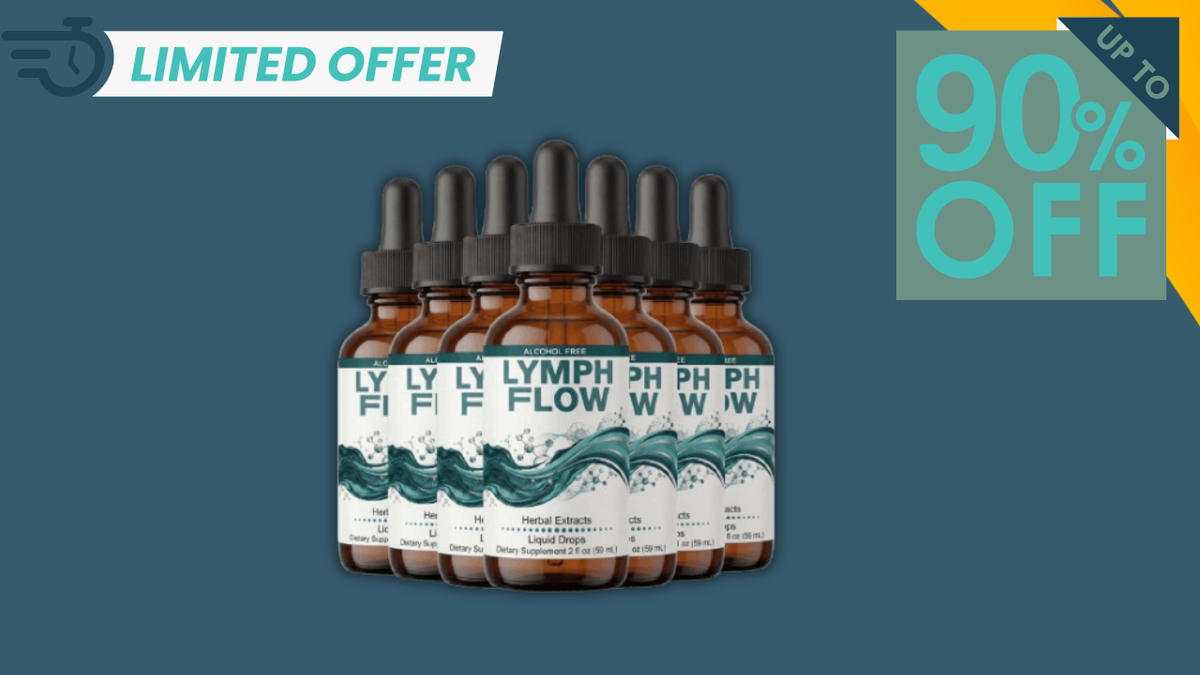
⭐ Rating: 4.91/5 on the Lymph Flow sales page
📝 Reviews: The seller says “thousands of customers,” although a complete independently verified review count is not displayed
💵 Advertised Six-Bottle Value: $774 reduced to $294
💵 Three-Bottle Package: $207
💵 Two-Bottle Package: $158, plus a stated shipping charge
⏰ Results Begin: No honest reviewer can guarantee a specific day or week
📍 Made In: USA, according to the brand
🧘♀️ Core Focus: Supporting natural lymphatic drainage, circulation and fluid balance
✅ Who It’s For: Adults interested in a convenient botanical wellness supplement
🔐 Refund: 60 days through ClickBank; published restrictions apply
🟢 Our Say: A compelling product concept and a legitimate-looking commercial offer. Highly interesting for the right USA buyer—but “guaranteed results” or “risk-free for everybody” would be going too far
Health disclaimer: Lymph Flow is sold as a dietary supplement. It is not intended to diagnose, treat, cure or prevent any disease, and this review is not a substitute for professional medical advice.
The Missing Information Is Usually Where the Real Decision Lives
I had the Lymph Flow page open on my laptop, the refund terms in another tab, and a half-cold mug of coffee sitting too close to the keyboard.
The room was quiet. Just the hum of the ceiling fan and that slightly bitter smell coffee gets when you forget about it for twenty minutes.
And honestly?
The product looked appealing.
A neat amber bottle. Liquid drops. Familiar botanical names. “Made in the USA.” A large discount display. Testimonials describing lighter legs and less puffiness. Everything arranged like stepping-stones leading toward the checkout button.
Smooth. Maybe a little too smooth—but good marketing is supposed to feel that way.
Then I searched “Lymph Flow Reviews and Complaints USA.”
That is where things got messy.
One page treated Lymph Flow like the greatest wellness discovery since clean drinking water. Another used “scam” in the headline without presenting any evidence of fraud. Several repeated the same benefits, the same phrases, even the same strangely perfect emotional journey.
Week one: hopeful.
Week three: transformed.
Month three: apparently reborn as a different person.
Come on.
The real problem with many Lymph Flow reviews is not necessarily that everything written in them is false. It is that important pieces are absent. Quietly removed, ignored, or brushed aside because uncertainty does not convert as aggressively as confidence.
But those missing elements matter.
They determine whether a USA customer buys the correct package, understands the formula, catches a possible medication concern, saves the necessary refund information—or orders with expectations so inflated they could float over Nevada.
Identifying gaps is therefore not cynical. It is useful.
It helps separate the actual product from the emotional mist surrounding it.
The current official website describes Lymph Flow as an alcohol-free liquid supplement containing 13 botanical extracts and bio-active ingredients. Each two-dropper serving reportedly delivers a combined 600 mg proprietary blend, and a bottle contains 30 servings. The seller highlights Boswellia, Curcumin, Horse Chestnut, Gotu Kola, Quercetin Phytosome and Ginger Extract.
Those details create a promising starting point.
Still, a starting point is not a conclusion.
Here are the five information gaps that USA buyers should fill before ordering—and why solving each one can lead to a much better experience.
Missing Element #1: Most Reviews Confuse Ingredient Research With Proof of the Finished Product
This gap is everywhere.
A review finds a study involving Curcumin.
Lymph Flow contains Curcumin.
The writer then jumps straight to: “Lymph Flow is scientifically proven.”
That is a cognitive leap wide enough to park a pickup truck inside.
Research on one ingredient does not automatically prove the effectiveness of every product containing that ingredient. The amount matters. The form matters. The extraction process matters, as does the combination with other substances.
And yes, individual biology matters too. Always sneaking into the room.
Lymph Flow’s official page identifies 13 ingredients inside a 600 mg proprietary blend but does not publicly break down the precise quantity of every individual ingredient in the accessible page text.
That is the first thing many reviews slide past.
Why the gap matters
Suppose one research paper examined a particular standardized Horse Chestnut extract at a defined dose.
That does not establish that:
- Every Horse Chestnut extract is identical
- Every amount creates the same effect
- Every combination works equally well
- The entire Lymph Flow formula produces the study’s outcome
The supplement may still be thoughtfully formulated. It could be a solid product—I actually like the ingredient direction.
But the conclusion must match the evidence available.
Think about coffee.
Research may show that coffee contains caffeine. Fine. But a tiny cup of weak diner coffee and a giant cold brew concentrate do not create the same experience, even though both are called coffee.
One makes you slightly more alert.
The other makes you hear colors.
Dose and preparation are not decorative details.
The consequence of ignoring this gap
When affiliate reviewers treat ingredient research as finished-product proof, expectations explode.
A shopper begins thinking:
“Curcumin has research, so this product will definitely reduce my puffiness.”
“Horse Chestnut is associated with circulation research, so these drops must fix my heavy legs.”
“Ginger supports digestion, therefore my bloating will disappear.”
Maybe the user notices a welcome difference.
Maybe they do not.
The problem is not hope. Hope is fine. The problem is turning possibility into certainty.
That creates disappointed customers—and ironically, more complaints.
People become angry because the article promised something the label never responsibly could.
The reality that leads to a breakthrough
The smarter approach is to evaluate Lymph Flow as a botanical wellness formula, not a clinically guaranteed treatment.
That framing changes the buying experience.
Instead of asking, “Will this definitely work?” ask:
- Are the ingredients relevant to my wellness goal?
- Is the daily format realistic for me?
- Does the company disclose allergens and directions?
- Can I use these ingredients alongside my medication?
- Is there published testing for quality or purity?
- Am I comfortable with a proprietary blend?
A USA buyer can also contact the company and request additional details, such as:
- A current Supplement Facts label
- Botanical standardization information
- Third-party testing documentation
- A certificate of analysis
- Ingredient-sourcing details
- Microbial and heavy-metal testing information
That may feel excessive for a little dropper bottle.
It isn’t.
A product designed to go inside your body should survive a few questions.
Closing this gap does not require rejecting Lymph Flow. It means appreciating what the formula potentially offers without stretching the available facts until they snap.
Missing Element #2: The Rating Is Powerful, but the Review Context Is Incomplete
The official Lymph Flow website displays a 4.91 out of 5 average customer rating and says the product is trusted by thousands of customers. It also publishes a group of highly positive testimonials describing individual experiences.
That score looks impressive.
Almost hypnotic.
A precise number creates authority because it feels measured. Not “around five.” Not “very highly rated.” Exactly 4.91.
But a rating without full context is like a movie trailer without the actual movie. It might be accurate. It might represent a lot of satisfied customers.
We simply need more information before treating it as independent proof.
The publicly accessible product-page text does not clearly present:
- The complete number of submitted ratings
- The full one-to-five-star distribution
- The percentage of negative reviews
- The review-moderation process
- An outside verification method
- A searchable archive of all customer feedback
Again, that does not mean the displayed testimonials are fake.
It means the score is seller-published.
Language matters.
Why this gap matters more in the USA now
The Federal Trade Commission’s Consumer Reviews and Testimonials Rule took effect on October 21, 2024. It addresses deceptive conduct involving fake or false reviews and allows courts to impose civil penalties for knowing violations.
That is not some dusty legal footnote.
It is directly relevant to the avalanche of affiliate reviews claiming:
“I personally used this for 90 days.”
“My wife and I tested six bottles.”
“I documented every result.”
Sometimes those experiences may be genuine. Other times the article provides no receipt, dated photographs, measurements, order confirmation or anything showing the writer used the product.
I did not personally consume Lymph Flow.
So I am not going to sit here and describe how my ankles felt on day 17. They felt like ankles, because I wasn’t running that experiment.
Inventing a personal experience might make the copy more dramatic. It would also make it fiction.
The consequence of accepting every rating at face value
A near-perfect rating can quietly become a guarantee inside a buyer’s mind.
The customer does not consciously say, “This product must work for 98.2% of people.”
But emotionally, something similar happens.
They imagine:
- Fast results
- Obvious physical changes
- No unpleasant reactions
- Universal satisfaction
- Easy refunds if anything goes wrong
Then normal uncertainty feels like failure.
Perhaps the drops taste different from what they expected.
Perhaps delivery takes seven business days rather than three.
Perhaps the buyer notices no dramatic change after two weeks.
The disappointment gets aimed at the product even though the real collision occurred between a glowing rating and an unrealistic mental picture.
A small case example
Imagine two USA customers.
Maria lives in Pennsylvania, works at a desk, walks during lunch, drinks enough water and wants an easy liquid supplement to include in her morning routine.
James lives in Texas and has persistent swelling with no clear diagnosis. He buys Lymph Flow expecting it to solve the cause without seeing a healthcare professional.
Same bottle.
Different use case. Different risk. Different definition of success.
A star rating cannot account for that.
How to fill the gap
Read testimonials for specifics, not enthusiasm.
A useful review should explain:
- How long the person used the product
- Whether they followed the stated serving
- What else changed in their routine
- What they liked and disliked
- Whether they purchased the product themselves
- Whether the review contains affiliate links
- Whether the outcome was subjective or measured
Real customer language is often uncertain and slightly awkward.
“I think it helped, although I was also walking more.”
That sentence is not glamorous. It is believable.
By contrast, fake-sounding reviews arrive wearing a tuxedo and carrying fireworks:
“My entire body completely transformed and every problem disappeared.”
Right.
The breakthrough comes when USA shoppers treat testimonials as individual stories—not promises carved into stone.
Missing Element #3: Reviews Rarely Explain Who Lymph Flow Is Actually Suitable For
Most product reviews talk as though one bottle is standing in front of the entire population, shouting, “Everybody get in.”
That is not how supplements work.
Lymph Flow is positioned toward adults seeking support for natural lymphatic drainage, fluid balance and circulation. The sales page speaks directly to people experiencing puffiness, heavy-feeling legs, tight rings, lingering bloat or discomfort after sitting and travel.
It is easy to see the appeal for USA lifestyles.
Long flights.
Road trips where the only movement is walking from the car to a convenience store.
Eight or nine hours behind a laptop. Then traffic. Then sitting at home because the day already drained every useful thought out of you.
I once finished a long computer session, stood up, and felt like my knees had been temporarily replaced with old door hinges. A dramatic comparison, probably. Still—the stiffness was real.
People want simple support.
A daily drop feels manageable.
Why the suitability gap matters
The phrase “heavy legs” can describe ordinary fatigue after standing.
It can also accompany health issues that should not be self-diagnosed through an affiliate article.
Puffiness may relate to lifestyle factors such as salt intake, heat, travel or long periods of inactivity. Persistent or sudden swelling may have other causes.
A supplement cannot determine which situation is occurring.
This is where some reviews become reckless. They imply that nearly every symptom proves someone has “stagnant lymph,” then position the product as the obvious answer.
The human body is not a clogged shower drain.
Sometimes I wish it were. Home Depot would have an aisle for everything.
The wrong-person problem
Lymph Flow’s official page discloses soy as an allergen and advises pregnant or nursing adults, people taking medication, and those managing a medical condition to consult a healthcare professional before use.
That makes the formula less appropriate—or at least something requiring professional guidance—for people who:
- Have a soy allergy
- Use blood-thinning medication
- Take several prescription products
- Are pregnant or breastfeeding
- Are preparing for surgery
- Have kidney or liver concerns
- Experience unexplained or persistent swelling
- Are younger than 18
A responsible review should say this in plain English.
Not whisper it beneath twelve purchase buttons.
What happens when this gap remains open
The wrong customer buys with the wrong expectation.
Then one of two things happens.
The buyer receives no meaningful benefit because their concern was not something the supplement could realistically address.
Or worse, they delay obtaining proper medical advice while waiting for a wellness product to solve an unexplained symptom.
Sudden one-sided leg swelling, warmth, redness, serious pain, shortness of breath or chest discomfort should not become a “let’s see how the drops go” experiment.
That is a stop-and-get-help situation.
How filling this gap creates better outcomes
Before ordering, define the actual goal.
Not “I want to feel better.”
Be more precise:
- I prefer liquid supplements over capsules.
- I want a botanical addition to an established wellness routine.
- I understand it is not a disease treatment.
- I have checked the ingredients against my medications.
- I can take it consistently.
- I accept that my experience may be subtle or nonexistent.
That last point feels pessimistic.
It is actually freeing.
When expectations are realistic, users can evaluate the product calmly instead of hunting for a miracle every morning.
The right product matched with the right person has a better chance of producing satisfaction. The right product forced into the wrong situation becomes the wrong product—like wearing beautiful hiking boots to a swimming pool.
Good boots. Bad plan.
Missing Element #4: “Made in the USA” Does Not Mean FDA-Approved or Risk-Free
The official site says Lymph Flow is made in the USA and describes it as an alcohol-free formula. Those characteristics may genuinely appeal to American customers.
But phrases involving USA manufacturing, registration and quality standards are often stretched into a much larger conclusion:
“The government approved this product.”
That is not what the available information establishes.
The FDA explains that it is not authorized to approve dietary supplements for safety and effectiveness before they enter the market. In many cases, companies may legally introduce supplements without first notifying the agency. FDA advises consumers to stay informed and discuss supplement use with a doctor, pharmacist or another healthcare professional.
This does not mean dietary supplements are completely unregulated.
It means they are not reviewed and approved before sale in the same manner as prescription drugs.
Different system.
Different evidentiary threshold.
Why the distinction matters
“Made in the USA” is a manufacturing-origin claim.
It is not evidence that:
- FDA tested the finished formula
- FDA confirmed the advertised benefits
- Every batch contains exactly what a marketing page suggests
- The product is suitable for all adults
- No medication interactions are possible
Likewise, manufacturing in a registered or quality-controlled facility can be reassuring without proving effectiveness.
A clean bakery can make a terrible cake.
A messy analogy, perhaps—but you get it.
Production standards and clinical outcomes answer different questions.
The “natural equals harmless” trap
Lymph Flow contains botanical ingredients. For many buyers, that sounds gentler than synthetic compounds.
Yet plants contain biologically active substances. That is the entire reason people use them.
Natural does not automatically mean weak, inert or interaction-free.
Poison ivy is natural.
So are rattlesnakes, although nobody is putting a “plant-inspired wellness” label on one of those.
The point is not to make herbal supplements sound frightening. It is to remove the lazy assumption that a leaf on a label settles every safety question.
How this gap creates complaints
A customer takes Lymph Flow alongside several medications without checking the combination.
They experience an unwanted effect.
The review they trusted never mentioned interactions because safety language “hurts conversions.”
Now the customer feels deceived.
Or the person sees “Made in USA,” interprets that as formal government endorsement, and assumes every claim has passed scientific inspection.
It has not.
The product’s own website includes the standard statement that its claims have not been evaluated by the FDA and that it is not intended to diagnose, treat, cure or prevent disease.
That sentence should influence how every benefit claim is interpreted.
The breakthrough approach
Keep the positive and cautious ideas in your head simultaneously:
- USA manufacturing may be a favorable attribute.
- Botanical ingredients may fit someone’s wellness preferences.
- A clean liquid format may be convenient.
- None of these guarantees effectiveness or universal safety.
Before use, show the complete label to a pharmacist when medications are involved.
Bring everything—not only prescriptions.
Include vitamins, powders, sleep products, pain relievers, herbal teas and that unmarked bag of “wellness gummies” someone recommended at work.
A pharmacist cannot assess what you forget to mention.
Filling this information gap turns vague confidence into informed confidence, which is much stronger. Less shiny, perhaps. Stronger.
Missing Element #5: The Guarantee and Package Pricing Need More Explanation
The purchase section is visually persuasive.
The official page currently promotes:
- Two bottles for $158, or $79 each
- Three bottles for $207, or $69 each
- Six bottles for $294, or $49 each
The three- and six-bottle USA packages include advertised free shipping, while the smaller option has an additional shipping charge. These were the prices displayed on the official page when reviewed in July 2026, and promotional terms may change.
The six-bottle package sits in the middle of the sales presentation like a king on a throne.
“Best Value.”
“73% Choose This.”
Large savings.
Bonus guides.
The numbers tug at you.
Six bottles cost more overall, obviously, yet the price per bottle is substantially lower. So the shopper begins feeling that buying fewer bottles is almost irresponsible.
Marketing is weirdly talented at making spending $294 feel like saving money.
The missing package question
The lowest price per bottle is not automatically the best purchase for every person.
A six-month supply may make sense for someone who:
- Has reviewed the complete label
- Has checked medication and allergy concerns
- Is comfortable with the proprietary blend
- Plans to use the product consistently
- Can afford the larger upfront payment
- Understands the refund deadline
But a first-time buyer who remains uncertain may prefer a smaller commitment, even at a higher unit cost.
Value is not only arithmetic.
It includes fit, risk, affordability and the likelihood that the bottles will actually be used rather than sitting in a cabinet beside an abandoned greens powder.
We all have that cabinet.
What the 60-day guarantee actually says
Lymph Flow’s current refund policy states that purchases are processed through ClickBank and refund requests are handled through ClickBank’s customer-support portal. Customers do not need to mail bottles back, and approved credits generally appear within five to ten business days.
Useful protection.
But there is a condition many quick reviews omit.
The policy describes the guarantee as one-time only. A customer who receives a refund and later purchases another company product will not qualify for a second refund under the published terms.
Therefore:
“Sixty days, no bottles returned” matches the current wording.
“Unlimited, condition-free refunds forever” does not.
The main sales page also says refunds exclude shipping charges.
Details, details.
Until you need them, and then they become the entire story.
A real-world purchasing scenario
Suppose an Arizona customer orders six bottles and assumes the guarantee begins when the package arrives.
The published policy says the customer has 60 days after purchase—not necessarily 60 days after delivery—to explore the product and request a refund.
That difference can matter.
Now imagine the buyer deletes the confirmation email, forgets which email address was used at checkout, and waits until the final days to investigate.
Suddenly an apparently simple refund becomes stressful.
Not because the process is impossible.
Because the paper trail vanished.
How to close the guarantee gap
Immediately after ordering, save:
- The ClickBank confirmation
- The order number
- The checkout email address
- The purchase date
- The package selected
- The final amount charged
- The refund-policy terms
- The card-statement merchant name
- Tracking information
The refund page says purchases appear as CLKBANK*Lymph Flow on credit-card statements.
Create a folder in your inbox called “Lymph Flow.”
It takes perhaps forty seconds.
Later, it could feel like discovering water in a desert.
USA shipping details
The current shipping policy estimates delivery within five to seven business days for USA orders. Tracking information is expected by email within three business days, and the seller lists a $14.95 USA shipping fee while stating that three- and six-month supplies receive free shipping.
Shipping estimates are not guarantees.
Weather, carrier disruption, holidays and address errors happen. A product can be legitimate and still arrive late.
The success strategy here is painfully simple:
Check the final checkout page. Save the receipt. Track the parcel. Know the refund date.
No mystical marketing psychology required.
What Lymph Flow Appears to Do Well
After all that skepticism, let me swing the pendulum back.
I like several things about the product presentation.
The liquid format is practical for people who dislike capsules. The formula is alcohol-free. Serving information is visible, the soy allergen is disclosed, and the official page clearly tells customers to consult a healthcare professional when pregnancy, nursing, medication use or health conditions are involved.
The brand also provides:
- Defined package options
- Published USA shipping estimates
- An identifiable payment retailer
- A written refund process
- Customer-support contact information
- A 60-day return window
- Six prominently explained botanical ingredients
Those are meaningful positives.
Do they establish that every benefit claim is proven?
No.
Do they make the offer look more credible than an anonymous page selling an unnamed bottle with cryptocurrency payments and no address?
Yes, absolutely.
Credibility is not a light switch. It is a collection of signals.
Lymph Flow presents several favorable ones.
Who May Find Lymph Flow Worth Considering?
The product may appeal to USA adults who:
- Prefer liquid drops
- Want an alcohol-free formula
- Are interested in botanical wellness support
- Dislike swallowing multiple capsules
- Understand the limits of dietary supplements
- Can use the product consistently
- Have checked for medication and allergen concerns
- Want a stated refund option
Someone working long hours at a desk may find the routine convenient.
A frequent traveler may like having a single daily liquid serving.
A person already prioritizing movement, hydration and balanced habits may view it as one additional tool.
Not the entire toolbox.
Who Should Pause Before Buying?
Pause and obtain professional guidance when you:
- Take prescription medication
- Use anticoagulants or blood-thinning products
- Have a soy allergy
- Are pregnant or breastfeeding
- Have an existing health condition
- Are preparing for surgery
- Have persistent, severe or unexplained swelling
- Expect the drops to replace medical evaluation
That pause is not failure.
Sometimes the most successful decision is not rushing forward.
Lymph Flow Complaints USA Customers Could Realistically Have
There is no need to manufacture complaints. Several possible frustrations are obvious.
The individual ingredient amounts are unclear
The public page gives a combined 600 mg proprietary-blend amount rather than a separate dose for each botanical.
The displayed rating lacks independent context
A 4.91/5 seller-published rating is impressive, but buyers are not shown a complete outside-audited review dataset.
The largest package requires $294 upfront
The unit price is lowest, yet the total commitment is substantial.
The product contains soy
This excludes some potential users.
Experiences will vary
The seller says many customers notice a difference within two to three weeks, while acknowledging that others take longer and individual results vary.
Shipping charges apply to smaller orders
The current USA policy lists a $14.95 shipping fee, with free shipping on three- and six-month packages.
The guarantee has restrictions
The refund is one-time only, must be requested through ClickBank and may not include shipping charges.
None of these automatically makes Lymph Flow bad.
They make it a real purchase with tradeoffs.
Every product has tradeoffs, despite what smiling stock-photo people holding clipboards would have us believe.
Is Lymph Flow a Scam or 100% Legit?
Based on the current public pages, Lymph Flow appears to be a real commercial dietary supplement with:
- A functioning official website
- Published product information
- Listed serving details
- Package prices
- A ClickBank checkout
- A written refund process
- USA shipping terms
- Customer-support information
Those details support describing Lymph Flow as a legitimate-looking retail offer, not an obvious take-your-money-and-disappear operation.
But “100% legit” is slippery language.
Does a real product appear to be offered?
Yes.
Is there a defined payment and refund route?
Yes.
Does that prove every marketing sentence?
No.
Does it guarantee results for every USA customer?
No.
Is it FDA-approved as a treatment for lymphatic or circulatory disease?
No. FDA does not approve dietary supplements for safety and effectiveness before marketing in the way it approves medicines.
So my honest conclusion is both positive and cautious.
Lymph Flow appears reliable enough to investigate and potentially try through the official purchase route. Its format and botanical formula may suit the right adult.
It should not be presented as a guaranteed medical solution.
Both statements fit together, even though the internet prefers fistfights.
Final Verdict: Filling the Gaps Creates Better Results
I like the Lymph Flow concept.
The alcohol-free drops feel more approachable than another oversized capsule. The ingredient lineup is interesting. USA manufacturing, published shipping terms and ClickBank refund handling add practical confidence.
Would I call it an automatic miracle?
No.
Would I dismiss it as a scam merely because it is promoted through affiliate marketing?
Also no.
That lazy either-or thinking is exactly what creates bad reviews.
The effective approach is more grounded:
- Understand the difference between ingredient research and finished-product evidence.
- Treat seller testimonials as individual experiences, not guarantees.
- Confirm that the formula fits your actual situation.
- Check allergies, medications and health conditions.
- Read the package, shipping and refund details before paying.
That is how missing information becomes useful information.
And useful information changes everything.
It prevents a customer from buying six bottles because a countdown timer caused panic. It prevents someone from ignoring a soy disclosure. It helps another buyer save the ClickBank receipt instead of searching desperately for it two months later.
Small actions. Large difference.
The strongest USA consumers are not those who believe every testimonial.
Nor are they the people who shout “scam” at every unfamiliar product.
They identify the gaps.
They ask uncomfortable questions.
They separate the bottle from the fantasy built around it—and then, with the noise turned down, they decide.
Do the same with Lymph Flow.
Check the formula. Check yourself. Check the terms.
Then move forward with open eyes.
That is not merely how to buy a supplement.
It is how to avoid becoming the next complaint.
Frequently Asked Questions
1. Is Lymph Flow a legitimate product or a scam?
Lymph Flow appears to be a genuine commercial dietary supplement sold through an active website with listed ingredients, package prices, USA shipping terms and ClickBank order support. Those signals support calling it a legitimate-looking offer. However, legitimate availability does not mean every customer will obtain the same result or that every promotional claim has been independently verified.
2. What is the real Lymph Flow customer rating?
The official website displays a 4.91/5 average rating and says the product is trusted by thousands of customers. That figure comes from the seller’s page. A complete independently audited count and full distribution of positive, neutral and negative ratings were not shown in the publicly accessible text reviewed.
3. How soon should Lymph Flow produce results?
There is no dependable timeline for every user. The seller says many customers report noticing a difference within two to three weeks, while also stating that others take longer and results vary. Treat that as promotional customer feedback, not a guaranteed schedule. Lifestyle, consistency, medication use, health status and the cause of someone’s symptoms can all affect their experience.
4. Is Lymph Flow FDA-approved and safe for everyone?
No. Lymph Flow is a dietary supplement, and FDA does not approve supplements for safety and effectiveness before they are marketed in the same way it approves prescription drugs. The product also contains soy, and the seller advises people who are pregnant, nursing, taking medication or managing a health condition to consult a healthcare professional before use.
5. How does the 60-day Lymph Flow refund guarantee work?
The current policy says customers must request refunds through ClickBank using their order number or checkout email address. Bottles do not need to be returned, and approved credits generally appear within five to ten business days. The guarantee is described as one-time only, meaning a customer who receives a refund will not qualify for another refund on a later company purchase. The main sales page also says shipping charges are excluded.
Related Hastags
#LymphFlow #LymphFlowReview #LymphFlowReviews2026 #LymphFlowAppReview2026 #LymphFlowBonus #LymphFlowProduct #LymphFlowPrice #LymphFlowOffers #LymphFlowBonuses #LymphFlowBuy #LymphFlowWebsite #LymphFlowSite #LymphFlowApp #LymphFlowHonestReviews #LymphFlowLatestReviews #LymphFlowUsersExperience #LymphFlowUsersReview #LymphFlowDemo #LymphFlowTutorial #LymphFlowPurchaseOnline #LymphFlowBuyit