5 Ridiculous Roar Lion’s Mane Reviews & Complaints Myths USA Buyers Still Swallow in 2026—No. 3 Could Cost More Than Money
⭐ Editorial Rating: 4.2/5 ⭐⭐⭐⭐ — a fascinating mushroom formula wrapped in marketing loud enough to wake the neighbors
📝 Review Signal: The official promotion claims 100,000+ happy customers and 1 million+ bottles sold; those are seller-published figures, not independently audited customer-review totals
💵 Advertised Regular Value: Approximately $236–$239, depending on which official campaign page you visit
💵 Standard Store Price: $59 for one bottle
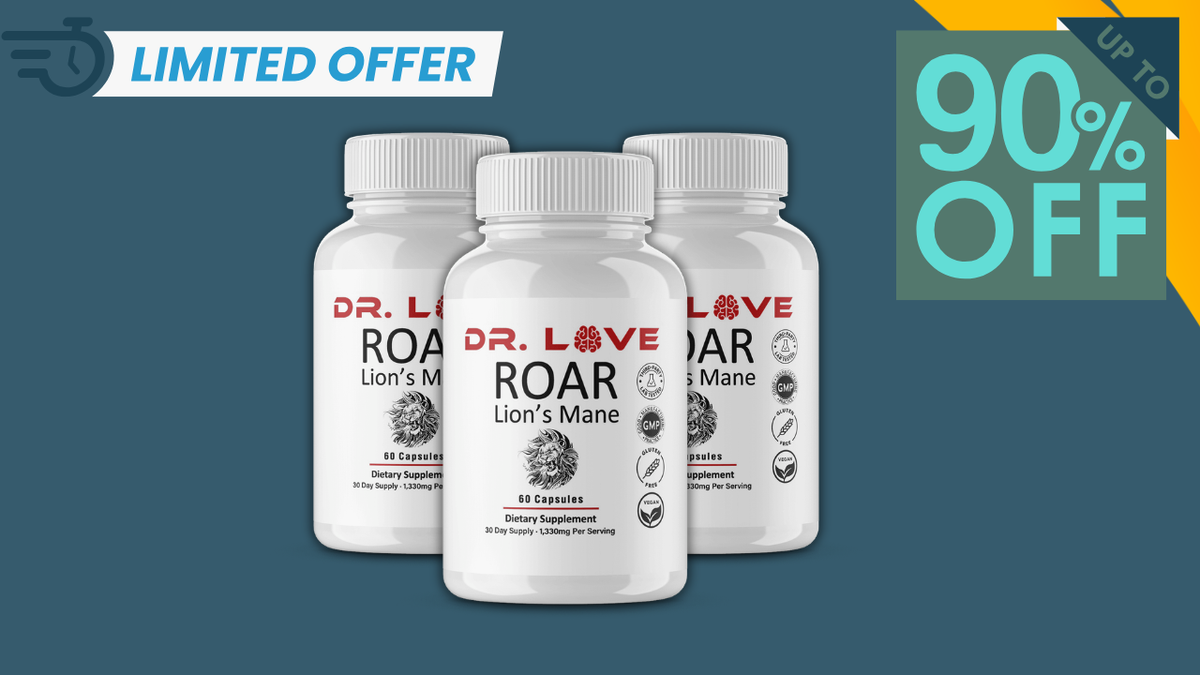
💵 Current Deal: Buy 1 bottle and receive 3 additional bottles free for $59, with shipping terms shown during the promotional checkout
⏰ Results Begin: No medically guaranteed schedule. The official page uses fast-result language, but human bodies don’t obey website countdowns
📍 Made In: The regular store says “Made in the USA” using domestic and imported ingredients; another official page says “Formulated in the USA”
🧘♀️ Core Focus: Memory support, concentration, mental clarity, energy, sleep and general cognitive wellness
✅ Who It’s For: USA adults interested in non-stimulant functional mushrooms—and willing to keep their expectations somewhere on planet Earth
🔐 Refund: A 180-day money-back guarantee is advertised on official promotional pages
🟢 Our Say: Recommended, with conditions. Roar Lion’s Mane appears commercially legitimate and is not an obvious fake-product scam. But “real supplement” does not mean “guaranteed brain transformation,” no matter how confidently somebody types it in capital letters.
Bad advice travels ridiculously fast.
Good advice walks.
Bad advice arrives in a red sports car, sunglasses on, shouting:
“Take these capsules and rebuild your brain by Friday!”
Good advice knocks politely and says:
“You should probably examine the dosage, evidence, checkout terms and possible medication interactions.”
Guess which one gets clicked?
Exactly.
That is why searching Roar Lion’s Mane Reviews and Complaints 2026 USA can feel like walking into an argument where everybody has a microphone and almost nobody brought evidence.
On one side, you have the worshippers.
They say Roar Lion’s Mane is flawless, revolutionary, practically a biological software update. Five stars. No questions. Buy immediately before a mysterious warehouse employee hands the last bottle to somebody in Nebraska.
On the other side, you have the professional internet cynics.
They read one complaint about shipping—or one person saying they noticed no difference—and declare the entire operation a scam created by mushroom bandits operating from a basement.
Neither extreme helps.
Both are emotionally satisfying, though. That’s the problem.
USA customers searching this product usually want a straight answer:
Is Roar Lion’s Mane reliable, legitimate and worth trying—or is it another shiny supplement wrapped in exaggerated promises?
The answer is not difficult, but it isn’t dramatic enough for most promotional pages.
Roar Lion’s Mane appears to be a real dietary supplement sold through active official storefronts. The seller publishes product listings, customer-service information, pricing, U.S. manufacturing language and a refund promise. The regular store also says its products are third-party tested and made in the USA from domestic and imported ingredients.
Those are positive signs.
But—
A functioning storefront does not clinically prove memory improvement.
A testimonial does not forecast your result.
A mushroom studied in a laboratory does not automatically become an Alzheimer’s treatment when placed inside a branded capsule.
And “Buy 1 Get 3 Free” is not a medical qualification.
While comparing the official pages, I noticed something that happens constantly in online supplement marketing: one detail sounds perfectly reasonable, then the next sentence jumps three floors without using the stairs.
“Lion’s Mane has attracted scientific interest.”
Fair.
“Lion’s Mane may support cognitive wellness.”
Possible.
“This finished supplement will grow new brain cells, remove plaque and protect everyone from dementia.”
Whoa there, Captain Mushroom.
That leap—from interesting ingredient to guaranteed outcome—is where many Roar Lion’s Mane reviews become misleading.
So, let’s gather the worst advice currently floating around this product, place it under a bright kitchen light and see whether it survives.
Spoiler: some of it does not survive thirty seconds.
Terrible Advice #1: “Just Trust the Five-Star Reviews—Thousands of People Can’t Be Wrong”
Of course they can.
Thousands of people once believed low-rise jeans were a sensible design choice.
Popularity is not infallibility.
One official Roar Lion’s Mane promotional page claims more than 100,000 happy customers and more than one million bottles sold. Another campaign says Lion’s Mane is used and trusted by over 17,000 people. These may represent real commercial activity, but they are seller-published marketing figures—not independently audited review totals displayed through a neutral consumer platform.
That difference matters.
A lot.
Why This Advice Sounds Convincing
Humans use social proof when uncertain.
If a restaurant is crowded, it feels safer.
If a movie has thousands of positive ratings, we expect to enjoy it.
If a supplement page contains enthusiastic testimonials beside smiling faces, our brain quietly whispers:
“Everybody seems happy. This must work.”
Social proof isn’t stupid. It is a normal shortcut.
But shortcuts occasionally drive straight through somebody’s flower garden.
A seller-controlled testimonial section usually shows selected customer experiences. It does not necessarily show every buyer who felt nothing, stopped using the product, forgot to request a refund or simply placed the unopened bottle beside three abandoned vitamin containers.
And there’s that cabinet again.
Every American home seems to have one—the wellness graveyard. Half a bottle of magnesium. Two dusty collagen tubs. A gummy supplement welded together into one enormous gummy organism.
Yet during the buying moment, we imagine perfect consistency.
Human optimism is adorable.
Expensive, sometimes, but adorable.
A Review Is Not a Prediction
Suppose a customer writes:
“Roar Lion’s Mane helped me concentrate.”
That statement means the customer reported better concentration.
It does not mean:
“Roar Lion’s Mane will improve the concentration of every person who orders it.”
The first statement describes an experience.
The second predicts your biology.
Those are not twins. Barely cousins.
People differ in:
- Age
- Diet
- Sleep quality
- Stress
- Medication use
- Medical conditions
- Supplement consistency
- Expectations
- Sensitivity to ingredients
Picture two USA customers.
One sleeps eight hours, exercises regularly, eats reasonably well and takes the recommended serving consistently.
The other sleeps four hours, lives on vending-machine snacks, drinks enough coffee to frighten a cardiologist and remembers the capsules twice per week.
Same bottle.
Different environment.
A review section cannot calculate that difference for you.
How Positive Reviews Create Negative Complaints
This is where things become funny in a sad way.
Overexcited reviews create an imaginary product.
Imaginary Roar Lion’s Mane does everything:
- Eliminates brain fog
- Creates laser focus
- Improves sleep immediately
- Recovers lost memories
- Produces endless motivation
- Probably organizes your tax receipts
Then the actual product arrives.
Perhaps the buyer notices a subtle change after several weeks. Or nothing obvious.
But subtle feels like failure when the expectation was mental fireworks.
So they write:
“Used it for seven days. Total scam.”
The exaggerated positive hype helped create the furious negative complaint.
Round and round we go.
The Truth That Actually Works
Use reviews as signals, not promises.
The most useful reviews include details:
- How long the customer took it
- Their approximate age or goal
- What changed specifically
- What did not change
- Whether they altered sleep, exercise or diet
- Whether they experienced unwanted effects
- Whether the purchase was verified
- Whether they reordered
“I took it consistently for eight weeks and noticed less afternoon mental fatigue, although my memory didn’t dramatically change” is useful information.
“AMAZING PRODUCT!!!!!”
That is enthusiasm wearing five exclamation marks as a hat.
Read the stories.
Just don’t let somebody else’s story make your decision for you.
Terrible Advice #2: “One Complaint Proves Roar Lion’s Mane Is a Total Scam”
The word scam has been abused.
It looks tired.
A package arrives late?
Scam.
A customer dislikes the capsules?
Scam.
Someone expected instant genius and remained approximately the same level of genius?
Massive scam.
A disappointing product experience and deliberate fraud are not automatically the same thing.
Every product with enough customers produces complaints.
Phones receive complaints.
Cars receive complaints.
Hotels receive complaints about pillows being too soft, too hard, too square, somehow emotionally distant.
People are people.
What a Complaint Can Actually Mean
A customer complaint might involve:
- No noticeable results
- Shipping delays
- Damaged packaging
- Ingredient sensitivity
- Unexpected shipping fees
- Confusion about promotional pricing
- Difficulty contacting support
- Recurring-payment concerns
- Refund disagreements
These issues do not all carry equal weight.
“I didn’t feel a difference” is a product-experience complaint.
“I was repeatedly billed without clear authorization” would be a potentially serious business-practice complaint.
Treating them as identical is lazy analysis.
What the Commercial Evidence Shows
Roar Lion’s Mane is listed through an active official store. The site publishes a customer-service phone number, support email, secure-payment language and worldwide shipping information. It also states that the products are third-party tested and made in the USA with domestic and imported ingredients.
A separate official campaign identifies Brain Fit For Life, LLC and lists a business address in Boynton Beach, Florida.
These details don’t guarantee perfection.
They do support the conclusion that Roar Lion’s Mane is a real commercial product connected to an identifiable seller—not an obvious nonexistent-product scheme.
There is a difference between:
“The company exists and sells a real supplement.”
And:
“Every customer will love it and every claim is scientifically established.”
The first appears reasonably supported.
The second is not.
The “It Didn’t Work” Problem
Imagine Customer A.
They take Roar Lion’s Mane consistently for two months, change nothing else, track their concentration and notice no meaningful improvement.
Their complaint is relevant.
Now imagine Customer B.
They take it on Monday, forget Tuesday through Friday, restart Saturday and then announce Sunday morning that the product failed.
Their complaint contains less useful information.
Both may write the exact same sentence:
“Didn’t work.”
That’s why context matters.
A review without context is like a weather report saying, “Bad outside.”
Rain?
Heat?
Tornado?
A goose with anger issues?
Give us something.
Complaints USA Buyers Should Investigate
The useful approach is to search for repeated patterns.
Pay close attention if many buyers independently describe:
- Orders never arriving
- Unauthorized recurring charges
- Refund promises not being honored
- Bottles arriving unsealed
- Labels differing materially from advertising
- Serious reactions
- Customer support repeatedly ignoring requests
One isolated issue can be ordinary operational failure.
A consistent pattern can reveal something bigger.
The Truth That Actually Works
Don’t dismiss complaints.
Don’t worship them either.
Sort them.
Before purchasing, protect yourself:
- Screenshot the offer.
- Confirm the bottle quantity.
- Check shipping and sales tax.
- Verify whether the purchase is one-time or recurring.
- Save the guarantee language.
- Keep the receipt and confirmation email.
- Avoid opening every bottle immediately.
This advice is not glamorous.
Nobody will whisper, “Wow, what an alpha consumer,” because you saved a receipt.
Do it anyway.
Terrible Advice #3: “Lion’s Mane Science Proves Roar Rebuilds Your Brain and Prevents Alzheimer’s”
This is where harmless exaggeration can become dangerous.
Lion’s Mane—Hericium erinaceus—is a real edible mushroom. Researchers have investigated its compounds and possible effects involving nerve-related pathways, mood and cognition.
Interesting?
Absolutely.
Clinically settled?
No.
A 2025 randomized, double-blind, placebo-controlled crossover study tested an acute dose of a standardized Lion’s Mane fruiting-body extract in 18 healthy adults aged 18 to 35. Researchers did not find a significant overall improvement in global cognition or mood compared with placebo, although one individual psychomotor measure improved. They said additional research was needed on long-term use, dosage and timing.
That study does not prove Lion’s Mane is useless.
It was small.
It examined an acute dose.
It involved healthy younger adults.
But it does show why responsible science uses cautious language.
Marketing prefers a trumpet.
Science often arrives with a clipboard and says, “The findings are mixed.”
The Logical Leap Nobody Mentions
Here is the bad-advice pathway:
- Lion’s Mane contains biologically interesting compounds.
- Some laboratory, animal or early human research reports encouraging findings.
- Roar Lion’s Mane contains Lion’s Mane.
- Therefore Roar definitely creates new brain cells in every customer.
- Therefore it removes amyloid plaque.
- Therefore it prevents Alzheimer’s disease.
Look how quickly that escalated.
Several unanswered questions are hiding between those steps:
- Was the evidence from cells, animals or humans?
- What exact extract was studied?
- What dose?
- For how long?
- Fruiting body or mycelium?
- Were the participants healthy?
- Was Roar’s complete finished formula tested?
- Were the results independently repeated?
- Were the changes meaningful in everyday life?
Research on an ingredient is not automatically research on every commercial product containing that ingredient.
Blueberries have nutritional research behind them.
That does not turn blueberry pie into prescription medicine.
Sad, but necessary information.
What the Official Product Pages Say
Official Roar pages market the supplement for memory, focus, brain function, stress and sleep. Some campaign language also mentions protecting against dementia, while another official store page says Roar stimulates new brain-cell growth.
At the same time, the official store includes a disclaimer that its statements have not been evaluated by the FDA and that supplements are not intended to diagnose, treat, cure or prevent disease.
That contrast deserves attention.
The large marketing statement is exciting.
The disclaimer is less exciting, smaller, quieter—and extremely important.
What FDA Guidance Says
FDA guidance distinguishes structure/function claims from disease claims. A statement that a supplement prevents or protects against a named disease can be treated as a disease claim, depending on its wording and context.
This doesn’t mean Lion’s Mane has no value.
It means Roar Lion’s Mane should not be treated as an approved Alzheimer’s medication.
Why This Myth Can Cause Actual Harm
Picture an older USA buyer noticing worsening forgetfulness.
Appointments get missed.
Bills become confusing.
Familiar tasks feel less familiar.
Instead of seeking medical evaluation, the person believes a mushroom supplement is “cleaning plaque” and decides to wait.
That delay matters.
Memory changes may relate to sleep problems, medication effects, nutritional deficiencies, depression, metabolic issues or neurological conditions. A supplement bottle cannot determine which factor is involved.
It cannot take a medical history.
It cannot ask follow-up questions.
It just sits on the counter looking confidently mushroom-shaped.
The Truth That Actually Works
Lion’s Mane is a promising and legitimate area of research.
Roar Lion’s Mane may be considered a dietary supplement for general cognitive-wellness support.
But current evidence does not establish that this exact finished product prevents, reverses or treats Alzheimer’s disease.
That sentence is not sexy.
It is responsible.
And sometimes responsible is exactly what brain-health marketing desperately needs.
Terrible Advice #4: “Made in the USA, GMP and Third-Party Tested Means FDA-Approved and Guaranteed To Work”
These phrases create a warm glow.
Made in the USA.
Third-party tested.
GMP-certified.
Science-backed.
Put them beside a clean white bottle and suddenly we imagine a pristine laboratory where extremely serious people inspect every mushroom while orchestral music plays.
Quality claims matter.
They’re just not magic spells.
The regular official store says Roar products are third-party tested and made in the USA using domestic and imported ingredients. Another official campaign says the facility is GMP-certified, while another identifies the formula as formulated in the USA.
These are encouraging quality statements.
But none of them, alone, proves clinical effectiveness.
“Third-Party Tested” Leaves Questions
Third-party tested for what?
- Heavy metals?
- Microbial contamination?
- Mushroom identity?
- Pesticides?
- Active-compound levels?
- Beta-glucan content?
- Undeclared ingredients?
- Finished-product potency?
Which laboratory performed the tests?
Was every batch tested?
Can USA customers request a lot-specific certificate of analysis?
Maybe the company has excellent answers.
Great. Ask.
But the phrase is not the evidence itself.
A restaurant sign saying “Clean Kitchen” is reassuring. You’d still prefer that somebody actually inspected the kitchen.
GMP Is Not a Clinical Trial
Good Manufacturing Practices address production controls and consistency.
They do not prove that the product improves memory or focus.
A supplement can be manufactured accurately and safely while producing no noticeable result for one individual.
Quality asks:
“Does the product contain what it claims?”
Effectiveness asks:
“Does taking it create the promised outcome?”
Related questions.
Different questions.
Like asking whether a guitar was built correctly versus whether the person holding it can play.
“Made in the USA” Can Be Misread
The store says the product is made in the USA from domestic and imported ingredients, while certain campaign pages say formulated in the USA.
Those statements may describe different stages of production.
They do not necessarily mean every mushroom was grown, processed, extracted and encapsulated entirely inside the United States.
Not a scandal.
Just a detail.
Details are what separate research from vibes.
The Truth That Actually Works
Treat quality badges as the beginning of due diligence.
Ask the seller for:
- Current Supplement Facts
- Exact serving size
- Amount of Lion’s Mane
- Fruiting-body versus mycelium details
- Extraction ratio
- Active-compound or beta-glucan standardization
- Heavy-metal test results
- Microbial testing
- A recent certificate of analysis
- Allergen information
If the company provides clear documentation, confidence increases.
If the answer is twelve paragraphs saying “premium” without a single test report… well.
Your eyebrow may move upward.
Let it.
Terrible Advice #5: The Buy 1 Get 3 Free Offer and 180-Day Guarantee Mean There’s Absolutely No Risk”
I like the offer.
There, said it.
Four bottles for the base promotional price is attractive. The official campaign currently advertises Buy 1 Get 3 Free for $59, while another official page shows an advertised regular value around $236. Promotional pages also feature a 180-day money-back guarantee.
That can reduce financial risk.
It does not erase reality.
A Guarantee Is Still a Procedure
Even a generous refund promise may involve:
- Contacting customer service
- Providing order information
- Meeting a deadline
- Returning bottles
- Paying return postage
- Keeping unopened containers
- Waiting for processing
- Following terms specific to the promotional route
The official guarantee page says customers can call for a refund within 180 days and describes it as no questions asked. That is reassuring, but buyers should still save the exact terms displayed when they order.
Web pages change.
Memories become fuzzy.
Screenshots remain irritatingly literal.
Scarcity Scrambles Judgment
Official promotional pages also tell shoppers to act while stock remains available.
Maybe inventory is genuinely limited.
Maybe demand changes.
An outside reviewer cannot inspect the warehouse from a webpage.
But we can understand the psychology.
Before the scarcity message, you ask:
“Does Roar Lion’s Mane fit my needs?”
After the scarcity message, you ask:
“What if another person buys my bottles?”
Now the mushrooms have become endangered wildlife.
Scarcity activates loss aversion—the fear of missing an opportunity. It makes people hurry, and hurried people overlook shipping, recurring terms and refund details.
The Standard Store and Promotion Are Different
The regular official store lists one bottle at $59 and separately offers multi-bottle quantities. The special campaign advertises one paid bottle plus three free bottles.
Promotional funnels often provide different offers.
That is not automatically suspicious.
It does mean you should confirm which page you’re using and what the final cart contains.
The Truth That Actually Works
Before entering payment details:
- Confirm the final total.
- Check the bottle quantity.
- Review shipping and tax.
- Verify one-time versus recurring billing.
- Save the guarantee.
- Keep your order number.
- Don’t open every bottle on day one.
- Put the refund deadline in your calendar.
A genuine bargain survives careful reading.
If an offer collapses the moment you stop rushing, it wasn’t much of an offer.
What Is Roar Lion’s Mane, Without the Fireworks?
Roar Lion’s Mane is a dietary supplement promoted through Dr. Robert Love’s official store and related campaign pages.
The product is marketed for:
- Memory
- Focus
- Mental clarity
- Sleep
- Stress
- Energy
- General cognitive support
The official store describes Roar Lion’s Mane as a supplement intended to support brain health and aging. Campaign pages also highlight third-party testing, GMP manufacturing and U.S. production or formulation language.
The ingredient category is interesting.
The advertising occasionally wanders into a superhero movie.
Both facts can be true.
Who May Want To Consider Roar Lion’s Mane?
Roar Lion’s Mane may appeal to:
- USA adults curious about functional mushrooms
- People who want non-stimulant cognitive support
- Buyers who dislike caffeine-heavy focus formulas
- Adults experiencing occasional mental fatigue
- Consumers comfortable with emerging rather than conclusive research
- People willing to use a supplement consistently
- Customers attracted to the long advertised guarantee
- Buyers prepared to examine subtle changes rather than expect a personality transplant
The ideal buyer understands:
“This may support my wellness routine. It is not a guaranteed treatment.”
Very reasonable.
Almost suspiciously reasonable for the internet.
Who Should Be More Careful?
Consult a qualified healthcare professional before using Roar Lion’s Mane if you:
- Take prescription medication
- Use several other supplements
- Have a mushroom allergy
- Have a chronic health condition
- Are pregnant or breastfeeding
- Have surgery planned
- Have experienced unexplained reactions
- Are dealing with persistent memory changes
- Are considering replacing prescribed treatment
The official store also says results vary and includes a standard warning that supplements are not intended to diagnose, treat, cure or prevent disease.
“Natural” is not another word for “safe for every person.”
A cactus is natural.
Nobody rubs one on their face for wellness.
Hopefully.
Roar Lion’s Mane Pros and Cons
What I Like
- It appears to be a real product from an identifiable seller.
- The company maintains active product and campaign pages.
- Customer-support information is publicly listed.
- Lion’s Mane is a legitimate subject of scientific research.
- The non-stimulant positioning may appeal to caffeine-sensitive customers.
- Official pages advertise third-party testing.
- GMP and U.S. manufacturing or formulation claims are presented.
- The Buy 1 Get 3 Free offer is financially appealing.
- The advertised 180-day refund period is relatively long.
What Makes Me Pause
- Some promotional claims go further than current human evidence.
- Seller-published customer numbers are not independent review totals.
- Research on Lion’s Mane generally is sometimes presented as proof for Roar specifically.
- A product-specific randomized clinical trial was not identified in the sources reviewed.
- Dementia and Alzheimer’s implications require serious caution.
- Scarcity messaging may pressure buyers.
- Publicly accessible batch-testing documentation would strengthen transparency.
- Results cannot be promised.
Is Roar Lion’s Mane Reliable, Legit and Worth Considering in 2026?
Here is the blunt answer.
Roar Lion’s Mane appears to be a legitimate commercial supplement.
It is sold through active official channels. The seller provides product listings, contact information, business details, a checkout process and an advertised refund policy. That does not resemble an obvious nonexistent-product scam.
I like the product concept.
Lion’s Mane is worth studying. A non-stimulant mushroom supplement may suit certain USA buyers who want to explore cognitive wellness without consuming another fluorescent energy drink at 3 p.m.
So yes, I recommend considering it.
But not blindly.
I would recommend Roar Lion’s Mane to an informed adult who:
- Understands the research is still developing
- Has checked the formula and dosage
- Has realistic expectations
- Reviews possible health or medication concerns
- Reads the checkout and refund terms
- Will not use it as an Alzheimer’s treatment
That is a lot of conditions.
Good.
Health decisions should have conditions.
The two loudest narratives are both nonsense:
“Roar Lion’s Mane transforms every brain.”
And:
“Any complaint proves Roar Lion’s Mane is fake.”
The fact-based position is more useful:
- The product appears real.
- The seller appears identifiable.
- The ingredient category has emerging research.
- Some people may report benefits.
- Other people may notice little or nothing.
- Marketing claims deserve scrutiny.
- Persistent cognitive problems deserve professional evaluation.
- A guarantee helps, but buyers still need to understand the terms.
Filter out the screaming.
Reject miracle promises.
Reject lazy scam accusations.
Read the evidence, inspect the offer and make the decision from your own goals—not somebody else’s excitement.
Because the smartest thing you can do before buying a brain supplement is painfully obvious.
Use your brain first.
Frequently Asked Questions About Roar Lion’s Mane Reviews and Complaints 2026 USA
1. Is Roar Lion’s Mane a scam or a legitimate product?
Roar Lion’s Mane appears to be a real commercial supplement sold through an active official store. The seller publishes product listings, customer-service information, a U.S. business address and refund language. These are positive legitimacy indicators.
Does that prove every claimed benefit?
No.
Real product—yes, apparently.
Guaranteed mental superpowers—put the cape away.
2. Are Roar Lion’s Mane reviews trustworthy?
Some reviews may reflect genuine customer experiences. But testimonials appearing on a seller-controlled page should be treated as selected experiences, not neutral scientific evidence.
Look for detailed reviews explaining duration, dosage, benefits, disappointments and side effects.
“Best product ever” might be sincere.
It is still not much data.
3. How quickly should Roar Lion’s Mane work?
There is no scientifically guaranteed timeline applying to every person.
A 2025 randomized study of an acute dose of standardized Lion’s Mane extract did not find a significant overall improvement in global cognition or mood, although one psychomotor measure improved. The researchers recommended more investigation into long-term use, timing and dosage.
Some customers may report gradual changes.
Others may notice none.
The body has not agreed to follow sales-page deadlines.
4. Can Roar Lion’s Mane prevent Alzheimer’s disease?
Roar Lion’s Mane should not be treated as a proven method of preventing, reversing or treating Alzheimer’s disease.
FDA guidance distinguishes general supplement structure/function claims from claims involving named diseases, and the official store itself says its supplements are not intended to diagnose, treat, cure or prevent disease.
Seek medical evaluation for worsening memory, confusion or difficulty completing normal daily tasks.
Do not hand that responsibility to a mushroom bottle.
5. Should USA customers buy Roar Lion’s Mane?
It may be worth considering for healthy adults interested in functional mushrooms and non-stimulant cognitive-wellness support.
Before buying:
- Read the Supplement Facts panel.
- Check the final price and shipping.
- Confirm whether billing is one-time.
- Save the refund policy.
- Discuss possible interactions with a healthcare professional.
Related Hastags
#RoarLionsMane #RoarLionsManeReview #RoarLionsManeReviews2026 #RoarLionsManeAppReview2026 #RoarLionsManeBonus #RoarLionsManeProduct #RoarLionsManePrice #RoarLionsManeOffers #RoarLionsManeBonuses #RoarLionsManeBuy #RoarLionsManeWebsite #RoarLionsManeSite #RoarLionsManeApp #RoarLionsManeHonestReviews #RoarLionsManeLatestReviews #RoarLionsManeUsersExperience #RoarLionsManeUsersReview #RoarLionsManeDemo #RoarLionsManeTutorial #RoarLionsManePurchaseOnline #RoarLionsManeBuyit