7 Joseph’s Well Gaps USA Buyers Should Check Before Calling It the Best DIY Water-from-Air System in 2026
⭐ Ratings: Mentioned as positive on promotional pages, but independent review volume should be checked carefully
📝 Reviews: Buyer interest is growing, especially among preparedness-focused USA households
💵 Original Price: Commonly promoted around higher-ticket value claims
💵 Usual Price: Listed around $39 on the official sales page at the time of review
💵 Current Deal: Check the official page before buying because launch pricing may change
⏰ Results Begin: After you access the guide, collect materials, build the setup, and test it in your climate
📍 Target Users: USA homeowners, preppers, off-grid families, RV users, homesteaders, and emergency planners
🧘♀️ Core Focus: DIY atmospheric water generation and household water preparedness
✅ Who It’s For: People who want a practical backup water plan, not a ready-made miracle machine
🔐 Refund: Promotional materials mention a refund policy; verify the current terms at checkout
🟢 Our Say? Highly recommended for the right DIY-minded buyer. Not a scam from what the public product information shows, but results depend on setup, humidity, power, filtration, and maintenance.
Most people do not fail because the product is bad.
They fail because they skip the missing pieces.
That sounds a little dramatic, I know. But it is true. Especially with something like Joseph’s Well, where the idea itself feels almost too good to ignore: a DIY system that helps you pull water from the air. Water. From air. It sounds like one of those things your uncle would mention during a late-night kitchen conversation, while everyone else is half-listening and the coffee has gone cold.
But here is where USA buyers need to slow down.
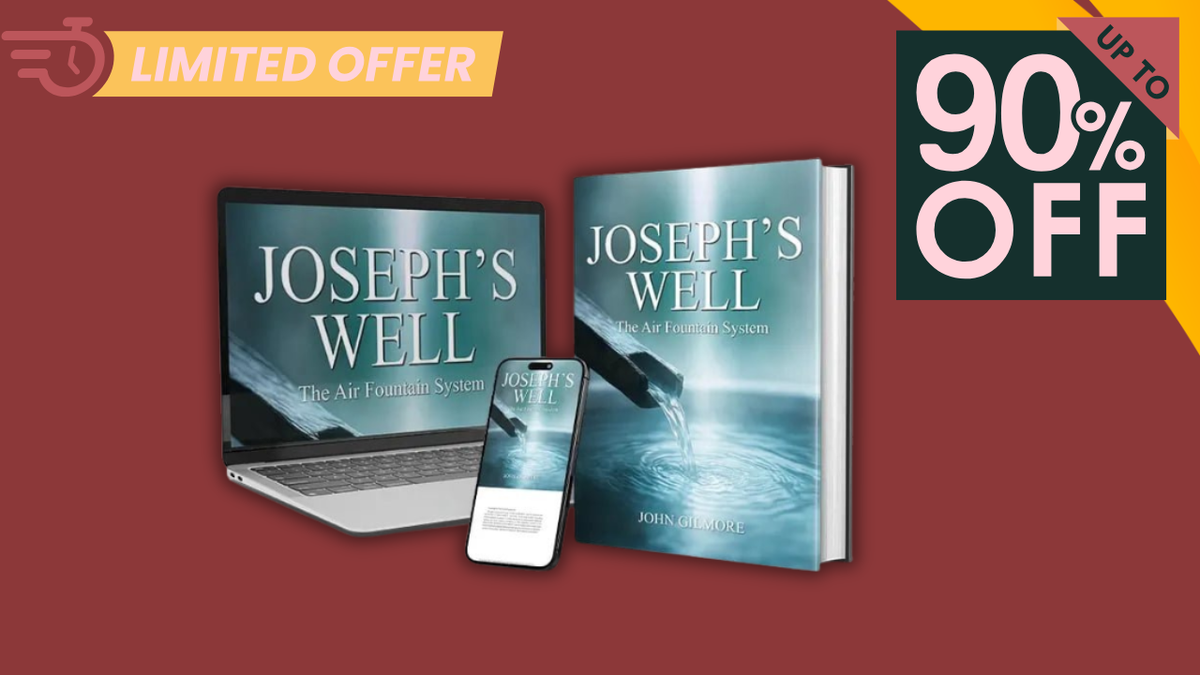
Joseph’s Well is not just another random survival gadget. It is being promoted as a digital DIY water-from-air guide, built around atmospheric water generation, condensation, filtration, and emergency preparedness. The official page describes it as a guide with videos, blueprints, and instructions rather than a physical machine shipped to your door.
That distinction is everything.
Because if you buy it expecting a polished appliance to arrive in a box, you may be disappointed. But if you buy it as a practical DIY preparedness guide, then yes, Joseph’s Well starts to make a lot more sense.
And honestly, this is where the product becomes interesting.
USA households are already dealing with drought alerts, storms, infrastructure worries, rising utility costs, and that weird feeling that “normal” is getting thinner every year. You do not need to be a hardcore prepper living in a bunker to understand that water security matters. FEMA and CDC emergency guidance both continue to push household emergency water storage as a basic preparedness step, and that is not conspiracy talk. That is plain common sense.
So this report is not here to blindly hype Joseph’s Well.
It is here to show the gaps.
Because the people who fill these gaps are the ones most likely to get real value from the product.
1. The Expectation Gap: It Is a DIY Program, Not a Ready-Made Water Machine
This is the first thing USA buyers must understand.
Joseph’s Well is not a physical atmospheric water generator that gets shipped to your house. The public product page presents it as a digital program with instructions, blueprints, videos, and guidance for building your own system.
That matters because expectation is the difference between a satisfied buyer and an angry review.
A person expecting a plug-and-play machine may say, “Wait, I have to build this?”
A person expecting a DIY guide may say, “Okay, show me the parts list.”
Same product. Completely different reaction.
This is not a small detail. It is the whole thing.
Joseph’s Well is better understood as a preparedness skill package. You are buying the know-how, the build path, the plan, the system layout. Not a shiny finished appliance with a warranty card and polished buttons.
And for some people, that is actually better.
A USA homeowner who enjoys building practical things, fixing stuff in the garage, or setting up off-grid tools may love this format. A person who hates tools, hates instructions, and wants instant results may not.
That is not a flaw. It is a fit issue.
Why this matters:
When buyers understand the product format before purchasing, they are less likely to feel misled and more likely to follow the program properly.
How addressing this creates a breakthrough:
Promote Joseph’s Well as a DIY preparedness guide, not a magical water appliance. This builds trust with Tier 1 buyers because they can smell fake hype from miles away.
2. The Climate Gap: USA Humidity Changes Everything
This is where a lot of reviews become too soft.
Atmospheric water generation depends on moisture in the air. No moisture, no magic. That is the basic reality.
Joseph’s Well is built around the concept of drawing humid air across cooled surfaces so water vapor condenses into liquid water. This is a real principle, not fantasy. Atmospheric water generation systems already exist and are studied in different environments. But performance depends heavily on humidity, temperature, cooling efficiency, airflow, and power.
Now think about the USA.
Florida is not Arizona.
Louisiana is not Nevada.
Houston is not Phoenix.
Georgia is not inland California during a dry spell.
A family in Tampa or New Orleans may have much better natural humidity to work with than someone in Las Vegas. That does not mean Joseph’s Well cannot help in drier regions, but expectations should be realistic.
The official Joseph’s Well information suggests it can work in dry climates, especially during higher-humidity windows like early morning or evening. That is useful. But buyers should not translate that into “same output everywhere.” That would be bad logic.
I would treat it like planting a garden. Same seeds, different soil, different weather, different result. Nobody screams “scam” because tomatoes grow better in one climate than another. They adjust the method.
That is the right mindset here too.
Why this matters:
Humidity is one of the biggest factors affecting water output. USA buyers in humid states may have an easier time getting satisfying results, while dry-state users may need more careful timing, better airflow, and lower expectations.
How addressing this creates a breakthrough:
Check your local humidity before building. Test the system at different times of day. Track output. Adjust. That boring little testing habit can make the difference between “this works” and “I gave up after one weekend.”
3. The Drinking-Water Safety Gap: Water from Air Still Needs Common Sense
This is the part that needs to be said clearly.
Water from air does not automatically mean safe drinking water.
Yes, the concept is exciting. Yes, Joseph’s Well talks about filtration and purification. Yes, a DIY atmospheric water system can be valuable. But any collected water must be handled responsibly.
Air can contain dust, pollen, smoke, chemicals, microorganisms, and other contaminants depending on the environment. Collection surfaces can get dirty. Storage containers can grow bacteria. Filters need replacement. Tubes need cleaning. This is not glamorous, but it matters.
CDC guidance for emergency water makes one thing very clear: safe drinking water must be stored, treated, and handled properly. CDC recommends storing at least one gallon of water per person per day for emergencies, and it still identifies commercially bottled water as the safest and most reliable emergency supply when available.
That does not hurt Joseph’s Well.
Actually, it strengthens the real argument.
Joseph’s Well should not replace every other water safety method. It should become one layer in a broader preparedness plan.
Stored water.
Filtration.
Purification tablets.
Boiling when needed.
Clean containers.
Testing where possible.
And then Joseph’s Well as an additional production method.
That is a far stronger setup.
Why this matters:
USA buyers are careful. They do not just want “cool survival ideas.” They want to know whether their kids, elderly parents, or household members can safely use the water.
How addressing this creates a breakthrough:
Treat Joseph’s Well as a water-production system, then add proper filtration, cleaning, and testing habits. The result is a much more reliable emergency plan.
4. The Preparedness Gap: Most USA Homes Are Still Not Fully Ready
Here is the uncomfortable truth.
A lot of people talk about preparedness. Fewer actually prepare.
They save a reel. They buy one flashlight. Maybe there is a case of bottled water in the garage. And then life gets busy. Groceries, bills, school pickups, emails, that weird noise the car keeps making — preparedness gets pushed aside.
But water emergencies are not rare anymore.
Drought conditions, hurricanes, winter storms, chemical spills, old pipes, broken treatment systems, and local boil-water notices can affect ordinary USA households. Nobody needs to panic. But ignoring water preparedness is just not sensible.
FEMA household preparedness survey summaries have shown that many Americans feel prepared, but fewer have actually built complete emergency plans and supply kits.
That is exactly where Joseph’s Well finds its audience.
It appeals to people who do not want to depend only on grocery-store shelves or city systems. It gives them something practical to do.
And psychologically, that matters.
Preparedness products sell when they reduce helplessness. Joseph’s Well does that well because it gives people a task, a build, a plan. Not just fear. Action.
Why this matters:
A water-from-air guide is most useful when the buyer already understands that emergency water access is a serious issue.
How addressing this creates a breakthrough:
Use Joseph’s Well as part of a household preparedness checklist. Build it, test it, store backup water, create a cleaning routine, and teach other family members how it works.
That is how a product becomes a system.
5. The Maintenance Gap: If You Don’t Maintain It, You Don’t Really Own It
This part is not exciting. But it is one of the most important.
Any DIY water system needs maintenance.
Filters must be cleaned or replaced. Coils need inspection. Collection containers should be sanitized. Tubing should be checked. Power connections should be safe. If the system uses air intake, that intake needs attention too.
The official Joseph’s Well materials mention cleaning filters, inspecting coils, and maintaining the system regularly.
That is good. It shows the product is not pretending maintenance does not exist.
But buyers need to take it seriously.
A neglected system can become dirty. A dirty system can produce unsafe water. Unsafe water defeats the whole purpose.
This is especially important in different USA environments:
In Florida, mold and humidity can become an issue.
In California, wildfire smoke may affect air quality.
In Texas, heat and dust can be tough on equipment.
In the Midwest, seasonal changes may affect how often the system runs.
In coastal areas, salt air may affect parts over time.
You see the point. The USA is not one climate.
Why this matters:
Most DIY projects fail after the first excitement fades. The system is only useful if it becomes part of a repeatable routine.
How addressing this creates a breakthrough:
Create a simple maintenance checklist. Weekly check. Monthly deep clean. Filter schedule. Water test reminders. Storage rotation. Nothing fancy. Just consistent.
That consistency turns Joseph’s Well from a weekend curiosity into a preparedness asset.
6. The Power Gap: Off-Grid Sounds Cool, But Energy Planning Is the Real Game
“Off-grid” is one of those words that sounds powerful.
And it is powerful — when it is planned properly.
Joseph’s Well is promoted with off-grid possibilities, including alternative power options like solar or battery setups. That is a major selling point for USA buyers, especially those in rural areas, cabins, RVs, homesteads, or storm-prone regions.
But let’s not make it cartoon-simple.
Condensing water from air usually requires energy. Fans, cooling elements, pumps, and filtration may all need power. Solar can help, but solar depends on panel size, sun exposure, battery capacity, weather, season, and actual energy demand.
This is where some buyers may get tripped up.
They hear “solar-compatible” and imagine unlimited water under any condition. That is not how energy works. Even a small refrigerator, pump, or cooling unit needs proper power planning.
Why this matters:
If the power setup is weak, the system may underperform or fail during the exact moment you need it.
How addressing this creates a breakthrough:
Before relying on Joseph’s Well in an emergency, test it with your actual power source. Wall outlet. Battery. Solar. Generator. Whatever you plan to use, test it before a crisis.
This is the USA preparedness rule that never goes out of style:
Do not wait for the emergency to learn your system.
7. The Trust Gap: “Legit” Is Stronger When You Explain the Limits
A lot of affiliate pages make this mistake.
They say:
“100% legit.”
“No scam.”
“Best product ever.”
“Guaranteed results.”
“Everyone needs this.”
That kind of language can actually reduce trust, especially with USA readers. It sounds like an overcooked sales page.
A better approach is more confident but more balanced:
Joseph’s Well appears to be a legitimate digital DIY guide based on the public product details. It is not a scam-style empty offer from what is shown, because it clearly presents deliverables such as videos, blueprints, and support materials. But results depend on climate, build quality, filtration, power, maintenance, and realistic expectations.
That is much stronger.
Why? Because it sounds like a real person looked at the product.
And honestly, that is what Google searchers want when they type Joseph’s Well review. They are not looking for blind praise. They are looking for the missing catch.
So give them the catch. Then show why the product still makes sense.
Why this matters:
Trust-first content converts better for Tier 1 audiences because readers do not feel trapped inside fake hype.
How addressing this creates a breakthrough:
Promote Joseph’s Well with honest confidence. Recommend it to the right people. Warn the wrong people. That is how the review becomes believable.
Is Joseph’s Well Worth It for USA Buyers?
Yes, Joseph’s Well is worth considering — but only for the right buyer.
It is best for USA homeowners, preppers, faith-based families, off-grid users, RV travelers, rural households, homesteaders, and anyone who wants another layer of emergency water protection.
It is not best for someone who wants a finished machine shipped to their house. It is not best for someone who refuses to build, test, clean, or maintain anything. And it is definitely not best for someone expecting unlimited water in every climate without effort.
But for a DIY-minded buyer?
Joseph’s Well has a strong appeal.
It gives people a plan. It gives them direction. It turns worry into a project. And sometimes that is exactly what people need — not panic, not doom-scrolling, but a real thing to build with their hands.
The smartest way to use Joseph’s Well is simple:
Buy the guide.
Understand the parts.
Check your humidity.
Build carefully.
Filter responsibly.
Store backup water too.
Test before emergencies.
Maintain the system.
That is how the product becomes powerful.
Not because it is magic. Because it fills a real gap.
And in 2026, USA families who think about water before the shortage happens are already ahead of the crowd.
Preparedness is not fear. It is discipline. It is the quiet decision to not be helpless when systems fail.
Joseph’s Well fits that mindset well.
So before you ask, “Does Joseph’s Well work?” ask the better question:
Have I filled the gaps that would allow Joseph’s Well to work for my home, my climate, my family, and my emergency plan?
That is where the real breakthrough begins.
FAQs About Joseph’s Well
1. Is Joseph’s Well a scam?
Based on the public product information, Joseph’s Well appears to be a legitimate digital DIY guide, not a scam. But buyers should understand that it is not a pre-built machine. It teaches you how to build a water-from-air system, and your results depend on climate, setup, filtration, power, and maintenance.
2. Does Joseph’s Well really make water from air?
The concept behind Joseph’s Well is based on atmospheric water generation, where moisture in the air is condensed into liquid water. The science is real, but output can vary heavily. Humid USA states may naturally offer better conditions than very dry areas.
3. Is the water safe to drink?
Do not assume collected water is automatically safe. It should be filtered, stored properly, and tested when possible. For infants, elderly people, or anyone with health concerns, extra caution is needed. Joseph’s Well can be useful, but water safety still matters.
4. Who should buy Joseph’s Well?
Joseph’s Well is best for DIY-minded USA buyers, preppers, homesteaders, rural homeowners, RV users, off-grid families, and people who want backup water options. It is not ideal for people who want an instant finished product with no effort.
5. Is Joseph’s Well worth buying in 2026?
Yes, it can be worth buying if you understand what it is: a DIY preparedness guide. It is most valuable when used as part of a full water plan that includes stored water, filtration, purification supplies, maintenance routines, and emergency testing.
Related Hastags
#JosephsWellSystem #JosephsWellSystemReview #JosephsWellSystemReviews2026 #JosephsWellSystemAppReview2026 #JosephsWellSystemBonus #JosephsWellSystemProduct #JosephsWellSystemPrice #JosephsWellSystemOffers #JosephsWellSystemBonuses #JosephsWellSystemBuy #JosephsWellSystemWebsite #JosephsWellSystemSite #JosephsWellSystemApp #JosephsWellSystemHonestReviews #JosephsWellSystemLatestReviews #JosephsWellSystemUsersExperience #JosephsWellSystemUsersReview #JosephsWellSystemDemo #JosephsWellSystemTutorial #JosephsWellSystemPurchaseOnline #JosephsWellSystemBuyit