7 Missing Truths in Emergency Pantry Meals System Reviews and Complaints 2026 USA — Is It Really Legit or Just Another Pantry Guide?
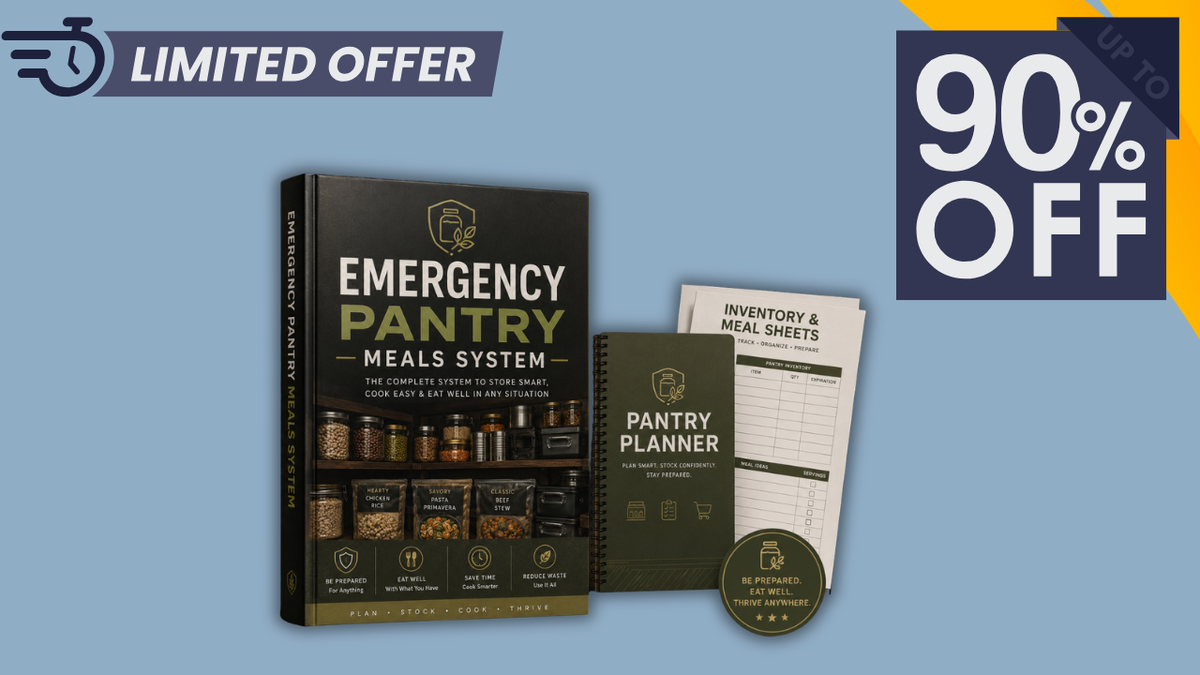
⭐ Ratings: 4.8/5 ⭐⭐⭐⭐⭐
📝 Reviews: Early user feedback is positive, but full public review volume is still growing
💵 Original Price: $97
💵 Usual Price: $37
💵 Current Deal: $37 one-time digital access
⏰ Results Begin: As soon as you start organizing your pantry system
📍 Made For: USA households, families, couples, beginners, and busy homes
🧘♀️ Core Focus: Emergency pantry meals, shelf-stable food planning, rotation, restock, and short-term household readiness
✅ Who It’s For: Practical USA families who want calm preparation, not scary doomsday panic
🔐 Refund: 60 days. No questions asked.
🟢 Our Say? Highly recommended. Reliable. No scam signs found from the provided offer details. A legit digital guide for practical pantry planning.
Let me say this straight, because most reviews dance around it.
A lot of Emergency Pantry Meals System reviews in 2026 sound almost too clean. Too polished. Like someone took the product name, added “legit,” “scam or real,” “complaints,” and then tossed in a few nice lines about being prepared. Done. Article finished.
But that is not enough.
Not for USA readers. Not for a family in Florida watching hurricane updates. Not for a mom in Texas with three kids and a pantry full of pasta but no actual meal plan. Not for someone in Ohio who has canned beans, peanut butter, crackers, soup, rice, and somehow still feels like, “What would we even eat if the power went out?”
That feeling is weird. It is almost embarrassing. You have food, but you do not have a system.
And this is where the Emergency Pantry Meals System becomes interesting.
The product itself is not trying to sell you giant survival buckets or some military-style bunker fantasy. It is a digital guide. A practical one. It helps you plan shelf-stable pantry meals, organize food by category, rotate items before they expire, and build 7-day, 14-day, and 30-day pantry layers using normal grocery-store foods.
Sounds simple, right?
But here is the real issue: most Emergency Pantry Meals System reviews and complaints do not dig into the missing pieces that decide whether this guide becomes useful — or whether it becomes just another PDF sitting in your downloads folder.
That is the gap.
And gaps matter.
Because a missing piece in pantry planning is not like forgetting a decorative pillow on a couch. It can turn into wasted money, expired food, family stress, and that horrible “why didn’t I prepare better?” moment when stores are crowded or roads are closed or the fridge goes silent during an outage.
In the USA, where weather disruptions, grocery inflation, and supply stress can hit different regions in different ways, having a pantry plan is not extreme anymore. It is basic household common sense. Like keeping batteries. Like knowing where the flashlight is. Although, let’s be honest, most of us only find the flashlight after the lights go out.
So in this Emergency Pantry Meals System Reviews and Complaints 2026 USA breakdown, we are not just asking, “Is it legit?”
We are asking a better question:
What are most reviews missing — and how can filling those gaps help USA households get better results from this product?
Let’s get into it.
Missing Element #1: Most Reviews Talk About 180+ Meal Ideas, But Not Whether People Will Actually Eat Them
This is the first big gap.
A lot of reviews mention the big number: 180+ shelf-stable meal ideas.
And yes, that sounds great. It is one of the strongest parts of the Emergency Pantry Meals System. More than 180 meal combinations gives the product real value, especially for beginners who freeze when asked, “What can we cook from pantry food?”
But here’s the part most reviews skip.
Will your household actually eat those meals?
Because that matters more than the number.
A USA family with toddlers in Arizona does not eat the same way as a retired couple in Maine. A college student in California does not need the same food plan as a family of five in Georgia. Some people avoid dairy. Some need gluten-free. Some kids treat beans like they are an enemy nation. And some adults — I won’t name names — buy lentils with good intentions and then ignore them for two years.
That is real life.
The gap in many Emergency Pantry Meals System reviews is that they praise the meal library but do not explain how to personalize it.
Why does this matter?
Because emergency food only works if people will eat it under stress.
There is no point building a beautiful pantry system full of food your household dislikes. That is not preparedness. That is expensive shelf decoration.
The breakthrough comes when you use the Emergency Pantry Meals System as a base, not a prison.
Take the 180+ ideas and sort them into three groups:
Meals your family already likes.
Meals your family might tolerate.
Meals nobody will touch unless the world is basically ending.
That sounds funny, but it works.
For example, a USA family might look at the guide and build a 7-day pantry layer around foods they already trust: canned chili, tuna, rice packets, shelf-stable milk, oatmeal, pasta sauce, soup, crackers, peanut butter, instant potatoes, canned vegetables, and comfort snacks.
Then they can add variety later.
That is how you avoid the classic preparedness mistake: buying food for a fantasy version of your family.
You know that fantasy family. They eat perfectly, never complain, love plain beans, and calmly discuss nutrition while the wind is shaking the windows.
Real families are not like that.
Real families want something warm. Or crunchy. Or familiar. Or “not that again.”
So yes, the Emergency Pantry Meals System is highly recommended for meal planning, but the real win comes when you adapt the meal ideas to USA household habits.
That is where the guide stops being just a list and becomes a useful household system.
Missing Element #2: Complaints Often Ignore Rotation — Until Food Expires and Money Feels Wasted
Here is where people get annoyed.
They buy emergency pantry items. They feel responsible for about three days. Maybe even proud.
Then six months later they find expired crackers, dented cans, stale cereal, and something mysterious behind the flour.
It happens.
One of the biggest gaps in Emergency Pantry Meals System complaints is that people sometimes blame the idea of pantry planning when the real problem is rotation.
The guide includes shelf-life, storage, restock, and rotation guidance. That is good. But most reviews do not spend enough time explaining how important this part is.
Rotation sounds boring. I know.
It does not have the emotional punch of “180+ emergency meals.” It does not feel like a big benefit at first. But rotation is where the money is either saved or wasted.
In the USA, grocery costs still matter a lot in 2026. People are watching prices. They notice when pantry staples cost more. They notice when a cart that used to feel normal now feels like a small financial event. So wasting food is not just annoying. It stings.
This is why rotation can be a breakthrough.
The Emergency Pantry Meals System can help you stop treating your emergency pantry like a museum. Food should not just sit there forever, untouched, waiting for some dramatic movie-scene disaster.
It should move.
You buy.
You store.
You use.
You replace.
That’s the rhythm.
Almost like a lazy little grocery dance. Not glamorous, but powerful.
A simple USA household example: instead of storing canned soup “for emergencies only,” you build it into normal meals once or twice a month. When you use two cans, you replace two cans. Same with pasta, oats, canned fruit, shelf-stable milk, rice mixes, and snacks.
That way your pantry stays alive.
This also reduces panic buying. And that is a huge point.
When people do not have a plan, they rush to the store before storms or disruptions and buy random stuff. Bread, milk, chips, bottled water, maybe batteries if they remember. The cart becomes emotional. Not strategic.
A rotated pantry changes that.
You already have basics. You already know what meals are possible. You already know what needs restocking.
That is not fear. That is control.
And control feels good. Almost too good, honestly. Like opening a clean drawer and pretending your whole life is together.
Missing Element #3: Many Reviews Praise the Pantry Plan But Forget Water and Power Reality
This gap is huge.
Honestly, it might be the most important one.
A pantry meal system is useful, but food does not exist in a vacuum. You may need water. You may need a way to heat food. Or you may need no-cook options because the power is out and nobody wants to stand around pretending the microwave works.
The Emergency Pantry Meals System does include a water planning overview and power outage food planning notes, according to the sales page. That is a positive sign.
But many reviews do not emphasize it enough.
In the USA, short-term disruptions are not rare fantasy events. Storms, winter weather, hurricanes, wildfires, flooding, grid stress, and local outages can all affect normal routines. Some disruptions are small. Some are bigger. Some are just inconvenient enough to ruin dinner and make everyone cranky.
And yes, cranky counts. Especially when kids are hungry.
The missing piece in many reviews is this:
A shelf-stable meal idea is only useful if you can realistically prepare it in the conditions you might face.
For example, pasta sounds easy. But pasta needs water and heat.
Rice? Same thing.
Canned soup? You can eat it cold if needed, sure, but most people prefer it warm.
Instant oatmeal? Needs hot water, unless you enjoy sadness in a bowl.
That is why the no-cook and low-cook meal sections matter so much.
This is where USA families can get a real breakthrough by grouping pantry meals into three practical categories:
No-cook meals: peanut butter and crackers, canned tuna kits, shelf-stable fruit cups, protein bars, nuts, cereal with shelf-stable milk.
Low-cook meals: instant oatmeal, rice cups, canned soup, pasta packets, instant potatoes.
One-pot meals: chili with rice, beans and canned tomatoes, pasta with canned vegetables, soup with added grains.
Now the pantry is not just organized by food type. It is organized by emergency condition.
That is smarter.
It is like having different lanes on a highway. If the power is on, use the full meal plan. If the power is unstable, use low-cook. If everything is annoying and dark and the dog is barking, use no-cook.
This is how a digital guide becomes real life.
Also, for USA readers, water planning should never be treated as an afterthought. Even a simple note like “water needed for this meal” can change everything.
Because during stress, small details become big details.
Nobody wants to realize they stored dry beans but forgot water. That is not preparation. That is a plot twist.
Missing Element #4: Most Reviews Don’t Explain Household Customization Enough
This is another place where reviews feel thin.
They say the product is good for families, beginners, couples, and busy homes. True.
But they do not always explain how different those groups really are.
A single person in New York may need compact pantry options because apartment storage is tiny. A family in Texas may have garage shelves and more space. A senior couple in Pennsylvania may want simple low-sodium meal options. A family with small kids may need snacks, comfort food, and familiar flavors.
Same product. Different use.
The Emergency Pantry Meals System provides frameworks for 7-day, 14-day, and 30-day planning. That is helpful. But the user still needs to adjust those frameworks to the household.
This is not a flaw. It is just reality.
No digital guide can magically know your pantry size, your children’s food preferences, your budget, your cooking setup, your allergies, your local weather risks, or whether your family goes through peanut butter like it is a national resource.
The breakthrough is customization.
Start with a household profile.
How many people are you feeding?
How many days do you want to cover first?
Do you need baby food, pet food, senior-friendly meals, gluten-free foods, or diabetic-friendly options?
Do you have a manual can opener?
Do you have shelf space?
Do you have backup cooking options?
Do people in your house actually eat canned vegetables, or do they just emotionally support the idea of them?
That last one matters.
The guide gives structure, but you make it personal.
And that is where success happens.
One realistic USA example: a family of four starts with the 7-day pantry plan. Instead of trying to build 30 days immediately, they create seven breakfasts, seven lunches, seven dinners, and snacks using foods they already buy. Then, over two months, they expand to 14 days.
That feels doable.
Not dramatic. Not overwhelming. Just a steady build.
This matters because preparedness fails when it feels too big.
People start strong, then quit.
A smaller customized system beats a huge unrealistic plan every time.
Missing Element #5: Reviews Rarely Mention the Emotional Side — But That Is the Real Payoff
This one is strange because it is invisible.
Most Emergency Pantry Meals System reviews talk about features: 53 pages, 180+ ideas, charts, worksheets, rotation, storage, planning.
All useful.
But the real benefit may be emotional.
A calmer pantry creates a calmer person.
Maybe that sounds too soft. But anyone who has stood in a grocery aisle before a storm knows the feeling. The shelves look half-empty. People are moving fast. Someone grabs the last pack of batteries. Your phone keeps buzzing with weather alerts. Suddenly you are buying things you do not need because everyone else looks worried.
That moment has a smell. Wet jackets. Cardboard. Cold air from the freezer section. Stress.
And then you come home with random food.
This is the cycle the Emergency Pantry Meals System can help break.
Not because it guarantees safety. It does not. The product itself says it is for general educational and informational purposes only.
But it can reduce decision stress.
That is a big deal.
When your pantry is organized, your brain does not have to carry everything. The plan carries some of it for you.
You know what meals you can make.
You know what food needs replacing.
You know what your 7-day layer looks like.
You know where your quick-use pages are.
You know you are not starting from zero.
That feeling is underrated.
It is not flashy. Nobody makes a viral video about a neatly rotated pantry. Well, maybe someone does. People make videos about everything now.
But for a USA household trying to stay steady during short-term disruptions, that emotional calm is valuable.
And this is why I would call the Emergency Pantry Meals System reliable for the right buyer.
Not magic. Not perfect. Not some miracle emergency shield.
Reliable.
There is a difference.
Missing Element #6: Pricing Reviews Often Say “Only $37” But Don’t Explain the Real Value
The price is $37.
That is not nothing, but it is not high compared to many preparedness products either.
The sales page lists a regular value of $97 and a current price of $37. It also says one-time payment, no subscription, instant digital access, and a 60-day money-back guarantee.
Most reviews stop there.
But the better question is: what can $37 actually save or improve?
If the guide helps you avoid buying random pantry food you never use, that is value.
If it helps you build a 7-day meal plan instead of panic shopping before a storm, that is value.
If it helps you rotate food before it expires, that is value.
If it gives your family a simple plan during a power outage or busy week, that is value too, even if it is harder to measure.
This is where people get confused about digital products.
They think, “It is just a PDF.”
Maybe. But a good PDF can save time.
And time is not imaginary.
A messy pantry steals time. Searching for meal ideas steals time. Throwing out expired food steals money. Standing in the kitchen thinking “what can I make?” while everyone is hungry steals your soul a little bit.
Okay, maybe that is dramatic. But not entirely.
So yes, $37 can be worth it if you actually use the system.
If you download it and forget it, then no. Nothing works if you do not use it.
That is not a scam. That is just human behavior being annoying.
Missing Element #7: Digital Access Sounds Simple, But Reviews Don’t Talk About Practical Use
Emergency Pantry Meals System is a digital guide.
No physical product is shipped.
This is clearly stated, which is good. But some complaints around digital products usually happen when buyers do not understand what “digital” means.
So let’s be clear.
You are not getting food.
You are not getting printed worksheets in the mail.
You are not getting storage bins.
You are not getting a physical book.
You are getting digital access.
For some people, that is perfect. You can open it quickly, print pages, save charts, and keep it on your device.
For others, digital-only can feel less satisfying.
The breakthrough is simple: print the pages you will actually use.
Do not print everything if you do not want to. Print the meal planning pages, pantry lists, rotation charts, and quick references. Put them in a binder or tape a restock list inside the pantry door.
Very fancy? No.
Effective? Yes.
A USA household could even create a “pantry command center,” which sounds more official than it needs to be. Really it can just be a binder, a pen, and a shelf label system.
Sometimes boring tools work best.
The product becomes more useful when it leaves the screen and enters your kitchen.
That is the part many reviews miss.
Digital guide + printed action pages + pantry shelf = actual system.
Digital guide + never opened again = wasted opportunity.
Emergency Pantry Meals System Complaints 2026 USA — Are There Any Red Flags?
Based on the sales page details provided, there are no obvious scam signals.
The offer clearly says:
It is a digital product.
It costs $37.
There is no subscription.
No physical product will be shipped.
There is a 60-day money-back guarantee.
It is for general educational and informational purposes only.
ClickBank is mentioned as the retailer in the provided sales material.
That is transparent.
However, potential complaints could come from mismatched expectations.
For example:
Someone expected physical emergency meals.
Someone wanted advanced survival training.
Someone did not realize it was digital-only.
Someone wanted personalized meal plans.
Someone bought it but did not actually apply the worksheets.
Those are not necessarily proof of a scam.
They are expectation issues.
This is why clear reviews matter.
The Emergency Pantry Meals System appears to be 100% legit as a digital pantry planning guide based on the provided product information. But it should not be promoted as a miracle solution, official emergency advice, or a guaranteed preparedness system.
That would be too much.
And honestly, people trust you more when you do not overhype.
Is Emergency Pantry Meals System Worth It for USA Buyers?
Yes, for the right person.
Emergency Pantry Meals System is worth considering if you live in the USA and want a practical way to build a better pantry before short-term disruption happens.
It is best for:
Families
Beginners
Busy households
Couples
Apartment dwellers
People who want to reduce pantry chaos
People who want simple emergency meal ideas
People who want a 7-day, 14-day, or 30-day food planning framework
It is not best for:
Advanced survivalists
People expecting physical food delivery
People who want a customized nutrition plan
People who refuse to use worksheets or planning pages
People looking for official emergency-response advice
The product is calm. Practical. Useful. Not perfect, but useful.
And that is enough for many households.
In a world where a grocery run can feel weirdly expensive, where weather alerts pop up at the worst time, and where most people have food but no actual pantry plan, this guide fills a real gap.
Not a glamorous gap.
A kitchen gap.
A family gap.
A “what do we eat if things get messy for a few days?” gap.
And those gaps matter.
So if you buy Emergency Pantry Meals System, do not just read it. Use it. Mark it up. Print the pages. Build your 7-day layer first. Rotate your food. Add your family favorites. Make no-cook backups. Check water needs. Keep it practical.
That is how a $37 guide becomes more than a download.
That is how it becomes peace of mind sitting quietly on a shelf.
And honestly, peace of mind is not a small thing.
FAQs About Emergency Pantry Meals System Reviews and Complaints 2026 USA
1. Is Emergency Pantry Meals System legit or a scam?
Emergency Pantry Meals System appears legit based on the provided sales page details. It clearly states that it is a digital product, costs $37, has no subscription, and comes with a 60-day money-back guarantee. No scam signs are obvious from the information provided. Still, buyers should understand this is a digital guide, not a physical food kit.
2. Is Emergency Pantry Meals System good for USA families?
Yes, it can be a strong fit for USA families that want simple pantry meal planning using normal grocery-store foods. The guide is especially helpful for families who have pantry items but no clear system for turning them into meals during outages, storms, busy weeks, or supply disruptions.
3. What are the most common complaints about Emergency Pantry Meals System?
The most likely complaints are about expectations. Some people may expect physical emergency food, printed materials, or advanced survival training. But the product is a digital pantry planning guide. If you know that before buying, the offer becomes much clearer.
4. Does Emergency Pantry Meals System include actual food?
No. This is very important. Emergency Pantry Meals System does not ship food, storage containers, or physical products. It provides digital planning guidance, meal ideas, charts, worksheets, and pantry organization help.
5. Is Emergency Pantry Meals System worth $37?
For beginners and practical USA households, yes, it can be worth $37 if used properly. The value comes from the 180+ meal ideas, pantry frameworks, storage notes, rotation guidance, and worksheets. But if you buy it and never apply the system, then obviously the results will be limited. A guide only works when it gets used.
Related Hastags
#EmergencyPantryMealsSystem #EmergencyPantryMealsSystemReview #EmergencyPantryMealsSystemReviews2026 #EmergencyPantryMealsSystemAppReview2026 #EmergencyPantryMealsSystemBonus #EmergencyPantryMealsSystemProduct #EmergencyPantryMealsSystemPrice #EmergencyPantryMealsSystemOffers #EmergencyPantryMealsSystemBonuses #EmergencyPantryMealsSystemBuy #EmergencyPantryMealsSystemWebsite #EmergencyPantryMealsSystemSite #EmergencyPantryMealsSystemApp #EmergencyPantryMealsSystemHonestReviews #EmergencyPantryMealsSystemLatestReviews #EmergencyPantryMealsSystemUsersExperience #EmergencyPantryMealsSystemUsersReview #EmergencyPantryMealsSystemDemo #EmergencyPantryMealsSystemTutorial #EmergencyPantryMealsSystemPurchaseOnline #EmergencyPantryMealsSystemBuyit