9 Critical Gaps in Smart Water Box Scam Reviews and Complaints 2026 USA — The “Too-Good-To-Ignore” Truth Buyers Should Read First
⭐ Ratings: Advertised as 5/5 ⭐⭐⭐⭐⭐
📝 Reviews: Claims of glowing buyer interest — but detailed proof still needs checking
💵 Original Price: Often promoted with high “before” pricing
💵 Usual Price: Advertised discount-style pricing may vary
💵 Current Deal: Check the live checkout page before buying
⏰ Results Begin: Depends on humidity, climate, setup quality, and power source
📍 Made In: Not clearly confirmed from the sales content provided
🧘♀️ Core Focus: DIY water independence, emergency preparedness, air-to-water concept
✅ Who It’s For: USA homeowners, preppers, off-grid families, and water-security-conscious buyers
🔐 Refund: Check the official refund page carefully before payment
🟢 Our Say? Interesting idea, but don’t buy on hype alone. Verify claims, output, safety, cost, and refund terms first.
Let’s be honest for a second. The Smart Water Box sales page feels exciting. Maybe too exciting. It talks about water independence, drought protection, military-style technology, space-age thinking, and a life where you are no longer begging the public water grid to behave. For USA buyers dealing with wild weather, higher bills, dry seasons, and that weird little anxiety in the stomach when the news says “shortage,” it hits hard.
And yes, some readers will say: “I love this product, highly recommended, reliable, no scam, 100% legit.”
Fine. Maybe they mean it. Maybe they had a good experience. But a smart buyer, especially in the USA in 2026, cannot stop at shiny words.
Because the real question is not only, “Is Smart Water Box scam or legit?”
The sharper question is this: what is missing from the pitch?
That is where the story gets interesting. The missing details are like cracks in a clean white wall. At first, you barely notice them. Then the sunlight hits sideways and suddenly—there they are. Cost questions. Water safety doubts. Review gaps. Power problems. Product clarity issues. The little things that decide whether a buyer feels smart… or completely burned.
And with online fraud losses reported by the FTC at more than $12.5 billion in 2024, USA consumers have every reason to slow down before trusting aggressive online claims.
So, let’s walk through the critical gaps in smart water box scam Reviews and Complaints 2026 USA and, more importantly, how fixing these gaps can lead to better decisions, fewer regrets, and actual success.
Gap #1: The “Up to 40 Gallons Per Day” Claim Sounds Huge — But Where Is the Real Proof?
The biggest attention-grabber on the Smart Water Box page is simple: it says the system can produce up to 40 gallons of water per day.
That number is wild. In a good way, maybe. Forty gallons sounds like freedom sitting in a bucket. It makes you imagine your family safe during droughts, wildfires, emergencies, utility disruptions, and all the strange little modern problems that keep popping up in the USA. It sounds like a mini water factory at home.
But wait.
“Up to” is doing a lot of heavy lifting here.
Up to 40 gallons where? Florida? Texas? Arizona? Maine in winter? A humid basement in Georgia? A dry garage in Nevada where the air feels like burnt toast?
This is the first huge missing element. The sales page should not just throw a big number and walk away like a magician dropping smoke. It should clearly explain the conditions behind that output.
The reader needs to know the humidity level, average temperature, power usage, build quality, filter setup, airflow, and whether the 40-gallon result came from a lab test, real USA home test, or best-case theoretical condition.
Because, and this is important, atmospheric water collection is not magic. It depends on the air. If the air is dry, there is less moisture to pull out. That’s common sense, but sales pages often make common sense feel optional.
Why does this matter? Because many complaints are born from expectation gaps. A buyer sees “40 gallons per day,” imagines endless clean water, pays quickly, and later realizes the output depends on their climate. Then frustration arrives. Not politely either. It kicks the door open.
The solution is simple: sellers should provide climate-based output charts for USA buyers.
For example:
Humid USA regions may see stronger output.
Moderate regions may see lower but usable output.
Dry regions may need realistic expectations or extra equipment.
Cold regions may face performance limits.
That kind of detail would instantly make the offer feel more reliable.
For buyers, the breakthrough is also simple. Before buying, ask: “What will this produce in my actual city or state?” Not in a fantasy survival bunker. Not in a polished ad. In your real environment.
If you live in Miami, your result may differ from someone in Phoenix. If you live near the Gulf Coast, your experience may not match someone in Colorado. That does not automatically make Smart Water Box a scam, but it does mean the sales claim needs context.
And context is everything. Without it, big numbers are just fireworks. Bright, loud, and gone in two seconds.
Gap #2: “Clean Drinking Water” Is a Serious Claim — But Safety Details Feel Too Thin
The Smart Water Box content talks about creating clean, drinkable water. That sounds comforting. Honestly, it sounds amazing. Like turning the air around your house into something your family can actually drink.
But drinking water is not a casual promise.
This is not a phone case. Not a kitchen spoon. Not a desk lamp from a random online store. This is water. Your body takes it in. Your kids may drink it. Your pets may drink it. Your emergency plan may depend on it.
So the missing safety details matter a lot.
The page should explain what filtration system is used, what contaminants it removes, whether the materials are food-grade, how the storage container is cleaned, whether bacteria or mold can grow inside the system, and whether the produced water has been tested by any independent lab.
It should also say whether the system includes UV purification, carbon filtration, mineral balancing, or testing recommendations.
Because here’s the thing nobody likes to say in a shiny sales pitch: water made from condensation can still become unsafe if it touches dirty surfaces, unclean containers, low-quality tubing, dusty coils, moldy parts, or poorly maintained filters.
That sentence is boring, yes. But boring details are sometimes what keep people safe.
For USA buyers searching smart water box scam Reviews and Complaints 2026 USA, this is one of the biggest points to check. A product may be clever. A guide may be interesting. But if it does not clearly explain water safety, then buyers should pause.
Not panic. Pause.
There is a difference.
A better version of the Smart Water Box page would include a full water safety section. It would say: here are the filters, here is the cleaning process, here is the replacement schedule, here is how to test the water, here is what not to do.
That would change everything.
It would move the page from “trust me bro” energy to actual buyer confidence.
And buyers can take control too. Before drinking any water from a DIY or home-built system, test it. Use a reliable home water test or a certified local testing service. It may feel like an extra step, and yes, nobody loves extra steps, but this one matters.
Because “I love this product, highly recommended, reliable, no scam, 100% legit” should never replace actual water safety.
A testimonial cannot filter bacteria. A five-star rating cannot clean a tank.
Gap #3: The Reviews Look Good at First Glance — But Where Are the Real Stories?
Here’s where things get a little uncomfortable.
The content you shared showed “⭐⭐⭐⭐⭐ Verified Purchase,” but the actual review text was basically missing. The pros and cons sections were also empty or incomplete.
That is a problem.
Not automatically a scam. But definitely a trust gap.
In 2026, USA buyers are not naive about reviews anymore. People have seen fake testimonials, AI-generated praise, copied review blocks, stock photos, and review sections that look real until you actually read them and realize they say almost nothing.
The FTC’s Consumer Reviews and Testimonials Rule went into effect in October 2024 and targets deceptive conduct involving consumer reviews and testimonials. That tells you something: fake or misleading reviews became such a big issue that regulators had to step harder into the room.
So, if a sales page shows stars but not meaningful review content, smart buyers should ask questions.
A real review usually has texture. It has little imperfect details. Someone says, “I used this in South Carolina during a humid week and got decent output.” Or “I struggled with the tubing setup.” Or “Customer support took two days but helped.” Or “The parts cost more than I expected.”
That is useful.
But generic praise like “amazing product” or “100% legit” does not help much. It feels good, but it is like cotton candy. Sweet, colorful, and then gone.
The missing element here is verified, detailed, balanced buyer evidence.
Not only perfect reviews. Actually, perfect-only reviews can feel suspicious. A page with a few reasonable complaints often feels more believable than a page where everyone sounds like they were paid in sunshine.
What should Smart Water Box provide?
Real buyer photos.
Location-based experiences in the USA.
Before-and-after setup images.
Videos showing actual water output.
Negative reviews with seller responses.
Clear pros and cons.
Refund experience stories.
That would build serious trust.
And buyers should not rely only on the official page. Search outside. Look for independent videos, forum discussions, complaint databases, consumer review sites, and long-form experiences. If every review sounds copied, polished, and emotionally inflated, step carefully.
The breakthrough here is simple: stop treating reviews as decoration. Treat them as evidence.
Because evidence has weight. Decoration just sparkles.
Gap #4: The DIY Build Sounds Easy — But “Easy” for Whom?
The sales page says the Smart Water Box is easy to build, even for people who do not know plumbing or building stuff. That is a comforting line. It removes fear.
But also… let’s not pretend every DIY project is truly easy.
I once tried to assemble a cheap wall shelf that came with “simple instructions.” Simple, they said. Twenty minutes, they said. Two hours later, I was sitting on the floor with one missing screw, a bruised thumb, and a deep personal hatred for tiny Allen keys.
So when a water-generation system says “easy,” I want details.
Does easy mean no wiring?
Does easy mean no drilling?
Does easy mean no plumbing tools?
Does easy mean a beginner can do it without calling a cousin who owns a toolbox?
Does easy mean safe?
This gap matters because the product seems to be presented like a DIY guide or system. If buyers think they are getting a ready-made device but actually receive instructions, confusion begins. And confusion turns into complaints very quickly.
A USA buyer should know exactly what they are purchasing:
Is it a physical machine?
Is it a digital guide?
Is it a blueprint?
Is it a kit?
Are materials included?
Will parts need to be bought separately?
What is the real total cost?
The sales page should include a proper cost breakdown. Not vague “affordable” language. Real ranges.
For example:
Estimated parts cost
Required tools
Build time
Skill level
Maintenance cost
Filter replacement cost
Electricity cost
Common beginner mistakes
This would make the offer much stronger.
Why? Because people do not usually get angry at hard work when they expected hard work. They get angry when they expected simple and received complicated.
That is the gap.
And addressing it leads directly to success. If buyers know the true difficulty, the right people buy it. DIY-minded people may love it. Non-technical buyers may decide it is not for them. Both outcomes are better than disappointment.
A clear sales page does not scare away good customers. It filters out bad-fit customers.
That’s not a weakness. That’s smart business.
Gap #5: The Refund Promise Needs More Than Friendly Words
Refunds are where trust either becomes real or falls apart.
A sales page can say “no risk” or “try it today” or “change your mind anytime,” but buyers need specific refund terms. Especially USA buyers who have been around the online offer world long enough to know that some guarantees look huge before checkout and tiny after payment.
The Smart Water Box content includes refund-related questions, but the buyer should carefully inspect the official refund policy before paying.
Look for:
How many days is the refund window?
Is it 30 days, 60 days, or something else?
Is it no questions asked?
Are digital products refundable?
How do you request a refund?
Do you need proof?
Are upsells included?
How long does support take?
Is there a subscription or recurring billing?
These are not boring technicalities. These are the little locks on the door.
If you cannot understand the refund policy in two minutes, that is not good. Maybe not scammy, but not good.
For any product connected to smart water box scam Reviews and Complaints 2026 USA, refund clarity is a big deal because many online complaints are not only about the product. They are about failed communication. Slow support. Confusing billing. Hidden terms. “I thought I could get my money back” situations.
The solution? Screenshot everything before purchase.
Take screenshots of the sales claim, price, refund policy, checkout page, support email, guarantee section, and receipt. Yes, it feels a little paranoid. But in 2026, a little buyer paranoia is just digital self-defense wearing a clean shirt.
Sellers can fix this gap by making the refund policy loud and clear. Put it near the buy button. Put it in the FAQ. Put it on the checkout page. Explain it in plain English.
A refund policy should not feel like a treasure hunt.
If Smart Water Box wants to be viewed as reliable, no scam, and 100% legit, then refund clarity is not optional. It is one of the fastest ways to build trust.
Gap #6: Emergency Marketing Is Strong — But What Happens During a Power Outage?
This one bothers me a bit.
The sales page talks about water independence, emergencies, wildfires, droughts, public grid problems, and survival-type situations. That is powerful. It makes people imagine being prepared when everyone else is scrambling.
But if the system needs electricity, then the power question becomes huge.
Can Smart Water Box work during a power outage?
Can it run on solar?
How many watts does it use?
Can a portable power station handle it?
Does water output drop if power is limited?
Can it run outdoors safely?
What happens in freezing weather?
Without these answers, the emergency promise feels incomplete.
Because during many USA emergencies—hurricanes, winter storms, wildfires, grid failures—power is exactly what may disappear first. A water solution that stops working when the electricity goes out may still be useful, but it should not be sold like a total emergency answer unless backup power is explained.
That is the missing element: power reality.
And yes, maybe the system can work with backup power. Maybe a solar setup can support it. Maybe the guide explains this after purchase. But buyers should not have to pay first to learn the limitations.
A better sales page would include a simple emergency power chart.
Small backup battery: expected runtime
Solar generator: recommended size
Standard outlet: daily power cost
Off-grid setup: what is required
Power outage mode: what changes
This would be incredibly useful for USA preppers, rural homeowners, and families who are tired of being surprised by the weather.
The breakthrough is not buying one “miracle” solution. The breakthrough is building a layered water plan.
Stored water. Filters. Backup power. Local water alerts. Emergency containers. Maybe an air-to-water setup if your climate supports it. One tool is good. A system is better.
Because when the lights go out, marketing copy does not help you. Preparation does.
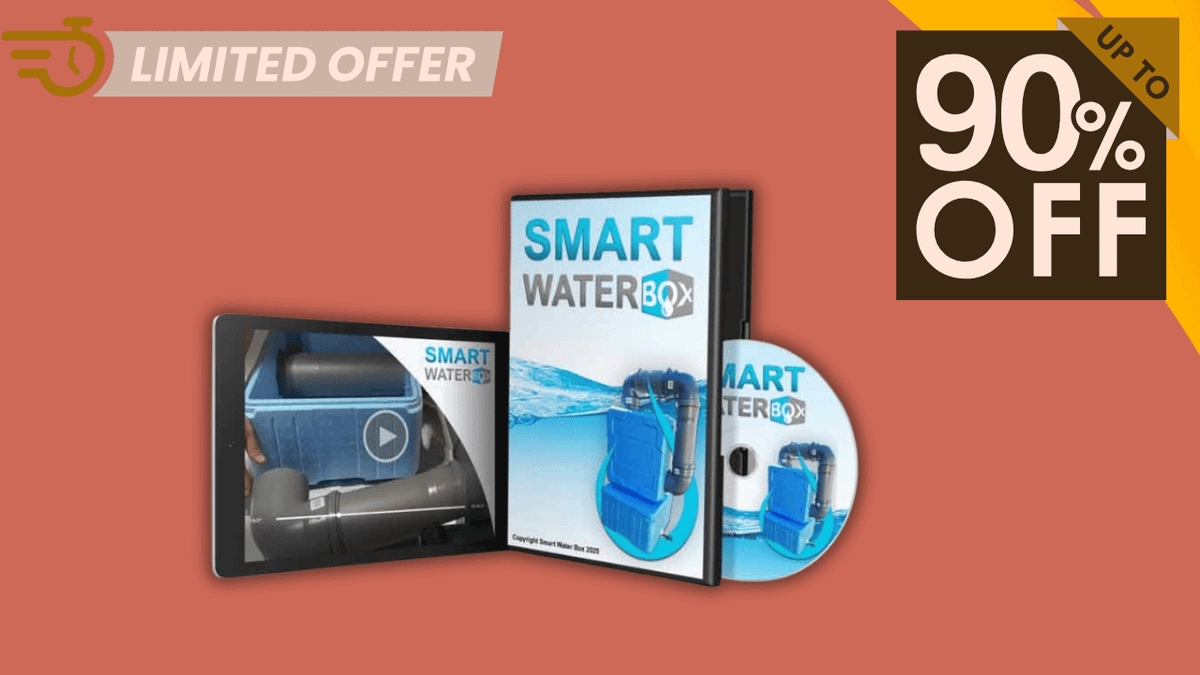
Gap #7: The Sales Page Needs to Clearly Say Whether This Is a Device, Guide, or Blueprint
This may be the most practical gap of all.
What exactly is the Smart Water Box?
A physical device?
A shipped machine?
A digital guide?
A DIY blueprint?
A kit?
A membership?
A downloadable manual?
The content sounds like it may be a step-by-step guide that teaches people how to build their own system. But the branding “Smart Water Box” can make it feel like a ready-made product. And when pages use phrases like “official site” and “90% off,” some buyers may assume they are ordering a physical thing.
That mismatch can become ugly.
Imagine expecting a box at your door and receiving a PDF. Even if the PDF is real, the buyer may feel tricked. Not because the concept is bad, but because the expectation was wrong.
This is why offer clarity matters so much.
The page should say, near the top:
“You are buying a digital DIY guide.”
Or:
“You are buying a physical device.”
Or:
“You are buying a kit with parts included.”
No blurry language. No hiding the real format in tiny text below the fold. No making people guess.
USA buyers should check the checkout page carefully. Look for words like digital download, guide, blueprint, plans, manual, ebook, members area, subscription, recurring billing, or instant access.
This one little check can save a lot of anger.
And for sellers, fixing this gap can reduce refund requests dramatically. Clear expectations create better customers. Better customers leave better reviews. Better reviews create long-term trust.
Simple, but somehow many pages still miss it.
Gap #8: The “Official Site” Label Needs Trust Signals Around It
“Official site” is a strong phrase. It suggests authenticity. It tells the buyer, “You are in the right place.” But in the online world, official-looking pages can be copied, duplicated, cloned, or promoted by affiliates.
So when a page says Smart Water Box Official Site, buyers should still check trust signals.
Does the site show a real company name?
Is there a physical business address?
Is there a support email?
Is there a phone number?
Is the payment processor recognizable?
Are terms and privacy policy clear?
Does the domain look strange?
Are there multiple similar “official” pages online?
This is where a lot of USA buyers rush. They see a discount timer, a big claim, a “verified purchase” block, and they hurry. That is exactly what urgency-based marketing wants.
But slow down. A real company should not be afraid of basic transparency.
The FTC has warned that fake reviews and deceptive testimonials harm buyers and honest businesses, which is why review transparency has become such a serious issue.
The missing element here is identity proof.
A trustworthy page should make it easy to know who is selling, how to contact them, what you are buying, and what happens after payment.
Buyers should also watch for fake urgency. If a countdown timer resets every time you refresh the page, that’s not exactly confidence-building. It feels like a carnival barker yelling through a laptop.
Not always a scam. But definitely a reason to inspect harder.
Gap #9: The Page Sells Independence — But It Needs Realistic Use Cases
The emotional heart of Smart Water Box is independence. No pipes. No government-controlled utilities. No bottled water. No expensive infrastructure. It sounds liberating.
And honestly, that idea is attractive.
But independence does not mean zero limitations.
A product can reduce dependence without replacing every water source. A DIY air-to-water system might be useful for emergency backup, small-scale water production, off-grid experimentation, or preparedness. But does it replace a full household water supply? That depends.
The page needs realistic use cases.
For example:
Best for emergency backup?
Best for drinking water only?
Best for humid regions?
Best for off-grid hobbyists?
Not ideal for large households without scaling?
Not ideal for dry climates unless modified?
This kind of honesty would make the product more credible. Strangely, saying what a product cannot do often makes people trust what it can do.
USA buyers are not children. They can handle nuance. Actually, many prefer it.
The breakthrough comes when buyers stop asking, “Will this solve everything?” and start asking, “Where does this fit in my water plan?”
That is a better question. Less dramatic, but more useful.
A Real-World Buyer Scenario: How Things Go Wrong, Then Right
Picture this. A USA buyer in Arizona sees the Smart Water Box sales page late at night. The headline is bold. The discount feels urgent. The idea of making water from air feels almost magical.
They buy.
Then reality shows up wearing work boots.
The air is too dry. The parts cost more than expected. The setup requires more confidence than they have. The water needs testing. The refund page is not as simple as they thought. Suddenly they are searching “smart water box scam Reviews and Complaints 2026 USA” with steam coming out of their ears.
Now change the story.
Before buying, the same person checks humidity conditions. They confirm whether it is a guide or device. They calculate material cost. They inspect the refund policy. They check independent reviews. They plan backup water storage too.
Maybe they still buy. Maybe they don’t.
But now they are not a victim of hype. They are a decision-maker.
That is the entire point.
Don’t Let Big Promises Do Your Thinking
Smart Water Box may be interesting. The idea of creating water from humidity is not silly. Water security is a real concern in the USA. Emergency preparedness is becoming more common. Online buyers are asking smarter questions, and they should.
But the sales page needs stronger proof in key places.
Performance proof.
Water safety.
Review authenticity.
DIY difficulty.
Refund clarity.
Power outage details.
Product format.
Company transparency.
Realistic use cases.
These gaps do not automatically prove a scam. But they are exactly the gaps that create complaints.
And if a seller fills these gaps? Trust rises. Buyer confidence rises. Refund disputes drop. Reviews become more meaningful. The product stands on evidence instead of adrenaline.
So yes, maybe you love this product. Maybe you find it highly recommended, reliable, no scam, 100% legit. But before saying that with full confidence, check the details. Touch the facts. Read the refund terms. Look for real users. Test the water. Ask the uncomfortable questions.
Because in 2026, the smartest USA buyer is not the one who believes every scary headline or every glowing testimonial.
The smartest buyer is the one who sees what is missing — and refuses to ignore it.
FAQs About Smart Water Box Scam Reviews and Complaints 2026 USA
1. Is Smart Water Box really a scam?
Not enough information from the sales page alone proves it is a scam. But there are clear gaps buyers should check, including performance proof, water safety, refund terms, real reviews, and whether it is a physical product or DIY guide. Don’t judge only from hype. Verify first, then decide.
2. Can Smart Water Box really produce 40 gallons per day?
The sales content claims “up to 40 gallons per day,” but that number likely depends on humidity, temperature, power, setup quality, and location. USA buyers in humid areas may have different expectations than buyers in dry states. Always look for test data before trusting the maximum claim.
3. Is the water safe to drink?
That depends on filtration, sanitation, storage, maintenance, and testing. The sales page should clearly explain filters, cleaning steps, and water safety standards. A smart buyer should test the water before drinking it, especially if the system is DIY-built.
4. Why are people searching for Smart Water Box complaints?
People usually search complaints when they want to know if the product matches the sales promise. Common concerns may include unclear pricing, DIY difficulty, refund confusion, low water output, missing reviews, or product-format confusion. Some complaints may come from unrealistic expectations, but some may point to real issues.
5. Should USA buyers purchase Smart Water Box in 2026?
Only after checking the details. If you understand what you are buying, know the real cost, confirm refund terms, verify climate suitability, and test water safety, then you can make a more confident choice. Don’t buy because of fear. Buy only if the facts make sense.
Related Hastags
#SmartWaterBox #SmartWaterBoxScam #SmartWaterBoxReview #SmartWaterBoxReviews2026 #SmartWaterBoxAppReview2026 #SmartWaterBoxBonus #SmartWaterBoxProduct #SmartWaterBoxPrice #SmartWaterBoxOffers #SmartWaterBoxBonuses #SmartWaterBoxBuy #SmartWaterBoxWebsite #SmartWaterBoxSite #SmartWaterBoxApp #SmartWaterBoxHonestReviews #SmartWaterBoxLatestReviews #SmartWaterBoxUsersExperience #SmartWaterBoxUsersReview #SmartWaterBoxDemo #SmartWaterBoxTutorial #SmartWaterBoxPurchaseOnline #SmartWaterBoxBuyit #SmartWaterBoxFraud #SmartWaterBoxWarning #SmartWaterBoxComplaint #SmartWaterBoxAlert