9 Hidden Gaps in Macrame for Beginners Reviews and Complaints 2026 USA — Read This Before You Say Scam or 100% Legit
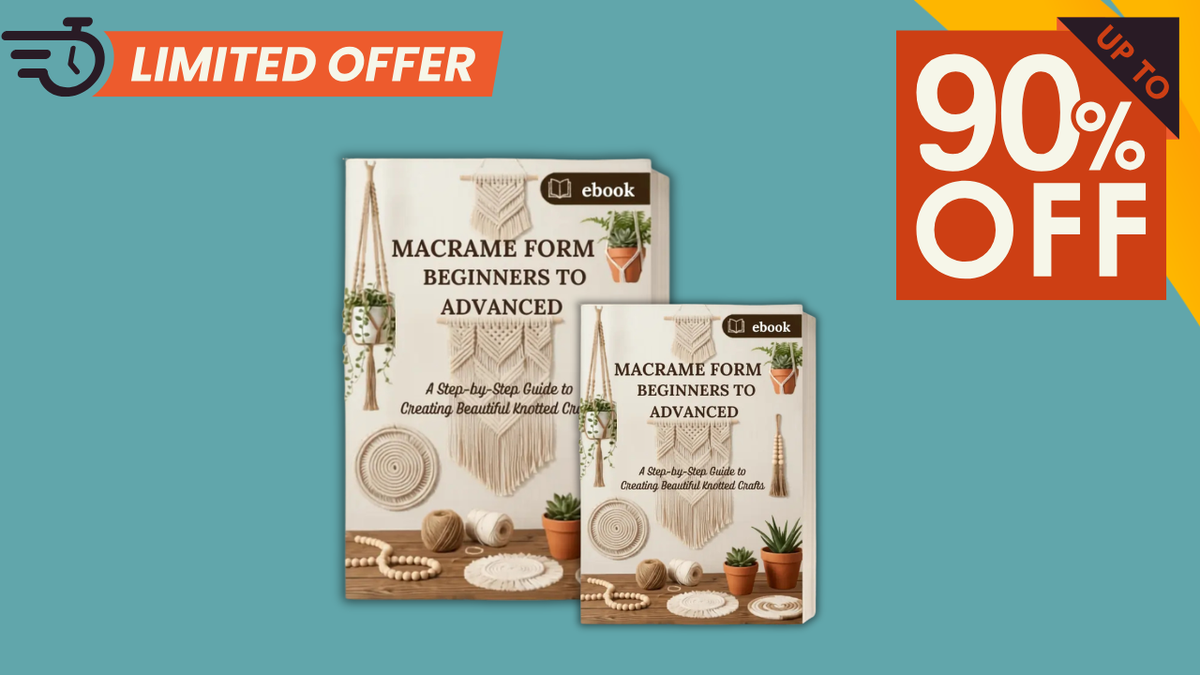
⭐ Ratings: 4.8/5 ⭐⭐⭐⭐⭐
📝 Reviews: Testimonials are shown on the sales page; independent review volume should still be checked
💵 Original Price: $99.99
💵 Usual Price: $3 promotional launch-style price
💵 Current Deal: $3 at the time shown on the sales page
⏰ Results Begin: When you practice the knots, not when the guide is resting in your downloads folder like a forgotten receipt
📍 Made For: USA beginners, DIY home decor lovers, handmade gift makers, craft hobby people
🧘♀️ Core Focus: Macrame knots, wall hangings, plant hangers, coasters, keychains, jewelry, dream catchers, bag patterns
✅ Who It’s For: Beginners who want a clear path instead of bouncing between 19 chaotic tutorials
🔐 Refund: 90-day money-back guarantee mentioned on the product page
🟢 Our Say? Highly recommended for the right USA beginner. Reliable-looking, no obvious scam signs, and legit based on visible offer details — but check the official checkout page before buying.
Macrame for Beginners Reviews and Complaints 2026 USA: The Missing Pieces Are Where People Mess Up
Most people don’t fail at macrame because they’re hopeless.
They fail because something is missing.
A path is missing. A simple practice routine is missing. A realistic expectation is missing. Sometimes even the correct cord is missing — and then people blame the guide like the PDF personally tied the knot wrong.
That is why so many Macrame for Beginners Reviews and Complaints 2026 USA articles feel half-useful and half-confusing. They say “legit,” “scam,” “worth it,” “not worth it,” “buy now,” “don’t buy,” and then leave the reader standing there like, okay… but what actually matters?
The real issue is not just whether Macrame Learning Guide by Macrame Haven is good or bad.
The real issue is whether the buyer knows how to use this kind of beginner guide properly.
Because a guide can be good, but your approach can be messy. Painfully messy. Like cord tangled under a chair leg while your coffee gets cold and the tutorial keeps saying “simple beginner step.”
Macrame Learning Guide looks like a useful digital product for USA beginners. It says it includes 70+ projects, basic knots, wall hangings, plant hangers, keychains, coasters, jewelry, dream catchers, bag patterns, pricing guidance, and beginner-to-advanced instruction.
That sounds strong.
I like the product concept. I really do.
But liking the product does not mean pretending it is magic. It is not. It will not tie knots for you. It will not make your first wall hanging look like a $200 handmade Etsy piece. It will not ship cord unless the product clearly says supplies are included. It will not transform a confused beginner into a craft-business legend by breakfast.
Still, for the right person, it can be highly useful.
The secret is filling the gaps.
So let’s talk about the missing pieces most reviews don’t explain properly.
Gap #1: Beginners Don’t Have a Learning Path
This is the monster gap.
Most beginners start with excitement, not structure.
They see a beautiful macrame wall hanging online. Cream cord. Soft sunlight. A plant in the corner. Maybe a beige sofa. Everything looks peaceful, like the person who made it has never paid a late bill or yelled at a printer.
Then the beginner thinks, “I can do that.”
Maybe they can.
But not by starting there.
This is where beginners get trapped. They jump straight into a complicated wall hanging before learning the basic knots. They buy cord, open a random video, and within 15 minutes the whole thing looks like spaghetti with trauma.
Then comes the complaint.
“Macrame is too hard.”
No. The starting point was wrong.
Why This Gap Matters
Macrame is a skill built in layers.
You need:
Basic knots first.
Then tension.
Then spacing.
Then small projects.
Then bigger pieces.
Then design confidence.
But most beginners skip the boring foundation because the final result is prettier. I get it. Nobody wants to post a basic knot practice strip on Instagram and say, “Look, I tied a thing.” It feels small.
But small is where confidence grows.
Beginner macrame usually starts with knots like lark’s head, square knot, half hitch, and wrapping knots. Once those begin to make sense, suddenly plant hangers and wall hangings stop looking like ancient rope science.
That is the whole point of structure.
Practical Example
Imagine two USA beginners.
Beginner A watches random tutorials. One video teaches a plant hanger. One teaches a wall hanging. One teaches jewelry. One says “measure your cord” but never explains how much. By the end, Beginner A has learned bits and pieces, but nothing connects.
Beginner B follows Macrame Learning Guide. First basic knots. Then simple keychains. Then coasters. Then mini wall hanging. Then plant hanger.
Beginner B is not more talented.
Beginner B just has a better road map.
That is not glamorous. It is effective.
How Fixing This Gap Leads to Better Results
Use the guide like a path, not a menu.
Don’t jump straight to the biggest project because it looks pretty.
Start here:
- Learn 2 or 3 basic knots
- Practice cord tension
- Make a keychain
- Make a coaster
- Try a mini wall hanging
- Then move toward plant hangers
- Save large wall hangings for later
This is how progress starts to feel real.
Not dramatic. Real.
And when a beginner finishes one small project, something clicks. The brain says, “Oh. I can actually do this.”
That tiny thought is more powerful than hype.
Gap #2: People Read Complaints Wrong
This one causes a lot of unnecessary panic.
A buyer sees one complaint and suddenly it becomes a crime documentary.
“Scam!”
“Fake!”
“Don’t buy!”
“Everyone run!”
Calm down.
A complaint is not automatically proof of a scam. It is a clue. You still need to look at what the complaint is actually saying.
Some complaints are serious. Very serious.
If someone paid and never got product access, that matters. If the refund was ignored, that matters. If checkout charged more than advertised, that matters. If the product did not match the sales page, that matters.
But some complaints are not red flags.
They are expectation problems.
A buyer thought physical cord was included. But the product is digital.
A buyer wanted video-only training. But the guide may be written or printable.
A buyer expected to make money quickly. But no beginner macrame product can guarantee that.
A buyer opened the guide once, tried one knot, failed, and complained. That is not a product issue. That is a patience issue, which is a different animal.
Why This Gap Matters
USA buyers should absolutely be careful online.
Digital products can be overhyped. Some are thin. Some are disappointing. Some use aggressive marketing. So caution is good.
But panic is not the same as wisdom.
The smart move is to separate complaints into two groups.
Real red flags:
- No access after payment
- Refund ignored
- Hidden charges
- Vendor details unclear
- Product does not match offer
- Fake income promises
- Suspicious checkout page
Expectation problems:
- Buyer expected physical supplies
- Buyer wanted only videos
- Buyer did not practice
- Buyer expected fast results
- Buyer did not read the page properly
- Buyer expected a $3 guide to perform miracles
See the difference?
Same word: complaint.
Totally different meaning.
A Quick Real-World Style Example
Let’s say a USA buyer purchases Macrame Learning Guide for the promotional price.
They complain because no macrame cord arrived at their house.
That sounds negative, but if the sales page clearly says digital access, then the guide may have delivered exactly what it promised. The buyer just misunderstood the format.
Now compare that with someone saying:
“I paid, never received access, and support did not reply.”
That is a serious issue.
That is why complaints need context.
How Fixing This Gap Leads to Better Results
Before buying, check the offer like a normal careful person.
Look at:
- Product name
- Vendor name
- Final price
- Refund policy
- Access method
- Whether upsells are optional
- Whether supplies are included
- Support details
This takes two minutes.
Do it before paying.
Based on the visible sales-page details, Macrame Learning Guide looks reliable and legit-looking. No obvious scam signs from what is shown. But smart buyers still verify.
That is not paranoia. That is basic internet hygiene.
Like washing your hands, but for checkout pages.
Gap #3: Supply Planning Is a Mess
This is where the dream gets expensive.
A beginner says, “I’ll just buy some cord.”
Then somehow they return with five cord colors, wooden rings, beads, a dowel, scissors, hooks, storage boxes, and probably a candle because it smelled like calm decision-making.
Craft stores are dangerous. Beautiful, but dangerous.
The problem is simple: beginners buy supplies for the fantasy instead of the project.
They imagine themselves as a peaceful fiber artist with perfect lighting and a tidy table. Then they buy everything.
But they still don’t know what to make first.
Now the hobby has become clutter before it became skill.
Why This Gap Matters
Macrame supplies matter more than beginners think.
Cord thickness affects the look. Cord length affects whether the project can be finished. Texture affects how knots sit. Scissors matter. Workspace matters. Hanging height matters.
If your cord is wrong, your project can look bad even if you followed the steps correctly.
Then you blame yourself.
Or the guide.
Or the moon.
But the real issue was setup.
Practical Example
A keychain does not need the same supplies as a plant hanger.
A coaster does not need the same setup as a wall hanging.
A plant hanger needs longer cord and often vertical hanging space.
A wall hanging needs a dowel, more cord, and better measuring.
So why do beginners buy randomly?
Because they do not start with the project.
They start with the vibe.
Vibes are nice. Vibes do not measure cord.
How Fixing This Gap Leads to Better Results
Choose one beginner project first.
Then buy only what that project needs.
Simple rule:
Project first. Supplies second.
If you use Macrame Learning Guide, pick the easiest project inside. Maybe a keychain or coaster. Read the materials list. Buy only those materials. Finish the project. Then move to the next.
This keeps the cost low. It keeps frustration low. It stops your closet from becoming a rope warehouse.
A good beginner setup might include:
- Basic macrame cord
- Scissors
- Measuring tape
- A keyring, dowel, or ring depending on the project
- A place to hang your work
- The guide open beside you
That is enough to begin.
You do not need to buy the entire craft aisle.
Even though, yes, the wooden beads are tempting.
Gap #4: No Practice System
This gap is boring.
And brutal.
Because nobody wants to hear that practice matters. People want the guide to do the hard part.
But macrame is not downloaded into your hands.
You learn it by tying knots.
Again.
Again.
Again, unfortunately.
The first knot may look bad. The second one may look slightly less criminal. The third one may look okay if nobody inspects it too closely.
That is not failure.
That is learning.
Why This Gap Matters
A guide gives instruction. Practice creates skill.
Those are different things.
Macrame is physical. Your fingers need repetition. Your eyes need to learn spacing. Your hands need to feel tension. You need to understand what “too tight” and “too loose” feel like, not just read the words.
That takes practice.
Not years. Relax.
But some repetition, yes.
This is why a beginner who uses the guide for seven days will usually do better than someone who opens it once, gets annoyed, and quits.
The product is not the only variable.
The user matters.
A Small Case Study
Beginner A makes one coaster. It looks uneven. Beginner A quits and says, “This guide didn’t work.”
Beginner B makes five coasters.
The first is ugly. The second is better. The third has cleaner spacing. The fourth is almost giftable. The fifth actually looks nice.
Same starting point.
Different practice system.
Beginner B wins.
Not because of talent.
Because they did not treat the first attempt as a final judgment from heaven.
How Fixing This Gap Leads to Better Results
Use a tiny practice plan.
Not a dramatic one. Nobody needs a 90-day monk-level rope discipline schedule.
Try this:
Day 1: Learn lark’s head knot and square knot
Day 2: Practice tension for 15 minutes
Day 3: Make a keychain
Day 4: Repeat the keychain cleaner
Day 5: Try a coaster
Day 6: Practice a half hitch or wrapping knot
Day 7: Start a mini wall hanging or plant hanger
That is enough to start building momentum.
Macrame Learning Guide becomes valuable when you actually use it.
A digital guide sitting unopened is just a file.
A digital guide used consistently becomes a tool.
There is a huge difference.
Gap #5: Side-Hustle Dreams Are Moving Faster Than Skill
This one needs honesty.
The sales page mentions pricing and selling guidance. That is attractive. I get it.
A lot of USA buyers love the idea of turning a hobby into extra income. Macrame seems perfect for that: wall hangings, plant hangers, wedding decor, nursery decor, coasters, jewelry, handmade gifts. It all feels sellable.
And yes, macrame can sell.
But buying a guide does not create income.
Skill creates income.
Presentation creates income.
Good photos create income.
Consistent quality creates income.
Customer trust creates income.
A crooked plant hanger photographed in bad kitchen lighting is not a premium handmade product just because the word “artisan” appears in the description.
Sorry. It had to be said.
Why This Gap Matters
Many complaints come from money expectations.
A buyer sees “pricing and selling guide” and hears “fast cash.”
That is not realistic.
A selling guide can help you understand pricing, platforms, and product ideas. But if your projects are not clean yet, you are not ready to sell seriously.
That is not discouraging. It is protective.
Selling too early creates stress, weak listings, and disappointment.
Practical Example
Two USA beginners make similar plant hangers.
Seller A takes one dark photo on a messy table and writes: “Handmade macrame plant hanger.”
Seller B hangs the product near a window, places a plant inside, shows the size, mentions cord type, gives styling ideas, explains handmade quality, and prices based on material cost and time.
Seller B has the better chance.
Not because the universe loves Seller B more.
Because Seller B understands presentation.
How Fixing This Gap Leads to Better Results
Treat selling as phase two.
Phase one is learning.
A realistic path:
- Finish 5 small projects
- Improve knot consistency
- Make 2 or 3 gift-worthy pieces
- Photograph them in natural light
- Calculate material cost and time
- Test interest with friends or social media
- Then list locally or online
This is slower.
It is also better.
Macrame Learning Guide’s selling guidance can be helpful, but it should not be treated like a money button.
Learn first. Sell later.
That is how beginners become creators instead of disappointed reviewers.
Why Macrame Learning Guide Still Looks Strong
After pointing out all these gaps, the product still looks useful.
Actually, it looks more useful when judged properly.
Because the biggest value is not hype.
It is structure.
Macrame Learning Guide gives beginners one place to start. That matters. A lot.
It appears to include:
- 70+ projects
- Basic knot tutorials
- Beginner-to-advanced instruction
- Wall hangings
- Plant hangers
- Keychains
- Coasters
- Jewelry designs
- Dream catchers
- Bag patterns
- Pricing and selling guidance
- Instant digital access
- 90-day guarantee mentioned on the page
For USA beginners who feel lost in random tutorials, this is a strong setup.
I love the product concept because it addresses a real beginner problem: scattered learning.
Scattered learning is exhausting.
You start in one place, jump to another, pause a video, open a blog, lose the tutorial, cut the cord wrong, get irritated, and then suddenly the hobby meant to calm you down is raising your blood pressure.
A structured guide can prevent that.
Not perfectly.
But enough.
Is It Reliable, No Scam, and 100% Legit?
Based on the visible sales-page details, Macrame Learning Guide looks reliable and legit-looking.
No obvious scam signs from what is provided.
It clearly describes the type of product. It lists project categories. It mentions instant digital access. It includes a refund guarantee. It targets beginners with practical craft projects.
That is positive.
But let’s be honest: “100% legit” should only be said after checking the official checkout, vendor name, product delivery, and refund process.
So the stronger, safer verdict is:
Macrame Learning Guide appears legit, reliable, and highly recommended for USA beginners who want a structured way to learn macrame.
That is confident without pretending to verify things we have not personally tested.
And honestly, that kind of honesty sells better.
People can smell fake certainty.
Who Should Buy It?
You should consider Macrame Learning Guide if:
- You are new to macrame
- You want one organized learning path
- Random tutorials confuse you
- You enjoy handmade home decor
- You want to make plant hangers or wall hangings
- You like smaller projects like coasters and keychains
- You want handmade gift ideas
- You may want to sell macrame later
- You prefer instant digital access
- You are in the USA and want a beginner-friendly craft guide
This product fits people who want structure and are willing to practice.
That is the key.
Willing to practice.
Not just willing to buy.
Who Should Avoid It?
Do not buy it if:
- You expect physical supplies included
- You want a full craft kit delivered
- You only learn through video
- You dislike digital guides
- You already own advanced macrame books
- You expect guaranteed income
- You refuse to practice
- You want expert results in one weekend
That does not make the product bad.
It means fit matters.
The right product in the wrong hands becomes a complaint.
Macrame for Beginners Reviews and Complaints 2026 USA
Here is the grounded verdict.
Macrame Learning Guide by Macrame Haven looks like a reliable, beginner-friendly, highly recommended digital macrame guide for USA buyers who want structure. Based on the visible offer details, it appears legit and shows no obvious scam signs.
But results depend on filling the missing gaps.
You need a learning path.
You need to understand complaints properly.
You need to plan supplies.
You need to practice.
You need realistic side-hustle expectations.
Fix those gaps and the guide becomes much more valuable.
Ignore them and even a good product can feel disappointing.
That is the truth most reviews avoid.
Strong Call to Action: Stop Guessing, Fill the Gaps, and Start Creating
If you are searching for Macrame for Beginners Reviews and Complaints 2026 USA, stop letting hype or fear make the decision for you.
Look at the facts.
Check the offer.
Understand what is included.
Confirm the checkout page.
Start with beginner projects.
Practice consistently.
Buy supplies for one project at a time.
Treat selling as a later step, not an instant promise.
And then — this is the part people avoid — actually make something.
Because macrame does not happen in the review section.
It happens in your hands.
One knot at a time.
Maybe messy. Maybe annoying. Maybe oddly peaceful.
Then one day, after enough small attempts, you look at something hanging on your wall and think:
“I made that.”
That is the real win.
Not the discount.
Not the hype.
Not the complaint drama.
The finished project.
Start there.
FAQs: Macrame for Beginners Reviews and Complaints 2026 USA
1. Is Macrame Learning Guide legit or scam?
Based on the visible sales-page details, Macrame Learning Guide looks legit and reliable. It explains what is included, mentions instant digital access, and shows a 90-day money-back guarantee. Still, USA buyers should check the official checkout page before buying. That final page matters.
2. Is Macrame Learning Guide good for complete beginners?
Yes, it appears beginner-friendly. The strongest benefit is structure. Instead of jumping between random tutorials, beginners get one organized path with knots, patterns, and project ideas. That can save a lot of frustration.
3. Does Macrame Learning Guide include physical supplies?
No, it appears to be a digital guide, not a physical macrame kit. You will need to buy cord, scissors, measuring tape, dowels, rings, or other materials separately depending on the project.
4. Can I make money selling macrame after using this guide?
Possibly, but not instantly. The guide mentions pricing and selling support, which may help, but income depends on skill, product quality, photos, pricing, platform, and consistency. Learn the craft first. Sell later.
5. Is Macrame Learning Guide worth buying in the USA?
For the right beginner, yes. If you want a structured, affordable, digital macrame guide with many project types, it is worth considering. If you expect physical supplies, video-only lessons, or guaranteed income, it may not be the right fit.
Related Hastags
#MacrameForBeginners #MacrameForBeginnersReview #MacrameForBeginnersReviews2026 #MacrameForBeginnersAppReview2026 #MacrameForBeginnersBonus #MacrameForBeginnersProduct #MacrameForBeginnersPrice #MacrameForBeginnersOffers #MacrameForBeginnersBonuses #MacrameForBeginnersBuy #MacrameForBeginnersWebsite #MacrameForBeginnersSite #MacrameForBeginnersApp #MacrameForBeginnersHonestReviews #MacrameForBeginnersLatestReviews #MacrameForBeginnersUsersExperience #MacrameForBeginnersUsersReview #MacrameForBeginnersDemo #MacrameForBeginnersTutorial #MacrameForBeginnersPurchaseOnline #MacrameForBeginnersBuyit