DROP 20 Reviews & Complaints 2026 USA: 7 Brutal Truths Nobody Tells You Before Paying $29
⭐ Editorial Rating: 4.2/5 — based on the product structure, simplicity, pricing, and limitations
📝 Verified Customer Reviews: No reliable public total has been confirmed
💵 Listed Regular Price: $47
💵 Current Deal: $29
⏰ Results Begin: No guaranteed timeline; progress depends on diet, activity, health, and consistency
📍 Availability: Instant digital download for customers in the USA and other supported locations
🧘♀️ Core Focus: Meal structure, better food choices, portion awareness, movement, and consistency
✅ Who It’s For: Beginners who want a straightforward weight-management routine
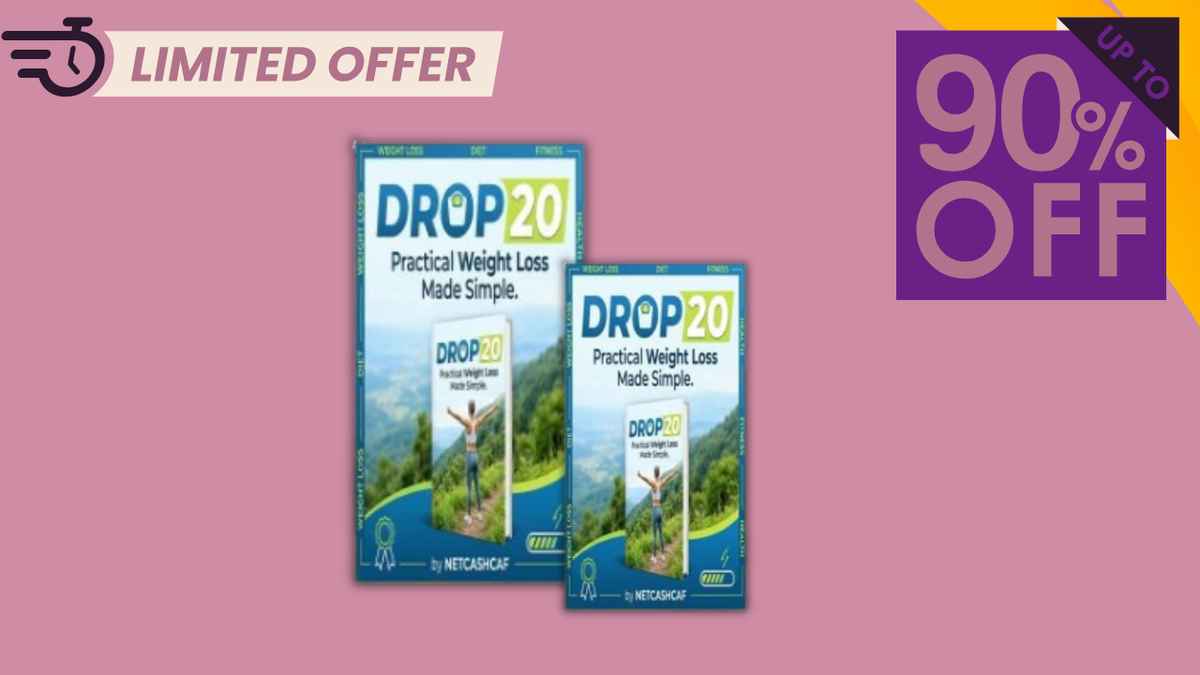
📄 Product Format: Downloadable PDF guide
👤 Creator: Larry, based on his personal experience of changing his habits after reaching 240 pounds
🔐 Refund Policy: 60-day money-back guarantee processed through ClickBank
🟢 Our Say: A practical beginner-friendly blueprint—not a miracle, not medical treatment, and definitely not a PDF that burns calories while sitting unopened in your downloads folder
Let us begin with the reason bad weight-loss advice spreads faster than butter on warm toast.
It sounds exciting.
“Lose everything without changing anything.”
“Eat whatever you like and watch the pounds vanish.”
“One weird trick doctors hate!”
Apparently, every doctor in the USA spends their free time trembling because somebody discovered lemon water again.
The internet rewards drama. Calm explanations do not get clicked nearly as much as wild promises dressed in capital letters. A realistic sentence such as, “Gradual lifestyle changes may support weight management,” cannot compete with, “I LOST 41 POUNDS WHILE SLEEPING!”
One sounds responsible.
The other sounds like a superhero origin story.
And that is how perfectly ordinary products such as DROP 20 get trapped between two loud groups. On one side, people treat every digital weight-loss guide as divine revelation. On the other, people shout “SCAM!” before they have even read the first page.
Both reactions are lazy.
I first looked at the DROP 20 offer expecting the usual circus—mysterious ingredients, microscopic disclaimers, a man in a laboratory coat pointing at a diagram of somebody’s intestines. You know the scene. Instead, the central idea was surprisingly plain: eat with more structure, avoid hidden calorie traps, move more, and repeat the routine long enough for it to matter.
Almost suspiciously sensible.
That does not make DROP 20 perfect. It does not guarantee that every buyer in Texas, Florida, California, Ohio, or anywhere else in the USA will lose exactly 20 pounds. The name is catchy; biology remains stubborn.
So let us tear apart the worst advice surrounding DROP 20 Reviews and Complaints in 2026—and replace it with something that might actually help.
Terrible Advice #1: “Just Download DROP 20 and the Weight Will Start Falling Off”
Yes, certainly.
The moment the PDF enters your phone, your metabolism will hear a heavenly trumpet and begin working overtime.
Perhaps the document will crawl out of the screen at midnight, open your refrigerator, remove the ranch dressing, and prepare tomorrow’s vegetables. Maybe it will lace your walking shoes as well.
A digital guide is information. It is not a tiny personal trainer living inside your laptop.
This sounds painfully obvious, yet people routinely purchase programs and behave as though buying is the same as doing. The dopamine hit of ordering something feels productive. For a brief moment, you are a transformed person. A planner. A champion. Someone who definitely meal-preps on Sundays.
Then Tuesday arrives.
The guide remains unopened, dinner comes through a delivery app, and somehow the product gets blamed.
DROP 20 is built around action. The sales page talks about creating a repeatable meal routine, watching high-calorie condiments, controlling dessert portions, increasing daily movement, and using a starter shopping list.
None of that happens automatically.
The truth that actually works
Use the guide as a framework, not as a lucky charm.
The practical value of DROP 20 appears to be its ability to reduce decision fatigue. Instead of standing in the kitchen at 7:38 p.m., hungry enough to eat the light bulb, and wondering what counts as a sensible dinner, you have a basic structure to follow.
Structure is underrated.
When every meal requires a fresh burst of motivation, sooner or later motivation goes out for cigarettes and never comes back.
A repeatable routine reduces the number of choices you must make. Breakfast is not a philosophical debate. Lunch does not become an emergency. Your grocery trip has a purpose rather than resembling an unsupervised treasure hunt.
That does not sound glamorous, but it is far more useful than motivation speeches screaming through your headphones.
The people most likely to benefit from DROP 20 are not those searching for effortless transformation. They are the ones willing to take a simple plan and actually repeat it.
Again. And again.
Even when it becomes boring.
Especially then.
Terrible Advice #2: “Simple Programs Cannot Work—Real Weight Loss Must Be Complicated”
This belief has cost Americans a spectacular amount of money.
People assume that if a weight-loss plan does not involve seventeen supplements, color-coded food containers, a Bluetooth fork, three laboratory tests, and an app sending aggressive reminders, it cannot possibly be valuable.
Complexity feels scientific.
It may also be completely unnecessary.
I once watched someone spend nearly ten minutes calculating whether a banana was appropriate before a short walk. Ten minutes. The banana had become a legal case. Witnesses were nearly called.
Meanwhile, the basic issue was not the banana. It was an entire week of oversized portions, sugary drinks, and almost no movement.
We sometimes obsess over tiny details because the large, obvious habits are uncomfortable to confront.
DROP 20 goes in the opposite direction. It presents itself as a practical guide using ordinary foods and familiar equipment. Larry describes relying on a microwave, a George Foreman grill, and walking shoes—not a private chef or a cryogenic chamber in Beverly Hills.
That simplicity will disappoint anyone who believes every solution must sound like a NASA mission.
The truth that actually works
Simple does not mean effortless, and it does not mean worthless.
A straightforward plan may be more effective for beginners because it is easier to understand and repeat. People rarely fail because they lacked access to sufficiently complicated instructions. They fail because the plan became exhausting, expensive, socially awkward, or impossible to maintain.
Consider the difference:
One plan demands rare ingredients, precise eating windows, extensive calculations, and a fresh recipe three times daily.
Another says: build meals around filling foods, pay attention to portions, limit hidden calorie sources, plan treats, and move more.
Which one is more likely to survive a busy Wednesday in suburban America?
Exactly.
DROP 20’s “high-volume eating” message is one of its more sensible angles. The example meal shown on the sales page includes a turkey burger, cottage cheese, and vegetables. The idea is not starvation. It is eating a satisfying quantity of relatively filling foods rather than consuming small portions of calorie-dense foods and then feeling betrayed by dinner.
However, simplicity must not be confused with universality.
A standard menu may not suit every allergy, medical condition, cultural preference, medication, or nutritional need. Anyone managing diabetes, cardiovascular disease, kidney problems, an eating disorder, or another health concern should speak with an appropriate licensed professional before making substantial dietary changes.
That sentence is not exciting.
It is still important.
Terrible Advice #3: “Every Positive DROP 20 Review Is Proof That It Works for Everyone”
No.
A positive review proves that somebody had—or claims to have had—a positive experience.
That is all.
It does not create a universal law of human physiology.
This is where affiliate content often wanders into fantasy. You see statements such as:
“Twenty thousand Americans cannot be wrong!”
Possibly. But where did that number come from?
Was it independently verified? Was it taken from an official platform? Was it copied from another article, which copied another article, which copied a website made last Thursday?
Internet statistics sometimes reproduce like rabbits. One person invents a figure, ten websites repeat it, and suddenly it becomes “widely reported.”
The DROP 20 sales material supplied here does not establish an independently verified count of 20,000 reviews. It also does not support claiming that every customer gave it five stars.
So we will not pretend.
That may sound less thrilling, but trust lasts longer than fabricated applause.
The truth that actually works
Evaluate what the product contains, what it costs, what it promises, and what it does not promise.
DROP 20 appears to offer:
- A downloadable PDF guide
- A simple daily menu framework
- Guidance about calorie-heavy condiments
- A portion-controlled dessert strategy
- A movement approach involving steps and everyday activity
- A starter shopping list
- A 60-day ClickBank refund policy
That is the package.
The strongest reason someone may like it is not because anonymous reviewers allegedly formed a marching band in its honor. It is because some beginners genuinely need structure. A concise guide can be more approachable than piecing together contradictory advice from hundreds of videos and social posts.
The strongest reason someone may dislike it is equally straightforward: experienced dieters may find the material basic. Buyers expecting private coaching, customized meal plans, medical supervision, an interactive app, or guaranteed results may feel underwhelmed.
Both reactions are reasonable.
A balanced DROP 20 review should not sound like a wedding speech written by the product’s mother. It should explain the fit.
Terrible Advice #4: “If You Feel Hungry or Miserable, the Diet Must Be Working”
This idea refuses to die.
Some people still believe weight loss must feel like punishment. If they are not staring sadly at three cucumber slices while their family eats dinner, apparently they are not committed enough.
Pain becomes proof.
Misery becomes discipline.
And eventually, an enormous pizza becomes inevitable.
Extreme restriction can create a dramatic start, which is why it attracts attention. Someone cuts nearly everything from their diet, sees the scale move quickly, and declares victory.
Then hunger arrives with a baseball bat.
Energy drops. Irritability climbs. Social events become complicated. One unplanned meal turns into, “Well, I ruined everything, so I may as well continue until Monday.”
Monday—the magical kingdom where every abandoned diet restarts.
DROP 20 markets itself as the opposite of a starvation diet. It highlights full plates, vegetables, protein-based meals, cottage cheese, and controlled dessert portions.
That last part matters.
The dessert strategy reportedly uses small, pre-portioned treats rather than pretending cravings can be permanently deleted from the human operating system.
The truth that actually works
A sustainable plan should make compliance easier, not transform eating into a daily courtroom battle.
High-volume foods—such as many vegetables, fruits, broth-based dishes, and lean protein combinations—can help meals feel more substantial without delivering the same energy density as many highly processed foods.
But there is no single perfect plate for everyone.
The larger principle is useful: create meals that are satisfying enough to repeat. If a plan leaves you constantly ravenous, obsessed with food, or unable to function normally, something needs adjustment.
DROP 20’s condiment warning is also more significant than it sounds.
Condiments can be sneaky little villains.
A salad begins with respectable intentions. Then come the dressing, cheese, croutons, bacon bits, candied nuts, and a cheerful waterfall of sauce. Suddenly the salad has the emotional complexity of a cheeseburger and possibly more calories.
The same thing happens with sandwiches, burgers, wraps, and “healthy” bowls.
The lesson is not that mustard is evil or ketchup must be reported to federal authorities. It is simply that additions count.
This is boring arithmetic.
Boring arithmetic has ruined many exciting delusions.
Terrible Advice #5: “You Need Brutal Gym Workouts or the Program Is Useless”
The fitness internet loves suffering.
Someone flips a tractor tire at sunrise while dramatic music plays. Another person sprints uphill carrying chains. A third individual performs an exercise that looks like escaping from an angry washing machine.
Impressive? Yes.
Necessary for every 60- or 70-year-old beginner? Absolutely not.
Larry’s story is central to DROP 20 because he reportedly began at 71 years old, 5-foot-6, and 240 pounds. His approach emphasized basic movement and a step strategy, along with activities such as bowling.
Bowling.
Not wrestling a bear in a CrossFit warehouse.
This matters because many inactive people avoid starting when exercise is presented as public humiliation with kettlebells. They assume anything less than intense training is meaningless.
So they do nothing.
Nothing is extremely easy to maintain, unfortunately.
The truth that actually works
Appropriate movement is better than imaginary perfect movement.
Walking is accessible for many people, requires little equipment, and can be scaled. Five minutes can become ten. Ten can become twenty. The exact pace and duration depend on fitness, mobility, health, climate, and safety.
In the USA, even basic walking can require planning. Some neighborhoods have excellent sidewalks and parks. Others appear designed exclusively for automobiles and wandering tumbleweeds.
Indoor walking, shopping malls, community centers, treadmills, home routines, bowling, water exercise, or chair-based movement may be more practical for certain people.
The sales page mentions building toward a “500-calorie daily burn,” but calorie-burn estimates vary considerably according to body weight, intensity, duration, fitness, and the measuring device used. Smartwatches are useful for trends, not divine prophecy.
Do not become hypnotized by a precise number.
Movement supports health and energy expenditure, but the best activity plan is one you can perform safely and regularly. People who are older, inactive, in pain, or managing health conditions should obtain appropriate medical guidance before beginning a substantially more demanding routine.
DROP 20 deserves credit for not presenting the gym as mandatory.
Still, it cannot assess your joints, balance, cardiovascular health, or personal limitations through a PDF. Common sense must remain switched on.
Terrible Advice #6: “If You Do Not Lose 20 Pounds Quickly, DROP 20 Is a Scam”
The title creates an obvious expectation.
DROP 20.
Naturally, some buyers may interpret that as a promise: follow the guide and exactly 20 pounds will disappear on schedule.
But the sales page itself includes a results disclaimer. It describes Larry’s experience as personal and states that individual outcomes may differ.
That distinction is crucial.
Weight changes are influenced by food intake, activity, age, body composition, medications, sleep, stress, fluid balance, health conditions, and numerous other variables. Two people can follow similar routines and see different outcomes.
Also, scale weight behaves like a moody house cat.
It may move unexpectedly, refuse to cooperate, or stare at you with contempt despite your best efforts.
Daily fluctuations can reflect sodium, carbohydrates, digestion, hormones, hydration, and other short-term factors. A single weigh-in is not a complete verdict.
The truth that actually works
Judge the process as well as the outcome.
Are meals becoming more structured?
Are portions more deliberate?
Are vegetables and protein showing up more consistently?
Are high-calorie sauces being used with awareness instead of poured like fire hydrants?
Are daily steps increasing?
Is the routine manageable?
Those changes matter even before a dramatic scale result appears.
This does not mean progress should never be measured. It means measurement should be interpreted sensibly.
A realistic assessment might include weight trends over time, waist measurements, energy, movement capacity, adherence, sleep, and how clothing fits. Someone with a medical condition or substantial weight-loss goal may benefit from professional monitoring.
Could DROP 20 help a person lose 20 pounds?
Possibly, when its recommendations create a sustained and appropriate energy deficit.
Does buying it guarantee 20 pounds of weight loss?
No.
Anyone saying otherwise is selling certainty that does not exist.
Terrible Advice #7: “It Is Sold Through ClickBank, So It Must Either Be Perfect or a Scam”
ClickBank inspires strangely dramatic opinions.
Some people treat the platform’s presence as a royal seal of excellence. Others react as though the word itself arrived wearing a fake mustache.
Neither conclusion is sound.
ClickBank acts as the retailer and payment processor for many digital products. Its involvement does not automatically verify every marketing claim, nor does it automatically make a product fraudulent.
The DROP 20 page includes the standard disclosure explaining that ClickBank’s role as retailer does not constitute an endorsement, approval, or review of the product’s claims.
That is worth reading twice.
ClickBank sells the product and handles the transaction. Buyers still need to evaluate the offer.
The truth that actually works
Look for concrete buyer protections and clear product details.
DROP 20 states that customers receive an instant digital download and that purchases are covered by a 60-day money-back guarantee through ClickBank.
That reduces financial risk, but buyers should still:
- Purchase through the official checkout
- Save the confirmation email and receipt
- Review the refund terms
- Contact the appropriate support channel within the stated period if necessary
- Avoid unauthorized websites claiming to offer pirated or “free” copies
A refund policy is not evidence that a product will work for every person. It is a mechanism for resolving dissatisfaction.
Reliable? The delivery and refund arrangement appears clearly described.
Guaranteed to produce weight loss? No.
Legitimate as a digital guide based on the information provided? There is no clear evidence in the supplied material suggesting it is a fake product. Customers are told what format they receive, what topics it covers, what it costs, and how the guarantee works.
That is a much more defensible conclusion than screaming “100% PERFECT!” through a digital megaphone.
What Is Actually Inside DROP 20?
Beneath the marketing, DROP 20 is a relatively straightforward lifestyle guide.
Its major components include:
The Daily Menu Structure
The guide reportedly lays out a repeatable breakfast, lunch, and dinner framework using foods available from typical stores in the USA.
This can help people who become overwhelmed by endless nutritional choices. Instead of inventing three meals every day, users start from a template.
Templates are useful.
They are also not sacred scripture. Portion sizes and food selections may need to be adapted to individual needs.
The “Silent Killer” Condiment Lesson
The dramatic title refers to hidden calories in sauces, dressings, spreads, and similar extras.
“Sneaky calorie accomplice” might be a more accurate phrase than “silent killer,” but marketing enjoys wearing a cape.
Still, the principle is legitimate. A few generous servings can substantially change the calorie content of a meal.
The Dessert Strategy
Rather than demanding complete abstinence, the plan recommends small pre-portioned treats—reportedly around two ounces.
This may help some people avoid the deprivation-binge cycle.
Others may find that certain foods trigger overeating and require a different approach. Personal awareness matters.
The Daily Activity Strategy
The product discusses increasing activity through steps and accessible movement, including bowling in Larry’s own routine.
This is refreshing in a market obsessed with punishing workouts.
The exact claim of burning 500 calories daily should be treated as a target or example, not a guaranteed measurement.
The Starter Shopping List
A shopping list is one of the most immediately useful elements because behavior often falls apart before cooking begins.
When the refrigerator contains nothing but condiments, half an onion, and optimism, healthy choices become difficult.
Preparation wins more battles than willpower.
Who Is DROP 20 Best For?
DROP 20 may suit:
- Beginners overwhelmed by conflicting diet information
- Older adults seeking a less extreme starting point
- People who prefer ordinary foods over specialized products
- Buyers who want a downloadable guide rather than an app
- Individuals who benefit from meal templates and shopping lists
- People willing to walk, move more, and monitor portions
- USA customers looking for a lower-cost alternative to expensive programs
It may be especially appealing to someone who has repeatedly started complicated diets and quit within days.
There is no shame in needing structure.
Even professional pilots use checklists. Somehow nobody calls them weak for not “just remembering everything.”
Who May Not Like DROP 20?
DROP 20 may disappoint:
- Experienced nutrition enthusiasts
- People expecting personalized coaching
- Buyers wanting an interactive mobile app
- Those requiring a medically tailored eating plan
- Anyone expecting supplements, shakes, or delivered meals
- People looking for guaranteed rapid weight loss
- Buyers who refuse to change their current habits
- Anyone who dislikes reading PDF guides
The program is simple by design.
For some people, that is the selling point.
For others, it may feel too basic.
DROP 20 Complaints: What Might Buyers Criticize?
Because a large independently verified complaint database has not been established here, it would be dishonest to manufacture specific customer grievances.
However, based on the product format, likely concerns may include:
“The Information Feels Basic”
Some readers may already understand calories, portions, walking, meal planning, and condiment awareness.
They may wonder why they paid $29.
The value depends on whether the organization and step-by-step presentation help them take action.
Knowing and doing are distant cousins who rarely visit each other.
“It Is Not Personalized”
A PDF cannot adapt itself to allergies, medications, calorie needs, cultural preferences, or medical conditions.
Buyers wanting individualized support should consider a registered dietitian, physician, or another qualified professional.
“I Expected Faster Results”
The product name may encourage ambitious expectations. The disclaimer matters: personal outcomes vary.
A slow result is not automatically proof of fraud, but buyers should reasonably expect the product to match its description.
“I Wanted Videos or an App”
DROP 20 is advertised as a digital guide in PDF format.
Someone who prefers interactive lessons, coaching calls, trackers, or video demonstrations may want a more comprehensive platform.
“It Requires Effort”
Yes.
This complaint accompanies nearly every legitimate behavior-change program ever created.
The guide can organize the route. It cannot walk the route while you remain on the couch watching cooking competitions.
DROP 20 Price: Is $29 Reasonable?
The displayed regular price is $47, while the current offer is $29.
Whether $29 is “worth it” depends on what the buyer needs.
Compared with private coaching, subscription programs, specialty meal plans, or gym memberships, it is inexpensive. Compared with free nutritional information available online, it costs more than zero.
But free information has its own hidden expense: chaos.
Search for one basic weight-loss question and you may receive fifteen mutually hostile answers. Carbohydrates are either essential fuel or an international conspiracy. Breakfast is either the most important meal or a dangerous social invention.
A concise system may save time by gathering basic principles into one routine.
That organizational value—not secret information—is probably the strongest justification for the price.
Is DROP 20 a Scam or Legit in the USA?
Based solely on the supplied sales-page information, DROP 20 appears to be a real digital guide offered through ClickBank, with a stated price, defined contents, instant delivery, support links, disclaimers, and a 60-day refund policy.
Those are positive signs.
There is no factual basis here for claiming that it guarantees results, has tens of thousands of verified five-star reviews, or works identically for every buyer.
There is also no clear evidence in the provided material that customers receive nothing or that the product is inherently fraudulent.
The blunt conclusion:
DROP 20 appears legitimate as a downloadable educational product. Its effectiveness depends heavily on whether the buyer follows the routine and whether that routine suits their individual needs.
Not thrilling.
Accurate, though.
Final Verdict: Should USA Buyers Consider DROP 20 in 2026?
DROP 20 is not revolutionary.
That sentence may sound like criticism, but it is partly a compliment.
The weight-loss market does not desperately need another revolution. It needs more people consistently applying basic, sensible behaviors.
DROP 20 focuses on meal structure, filling foods, portion awareness, condiment calories, planned treats, shopping preparation, and daily movement.
Those principles are not magical.
They are useful.
For a beginner in the USA who feels overwhelmed by complicated diet culture, the guide may offer a clear starting point at a relatively modest price. For an experienced individual who already meal-plans, tracks portions, and exercises regularly, the material may feel familiar.
Do not buy it believing a PDF will remove 20 pounds by force.
Do not reject it merely because its advice is simple.
And please—please—do not trust an article claiming 20,000 glowing reviews unless it shows where those reviews can actually be verified. Numbers wearing makeup are still made-up numbers.
The internet will continue producing nonsense at industrial scale.
Miracle foods.
Forbidden foods.
One-week transformations.
Experts who discovered nutrition approximately twelve minutes ago.
Filter it.
Keep the principles that survive basic logic. Build meals you can maintain. Move in ways you can repeat. Track enough to stay honest without turning dinner into a spreadsheet emergency.
Success is usually not hidden behind a secret door.
It is sitting in plain sight, looking boring, waiting for consistency.
DROP 20 FAQs
1. Is DROP 20 a legitimate weight-loss product?
DROP 20 appears to be a legitimate downloadable PDF guide sold through ClickBank. The supplied sales page clearly identifies the product format, price, contents, disclaimers, support options, and refund policy. That does not guarantee weight-loss results, but there is no clear evidence in the provided information that buyers receive a fake or nonexistent product.
2. Can DROP 20 guarantee that I will lose 20 pounds?
No. The program shares Larry’s personal experience, and the sales page specifically states that individual results may vary. Your outcome will depend on factors such as current eating habits, activity level, adherence, health, medications, sleep, and overall calorie intake. The name is marketing—not a legally binding conversation with your bathroom scale.
3. How quickly should I expect results from DROP 20?
There is no verified or guaranteed timeframe. Some people may notice early changes in routine, appetite awareness, or water weight, while meaningful fat loss generally requires sustained behavior over time. Be suspicious of anyone promising an exact result by an exact date without knowing anything about your body.
4. What do I receive after purchasing DROP 20?
According to the sales page, buyers receive instant access to a downloadable PDF containing a daily menu structure, information about hidden condiment calories, a portion-controlled dessert method, an activity strategy, and a starter shopping list. It is not advertised as private coaching, meal delivery, a supplement, or an interactive fitness app.
5. Is DROP 20 worth the $29 price for USA customers?
It may be worthwhile for beginners who need a simple, organized routine and are tired of sorting through conflicting free advice. It may offer less value to people already experienced with meal planning, portion control, and exercise. The 60-day ClickBank refund policy provides some protection, but buyers should still read the terms and purchase only through the official checkout.
Related Hastags
#DROP20 #DROP20Review #DROP20Reviews2026 #DROP20AppReview2026 #DROP20Bonus #DROP20Product #DROP20Price #DROP20Offers #DROP20Bonuses #DROP20Buy #DROP20Website #DROP20Site #DROP20App #DROP20HonestReviews #DROP20LatestReviews #DROP20UsersExperience #DROP20UsersReview #DROP20Demo #DROP20Tutorial #DROP20PurchaseOnline #DROP20Buyit