“I Hit the Gym and Added Lymph Flow… The Results Shocked Me”? 7 Missing Truths Behind Lymph Flow Reviews and Complaints 2026 USA
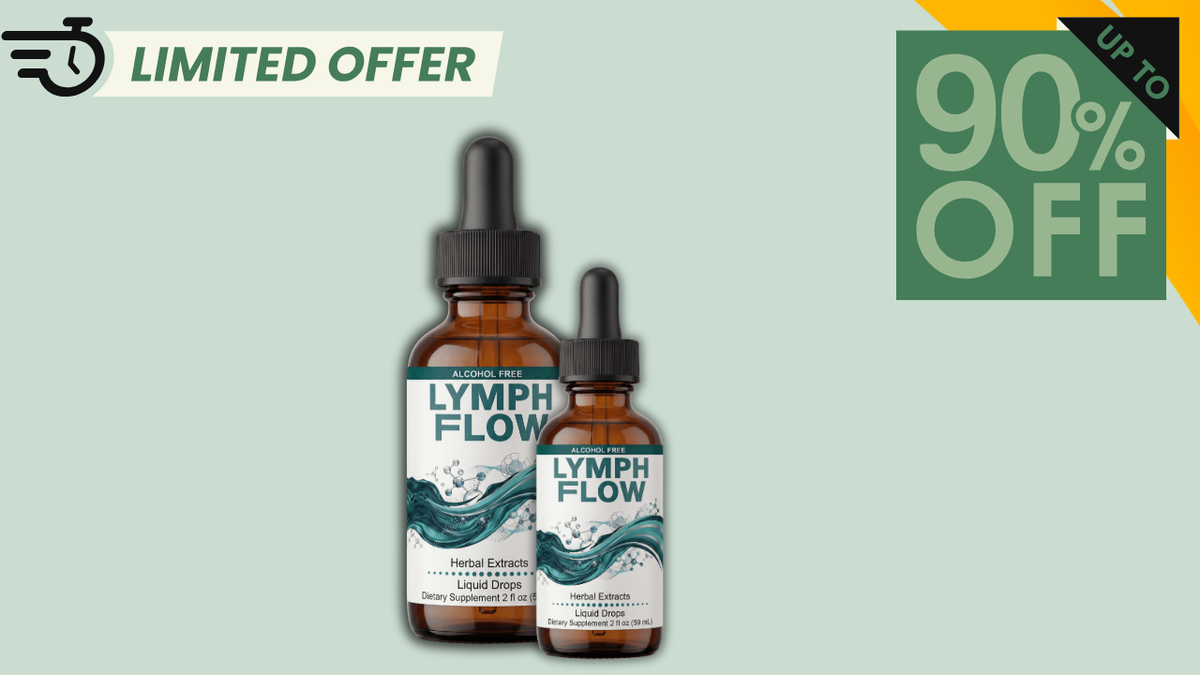
⭐ Brand-Displayed Rating: 4.91/5 — shown on the official website, not independently audited
📝 Reviews: The brand says “thousands of customers,” but it does not display an exact total of 20,000 verified reviews
💵 Listed Regular Price: $129 per bottle
💵 Two-Bottle Deal: $79 per bottle — $158 charged at checkout, plus a small shipping fee
💵 Three-Bottle Deal: $69 per bottle — $207 total with free USA shipping
💵 Current Lowest Price: $49 per bottle when purchasing six bottles — $294 total
⏰ Results Begin: The seller says many customers report changes within two to three weeks; results are not guaranteed
📍 Made In: USA, according to the manufacturer
🧘♀️ Core Focus: Supporting normal lymphatic drainage, circulation and fluid balance
✅ Who It’s For: Medically suitable adults who prefer alcohol-free liquid herbal supplements
🔐 Refund: 60 days, minus shipping costs, according to the official terms
🟢 Our Say: Potentially useful as an optional wellness supplement. Not a miracle, not guaranteed and definitely not a replacement for exercise, nutrition or medical care
The Gym Story Sounds Incredible. Maybe Too Incredible
You have probably seen some version of the headline already.
“I started working out, added three drops to my water and everything changed.”
“My body finally released years of trapped fluid.”
“I woke up looking completely different.”
Sometimes there is a dramatic before-and-after photograph. Sometimes a woman is holding a giant pair of jeans several inches away from her waist, looking as shocked as though the jeans have personally betrayed her.
And sometimes—this is my favorite part—the article claims the supplement “worked” while casually mentioning that the person also began strength training four days a week, walked 10,000 steps, stopped drinking soda, improved sleep and ate more protein.
But yes. Clearly, it was only the tiny brown bottle.
That kind of storytelling spreads because it gives people a clean answer.
People adore clean answers.
A single villain. A single hero. One bottle enters the room, dramatic music begins, the problem disappears.
Reality is messier, more annoying. Like lymphflows opening a gym bag and finding a banana that has been living there since Monday.
Fitness progress comes from several interacting pieces: training, recovery, food intake, hydration, consistency, health status, expectations and plain old time. Adding a supplement may become one small part of that system, but the bottle does not erase the system.
That is the critical gap hidden inside many Lymph Flow reviews and complaints in the USA.
Positive reviewers sometimes credit the supplement for everything.
Negative reviewers sometimes blame it for everything.
Both may be ignoring the same question:
What else changed—or failed to change—during the experiment?
Identifying the missing elements matters because without them, you cannot tell whether a routine is actually working. You just have a story. Perhaps a convincing story, perhaps a story with stars and bold text and someone pointing toward their ankle.
Still a story.
The official Lymph Flow page describes an alcohol-free liquid supplement containing a 600 mg proprietary blend of 13 botanical extracts and bio-active ingredients. It promotes the formula for normal lymphatic drainage and circulation support, while also stating that the product is not intended to diagnose, treat, cure or prevent disease.
That last sentence tends to arrive quietly.
The transformation language walks through the front door wearing fireworks. The legal limitation enters through a side window, whispering.
So let’s turn the lights on.
Below are the most important missing pieces behind the “I hit the gym and added Lymph Flow” narrative—and how filling those gaps can lead to smarter decisions, fewer complaints and far more realistic results.
Missing Element #1: Nobody Separates the Gym Results From the Supplement Results
The Gap
Suppose somebody starts taking Lymph Flow on January 1.
At the same time, they:
- Begin lifting weights three times weekly
- Start walking after dinner
- Drink more water
- Reduce highly processed food
- Sleep seven hours instead of five
- Stop ordering a family-sized pizza for one person every Thursday
Four weeks later, they feel less sluggish and notice that their clothes fit slightly differently.
What caused the improvement?
The supplement?
The exercise?
The reduced calories?
The improved sleep?
The walking?
A combination?
Nobody knows—unless those variables were separated or tracked.
Yet affiliate reviews often charge ahead with the confidence of a detective who has not visited the crime scene.
“Lymph Flow changed everything!”
Maybe.
Or perhaps the newly consistent workout plan did most of the heavy lifting. Literally.
This is not an attack on Lymph Flow. It is an attack on sloppy reasoning.
The official product page contains several positive customer stories describing lighter-feeling legs, reduced puffiness and improved energy after periods ranging from several weeks to several months. However, the same page states that these testimonials reflect individual experiences, may not be typical and do not guarantee similar results for other users.
That qualification is crucial.
A testimonial can tell you what a person believes happened.
It cannot isolate causation.
Why This Gap Matters
When multiple lifestyle changes happen together, attributing every outcome to one supplement creates a false impression of precision.
This affects both believers and skeptics.
The believer may keep buying an expensive lymphflows product that contributed very little.
The skeptic may stop a potentially useful routine because the supplement alone failed to create fireworks.
The actual answer could be sitting between them, drinking lukewarm gym water.
Scientific studies try to control variables for exactly this reason. Researchers compare groups, define outcomes, track adherence and attempt to reduce bias. A personal review generally does none of this.
It is memory plus emotion plus whatever happened that week.
And memory is unreliable. Beautifully unreliable.
After a difficult workout, you may feel enormous and powerful under the changing-room lights. Twenty minutes later, under fluorescent supermarket lighting, you look like someone’s exhausted cousin buying frozen peas.
Same body. Different context.
A Composite Gym Scenario
Consider “Ryan,” a fictional but realistic composite of common fitness behavior.
Ryan lives in Ohio and works from home.
Before January, he averages 3,000 steps per day, sleeps around six hours and trains inconsistently. Then he joins a gym, purchases Lymph Flow and starts preparing most meals at home.
After six weeks, Ryan reports:
- Better afternoon energy
- Less heavy-feeling legs
- A two-inch reduction at the waist
- Improved workout stamina
- Seven pounds of weight loss
Could Lymph Flow have supported how Ryan felt?
Possibly.
Can Ryan honestly claim the supplement caused the waist reduction and weight loss?
No.
He changed his activity, energy expenditure, diet and sleep simultaneously. The supplement is one variable inside a crowded room.
Claiming certainty would be like tasting a stew containing 14 ingredients and announcing that the third carrot created the entire flavor.
The Breakthrough
Track variables instead of writing emotional fan fiction about them.
Before adding Lymph Flow, record a simple baseline for one or two weeks:
- Daily steps
- Training frequency
- Sleep duration
- Water intake
- Sodium-heavy meals
- Morning body weight, when relevant
- Waist or ankle measurements, when appropriate
- Subjective leg heaviness on a 1–10 scale
- Puffiness observations under similar conditions
- Other supplements and medications
Then avoid changing ten things at once.
Perfect control is impossible in ordinary life, but some structure is better than none.
Also, choose outcomes that match what the product actually claims to support. Lymph Flow is not marketed as a muscle-building formula, fat burner or pre-workout. If your squat improves by 40 pounds, thank progressive training before thanking Horse Chestnut.
The stronger version of the gym-plus-supplement strategy is:
Maintain a consistent exercise and nutrition routine, add only medically suitable supplements, and track specific outcomes without pretending correlation equals proof.
Less dramatic?
Yes.
Far more useful.
Missing Element #2: Movement Helps, but the “Your Lymph Has No Pump” Story Is Oversimplified
The Gap
The Lymph Flow sales page says the human body has more than 600 lymph nodes and “zero pump,” then emphasizes that lymph moves when the person moves.
The general message—movement matters—is reasonable.
The anatomical slogan is oversimplified.
The lymphatic system does not have one central pump equivalent to the heart. However, collecting lymphatic lymphflows vessels are not lifeless plumbing pipes lying around waiting for your next treadmill session.
They contain muscle cells capable of spontaneous contractions that help propel lymph. External forces, including skeletal-muscle movement, also contribute. Research has observed changes in lymph flow during muscle contractions and describes both active vessel contractions and outside mechanical forces as parts of lymph transport.
This may sound like a tiny technical correction.
It is not.
Oversimplified biology creates oversimplified solutions.
First the marketing says lymph has “no pump.”
Then social media says sitting for three hours means your body is “full of toxins.”
Then somebody sells a vibrating platform, a tea, a massage brush, a trampoline, red socks and a mysterious metal spoon.
The spoon has no known purpose. It comes in a velvet bag.
Why This Gap Matters
People searching for Lymph Flow reviews in the USA often arrive with genuine discomfort:
Heavy-feeling legs.
Occasional puffiness.
Tight rings in the morning.
Bloating after salty meals.
Fatigue after sitting at a desk.
These experiences are real. But they do not automatically prove the existence of a clinically meaningful lymphatic disorder, and they certainly do not identify the cause.
A sales page can describe patterns.
It cannot diagnose the person reading it.
This distinction becomes especially important when swelling is sudden, painful, one-sided, persistent or associated with other concerning symptoms. Those situations should not be translated into “my lymph is slow” because a marketing paragraph sounded familiar.
Recognition is not diagnosis.
I once read an online symptom checklist and managed, within four minutes, to mentally acquire three rare diseases and a vitamin deficiency. Then I drank water and went outside.
The internet does that.
The Breakthrough
Keep the useful part of the message: regular movement is generally valuable.
Discard the cartoon biology.
A practical gym-centered approach could include:
- Walking throughout the day rather than saving all movement for one workout
- Resistance training appropriate to your ability
- Calf raises during long desk periods
- Brief mobility breaks
- Gradual progression instead of sudden punishment workouts
- Recovery days
- Medical guidance when swelling or discomfort is unexplained
Movement can support circulation and broader health. It also improves fitness through well-established training mechanisms.
But movement does not prove a supplement works.
And the supplement does not make movement optional.
Lymph Flow should be considered, at most, an accessory to a healthy routine—not a substitute for the routine and not a treatment for lymphedema or another diagnosed condition.
That stronger approach produces a breakthrough because it removes magical thinking.
You stop waiting for drops to “activate” a body that only needs more consistent habits, proper evaluation or both.
Missing Element #3: The Headline Price Is Not the Checkout Price
The Gap
“Only $49!”
That number looks friendly.
Tiny, almost.
A casual Friday-night purchase. About the price of dinner for two—well, dinner for two before somebody orders cocktails.
But the current $49 price is a per-bottle figure tied to the six-bottle package.
The actual checkout total is $294.
The two-bottle package costs $158, or $79 per bottle, and includes a small shipping fee. The three-bottle package costs $207, or $69 per bottle, with free USA shipping. The six-bottle package includes free USA shipping and bonus materials, according to the seller.
Nothing is inherently wrong with volume discounts.
Costco has built an empire around people purchasing enough paper towels to survive a minor civilization collapse.
The problem is presentation.
Affiliate articles often repeat the smallest per-bottle number without giving the full purchase total equal prominence. Readers mentally budget $49, click through and find nearly $300 waiting at checkout.
That gap generates complaints.
Not necessarily because the price was hidden completely, but because the framing nudged the buyer toward a smaller mental number.
Why This Gap Matters
Pricing psychology affects judgment.
A person asking “Is Lymph Flow worth $49?” is asking the wrong financial question when the relevant package costs $294.
The useful questions are:
- Am I comfortable spending $294 today?
- Do I need six bottles lymphflows before testing whether I tolerate the formula?
- Does the 60-day refund window adequately protect a six-month purchase?
- Are shipping costs refundable?
- Do I understand how the guarantee is requested?
- Will I remember to act before the deadline?
The official page promotes the six-month supply as the best-value and most popular option. It also uses urgency language about limited stock, previous sellouts and the risks of running out during a supposed transformation period.
That is classic direct-response marketing.
Create a problem.
Increase urgency.
Make the largest package look safest.
Offer a guarantee.
Move the buyer before hesitation returns from lunch.
Again, this does not automatically make the product a scam. It means the buyer must separate sales strategy from health evidence.
The Breakthrough
Calculate the actual economics.
For example:
Two bottles:
$158 total, excluding the stated small shipping charge
30 servings per bottle
Approximately 60 daily servings total
Three bottles:
$207 total
Approximately 90 daily servings
Free USA shipping advertised
Six bottles:
$294 total
Approximately 180 daily servings
Free USA shipping advertised
The official serving is two droppers once daily, and each bottle contains 30 servings.
Now ask whether the larger order fits your risk tolerance.
Buying six bottles provides the lowest unit price, but it also produces the highest upfront exposure. A discount is not savings when the product sits unused because the taste bothers you, the ingredients do not suit you or you simply forget to take it.
There is another subtle gap: a 60-day refund guarantee does not mean six months of risk-free testing.
The clock still runs for 60 days.
The seller says eligible refunds exclude shipping. Full terms should be checked before purchasing.
The stronger purchasing approach is:
Judge the complete transaction, not the brightest number on the page.
That one habit will prevent more supplement regret than 700 glowing emojis.
Missing Element #4: “Natural,” “Made in the USA” and “Reliable” Are Not Clinical Evidence
The Gap
Lymph Flow is presented as:
- Alcohol-free
- Made in the USA
- Formulated with herbal extracts
- Free from artificial colors
- Supported by a 60-day guarantee
- Sold through ClickBank
Those features may increase buyer confidence.
They do not prove effectiveness.
They also do not mean the product was approved by the FDA for safety and efficacy before being marketed.
Under current US law, the FDA generally does not approve dietary supplements for safety and effectiveness before sale. Companies can often introduce supplement products without prior FDA approval, while the agency may later act against products that are unsafe, adulterated or improperly marketed. The FDA advises consumers to research supplements and speak with a healthcare professional before use.
This is one of the biggest misunderstandings in the USA supplement market.
People see:
“Made in an FDA-registered facility.”
Their brain hears:
“FDA tested, examined, approved and personally blessed this bottle.”
That is not what the phrase means.
Registration is not product approval.
Manufacturing location is not proof of results.
A refund guarantee is not a clinical trial.
And “natural” is a marketing category so broad it could include peppermint tea, volcanic ash and a raccoon.
Why This Gap Matters
Lymph Flow contains a proprietary 600 mg blend spread across 13 ingredients. The official page highlights Boswellia, Curcumin, Horse Chestnut, Gotu Kola, Quercetin Phytosome and Ginger, while the label also declares soy as an allergen.
A proprietary blend gives the total weight but may not reveal the individual quantity of each component.
That makes serious evaluation harder.
Research on an individual herb at a specific dose cannot automatically be applied to a multi-ingredient blend containing an unknown amount of that herb.
Imagine a recipe saying:
“Contains 600 grams of flour, salt, chocolate, chili powder, garlic and cinnamon.”
Wonderful.
How much garlic?
One gram or 300?
Rather important if this is supposed to be a birthday cake.
The same logical problem applies to supplement comparisons. Ingredient presence is not equivalent to evidence that the final formula provides a meaningful dose or a clinically demonstrated outcome.
NCCIH notes that scientific evidence varies widely across supplements, that products sold online may differ from products studied in research and that supplements can interact with medications or pose risks in some health conditions.
That is the gap hidden by elegant ingredient graphics.
The ingredient name looks impressive.
The relevant dose, formulation, evidence quality and personal suitability determine far more.
A Real-World Buyer Example
A buyer sees Horse Chestnut on the label and reads that it has been used traditionally for leg circulation.
They conclude:
“Excellent. This product will fix my heavy legs.”
But several steps are missing:
- Is the symptom actually circulation-related?
- How much Horse Chestnut is present?
- What form and standardization are used?
- Does the person take medication?
- Is the product appropriate for their medical history?
- Is there evidence for this exact combination?
- Are the symptoms lymphflows severe enough to need evaluation?
The buyer jumped from ingredient familiarity to treatment certainty.
That jump is where many poor decisions live.
The Breakthrough
Use a three-layer evidence test.
Layer One: Product facts
What does the label actually disclose?
Lymph Flow provides two droppers per serving, 30 servings per bottle, a 600 mg proprietary blend, a liquid base and soy allergen information.
Layer Two: Ingredient evidence
What does research suggest about each ingredient, at what dose, and for which outcome?
Do not assume every study applies to this formula.
Layer Three: Product-specific evidence
Has the exact finished Lymph Flow product been evaluated in well-designed, independent human trials for the claimed outcomes?
The public sales page emphasizes testimonials and traditional ingredient descriptions rather than presenting independent product-specific clinical trials.
That does not prove the formula cannot help.
It means certainty is not justified.
The stronger conclusion sounds like this:
Lymph Flow appears to be a real herbal supplement with clearly presented practical features, but its marketing claims should not be confused with independently proven clinical outcomes.
Reliable commercial offer?
Possibly.
One hundred percent guaranteed result?
No responsible reviewer can say that.
Missing Element #5: People Do Not Account for Food, Hydration, Sleep and Sodium
The Gap
A person takes Lymph Flow at 8 a.m.
They eat restaurant food for lunch, sit for nine hours, drink two coffees and one glass of water, train intensely at 7 p.m., sleep five hours and wake up feeling puffy.
The review appears the next morning:
“Did nothing.”
Maybe it did nothing.
But the routine also resembles a stress test conducted inside an airport.
Fluid balance, body weight, digestion, energy and perceived puffiness can fluctuate for numerous reasons. Meal composition, carbohydrate intake, sodium, menstrual-cycle changes, travel, sleep and training stress can all affect how somebody feels or looks from day to day.
This makes casual mirror-checking a terrible measurement tool.
Your face at 6:30 a.m. after bad sleep is not an objective clinical instrument.
It is barely awake.
Why This Gap Matters
When people expect visible results, they begin searching for them constantly.
Morning mirror.
Bathroom mirror.
Car mirror.
Front camera.
Gym lighting.
Kitchen window reflection while waiting for toast.
This creates noise.
One favorable day becomes “the supplement is working.”
One unfavorable day becomes “total scam.”
The emotional pendulum swings so aggressively it could power a small town.
The gym introduces even more fluctuation. Hard training may temporarily affect soreness, inflammation, glycogen storage and body weight. A salty post-workout meal can alter next-day appearance. None of this necessarily reveals whether Lymph Flow did anything.
The Breakthrough
Standardize your observations.
Compare like with like:
- Same time of day
- Similar lighting
- Similar hydration conditions
- Similar clothing
- Similar training status
- Weekly trends rather than hourly reactions
Track sleep and meal patterns too.
This does not require building a NASA dashboard.
A note on your phone works:
Monday: trained legs, slept 5.5 hours, restaurant dinner, felt heavy Tuesday morning.
Thursday: rest day, slept 8 hours, normal meals, felt lighter.
After several weeks, patterns emerge.
Maybe the supplement appears useful.
Maybe sleep explains more.
Maybe long sitting days are the real trigger.
Maybe nothing meaningful changes.
That last possibility is allowed.
A mature review can say, “I noticed no clear difference.” It does not need to scream “SCAM” as though police helicopters are circling the warehouse.
The breakthrough is not always finding proof that the product worked.
Sometimes it is identifying what actually controls your symptoms.
That information has value.
Missing Element #6: Nobody Defines What “Results” Actually Means
The Gap
The phrase “results shocked me” sounds dramatic.
Results of what?
Weight loss?
Less puffiness?
Better workout recovery?
Improved energy?
More frequent bathroom trips?
A pleasant taste?
The ability to remember taking the drops for seven consecutive days?
Without a defined outcome, almost anything can be interpreted as success.
The official Lymph Flow page says many customers report noticing a difference within two to three weeks, while others need longer. It recommends consistent use and acknowledges that individual outcomes vary.
But “a difference” is vague.
Vagueness is excellent for marketing because the reader fills in the blank using their strongest desire.
The person worried about puffiness imagines a sharper jawline.
The gym-goer imagines faster recovery.
The person trying to lose lymphflows weight imagines the scale dropping.
The tired office worker imagines limitless energy.
One phrase, four different products inside four different minds.
Why This Gap Matters
Undefined goals cannot be evaluated fairly.
Suppose someone loses six pounds during a month of training while taking Lymph Flow.
If they expected fat loss, they may praise the drops.
But Lymph Flow is not sold as a proven fat-loss product. The weight change might reflect calorie balance, water fluctuation or both.
Suppose someone notices no change on the scale but says their legs feel less heavy after work.
Is that failure?
Not if leg comfort was the intended outcome.
The buyer must define the target before beginning—not invent it afterward.
The Breakthrough
Choose one or two realistic metrics.
For example:
Subjective metric:
End-of-day leg heaviness rated from 1–10.
Practical metric:
Whether rings or shoes feel consistently different at the same time of day.
Adherence metric:
Number of daily servings taken.
Tolerance metric:
Any digestive discomfort, headache, rash or other unexpected reaction.
Financial metric:
Whether the perceived benefit justifies the monthly cost.
That final one is neglected.
A product can create a small positive effect and still fail the value test.
Suppose you believe the drops improve your subjective leg comfort from 6/10 to 5/10.
Is that worth $49–$79 per month?
Only you can decide.
Success is not merely “something happened.”
Success means the outcome matters enough to justify the cost, effort and risk.
Missing Element #7: Safety Is Treated Like Fine Print Instead of Part of the Strategy
The Gap
The fitness supplement world has an odd attitude toward safety.
People will research the optimal bench-press grip angle for three hours, then swallow a 13-ingredient proprietary blend without reading the label because the website used leaves in the background.
Lymph Flow is herbal.
That does not mean universally harmless.
NCCIH warns that botanical supplements may interact with prescription drugs, over-the-counter medicines and other supplements. It also notes that research on herb-drug interactions is often limited or inconclusive, which is not reassurance—it means uncertainty remains.
The product’s own website advises consulting a healthcare professional before use, particularly for people who are pregnant, nursing, using medication or managing a medical condition. It also identifies soy as an allergen.
Those details belong near the decision.
Not buried after the order button.
Why This Gap Matters
Gym users often stack products.
Protein powder.
Creatine.
Pre-workout.
Electrolytes.
Multivitamins.
Fat burners.
Sleep formulas.
Herbal drops.
Maybe a powdered mushroom product because a podcast host sounded very confident.
Each item may look harmless in isolation. The total combination is what matters.
A healthcare professional cannot assess interactions accurately when the patient says, “I take some vitamins,” while forgetting seven containers sitting above the refrigerator.
Also, symptoms attributed to “slow lymph” may have another explanation. Masking or delaying evaluation because a supplement review promised detoxification can create real risk.
The Breakthrough
Create a complete supplement list.
Include:
- Product name
- Full ingredient list
- Serving size
- Frequency
- Prescription medication
- Over-the-counter medicines
- Energy drinks and concentrated stimulants
- Known allergies
- Relevant medical conditions
Show that list to a pharmacist or qualified healthcare professional.
The FDA advises consumers to consult healthcare professionals before purchasing or using dietary supplements because supplement use can involve health risks.
Stop using a product and seek appropriate advice when unexpected symptoms occur.
And no, “push through it” is not always toughness.
Sometimes it is merely poor judgment wearing gym clothes.
Lymph Flow Reviews and Complaints 2026 USA: What the Evidence Actually Supports
After stripping away the heroic testimonials, angry one-star reactions and “100% legit” declarations, what remains?
Lymph Flow appears to be a functioning commercial supplement offer.
The official website provides:
- A supplement facts label
- A stated 600 mg proprietary blend
- 13 botanical and bio-active ingredients
- Two-dropper serving instructions
- 30 servings per bottle
- A soy allergen disclosure
- USA manufacturing claims
- Multiple pricing packages
- ClickBank order processing
- A 60-day refund policy
- Seller-displayed customer reviews
- Standard FDA and medical disclaimers
Those details suggest it is not simply a nonexistent product page collecting money for imaginary bottles.
But “not an obvious fake product” does not equal “clinically proven.”
And “legitimate seller” does not lymphflows equal “guaranteed individual success.”
There are several different questions hiding inside “Is Lymph Flow legit?”
Is It a Real Product?
The available sales information indicates yes.
Does the Website Disclose Basic Product Information?
Yes, including serving size, formula weight, ingredients, allergen information and package pricing.
Is Every Marketing Claim Independently Proven?
The visible sales page relies heavily on testimonials, traditional ingredient descriptions and seller-reported outcomes. It does not establish that every claimed benefit will occur for every buyer.
Is It a Scam?
Based solely on the visible sales structure, calling it an outright scam would be too strong.
Is It “100% Legit With Guaranteed Results”?
That claim would also be too strong.
The more accurate verdict sits in the middle, which is where internet headlines go to die:
Lymph Flow appears to be a genuine herbal supplement with a stated refund process and clear bundle options. Its actual usefulness will vary, and buyers should not treat seller testimonials as medical proof.
Lymph Flow Pros and Cons for USA Gym-Goers
Pros
- Alcohol-free liquid format
- Easy to mix into water or juice
- No capsules to swallow
- Once-daily serving
- 13-ingredient botanical blend
- Made-in-USA claim
- Published supplement label
- Soy allergen disclosed
- Multiple bundle choices
- Free USA shipping on larger packages
- 60-day refund period
- May fit an existing wellness routine
Cons
- No guarantee of noticeable results
- No clear independent clinical trial of the finished product shown on the sales page
- Proprietary blend hides individual ingredient quantities
- Lowest price requires spending $294
- Seller rating is not independently audited evidence
- Contains soy
- May not suit people taking certain medications
- Not a fat burner or muscle-building product
- Does not replace training, nutrition or medical treatment
- Urgency language may pressure people into purchasing more than needed
Who May Find Lymph Flow Worth Considering?
Lymph Flow may appeal to adults in the USA who:
- Prefer liquid supplements
- Dislike capsules
- Want an alcohol-free botanical formula
- Already follow a reasonably consistent fitness routine
- Understand that outcomes vary
- Have reviewed the full ingredient label
- Have checked medication and health considerations
- Can afford the package without financial strain
- Are prepared to track results objectively
- Do not expect medical treatment from a supplement
Who Should Slow Down Before Buying?
Pause before ordering when you:
- Are pregnant or breastfeeding
- Take prescription medication
- Use several other supplements
- Have a soy allergy
- Have unexplained swelling
- Are preparing for surgery
- Have a diagnosed medical condition
- Expect rapid weight loss
- Expect permanent “detoxification”
- Believe six bottles guarantee a transformation
- Feel pressured by countdowns or scarcity messages
- Cannot comfortably afford the complete checkout total
NCCIH notes that many dietary supplements have not been tested in pregnant women or nursing mothers and may pose risks in certain medical situations.
Final Verdict: The Missing Pieces Matter More Than the Hype
Here is the uncomfortable conclusion.
The gym-plus-Lymph-Flow routine might feel useful for some people.
It might feel pointless to others.
And in many cases, nobody will know precisely how much the supplement contributed because the person changed half their life at the same time.
That is not a sexy ending.
No thunder.
No dropped measuring tape.
No shocked spouse walking into the kitchen and yelling, “What happened to your lymph?!”
Just reality.
Lymph Flow has practical advantages. The liquid format is convenient. The formula is alcohol-free. The brand provides a visible label, multiple package options and a refund process. For medically suitable adults who understand the limitations, it may be a reasonable supplement to test alongside—not instead of—a disciplined wellness routine.
But the product should not receive credit for every benefit created by strength training, increased steps, improved nutrition, reduced sodium or better sleep.
Nor should it be called a scam merely because it failed to overpower an inconsistent lifestyle.
The better strategy is brutally simple:
Define what you expect.
Record your baseline.
Keep your gym routine consistent.
Track food, sleep and hydration.
Read the complete label.
Check interactions.
Calculate the real checkout total.
Evaluate trends instead of chasing one dramatic morning.
Then decide whether the benefit is meaningful enough to continue.
Fill those gaps and something interesting happens.
You stop being controlled by reviews.
You begin using them as evidence—limited evidence, imperfect evidence—but one piece of a larger decision.
That is the real breakthrough.
Not finding a miracle bottle.
Finding a process that prevents you from being fooled by either hype or cynicism.
In 2026 USA, wellness marketing is louder than ever. Every product arrives with glowing stars, urgency timers, transformation lymphflows language and somebody claiming their jawline appeared on day eleven.
Let them shout.
You do not need to shout back.
Ask better questions. Track real outcomes. Protect your health and your wallet.
Because success rarely comes from the missing supplement.
It comes from identifying the missing pieces in your approach—and finally having the nerve to fix them.
Frequently Asked Questions
1. Is Lymph Flow a Scam or a Legitimate Supplement?
Lymph Flow appears to be a real commercial supplement with an official label, bundle pricing, ClickBank order processing and a stated 60-day refund policy. That makes “obvious fake product” an unfair description.
However, legitimate does not mean guaranteed.
The seller-displayed 4.91/5 rating and testimonials do not prove every buyer will experience the same outcome. Treat Lymph Flow as an optional herbal supplement, not a scientifically guaranteed transformation.
2. Can Lymph Flow Improve Gym Results?
Lymph Flow is not marketed as a muscle-building, fat-burning or performance-enhancing supplement.
The brand positions it around lymphatic drainage, circulation and fluid-balance support. Any improvement in strength, muscle growth, endurance or fat loss should primarily be attributed to training, nutrition, recovery and overall consistency unless strong evidence shows otherwise.
Your dumbbells do not care what is in the dropper.
They respond to progressive training.
3. How Long Does Lymph Flow Take to Work?
The seller says many customers report a difference within two to three weeks, while others take longer. It also states that individual results vary.
That is a seller-reported expectation, not a guaranteed biological deadline.
Define what “working” means before starting and track the same outcome for several weeks. Otherwise, every random fluctuation will look like either a miracle or a disaster.
4. Is Lymph Flow Really Available for $49?
The $49 figure is the per-bottle price for the six-bottle package.
The total charge is $294.
The three-bottle package is listed at $207, while the two-bottle package is $158 plus a small shipping fee. Prices can change, so confirm the full total at checkout.
Tiny price in the headline.
Large price on the card statement.
Always read both.
5. Can I Take Lymph Flow With Other Supplements or Medication?
Do not assume that combining products is safe simply because each one is herbal or sold without a prescription.
Botanical ingredients can interact with medicines and other supplements, and evidence about many interactions remains incomplete. Lymph Flow’s seller recommends speaking with a healthcare professional, particularly when using medication, managing a health condition, pregnant or nursing.
Bring the full label and a list of everything you take.
Yes, everything.
Related Hastags
#LymphFlow #LymphFlowReview #LymphFlowReviews2026 #LymphFlowAppReview2026 #LymphFlowBonus #LymphFlowProduct #LymphFlowPrice #LymphFlowOffers #LymphFlowBonuses #LymphFlowBuy #LymphFlowWebsite #LymphFlowSite #LymphFlowApp #LymphFlowHonestReviews #LymphFlowLatestReviews #LymphFlowUsersExperience #LymphFlowUsersReview #LymphFlowDemo #LymphFlowTutorial #LymphFlowPurchaseOnline #LymphFlowBuyit