“I’m 18 and Tried Lymph Flow for the First Time…” 5 Overhyped Myths, 11 Buyer Truths and the 2026 USA Result Nobody Expected
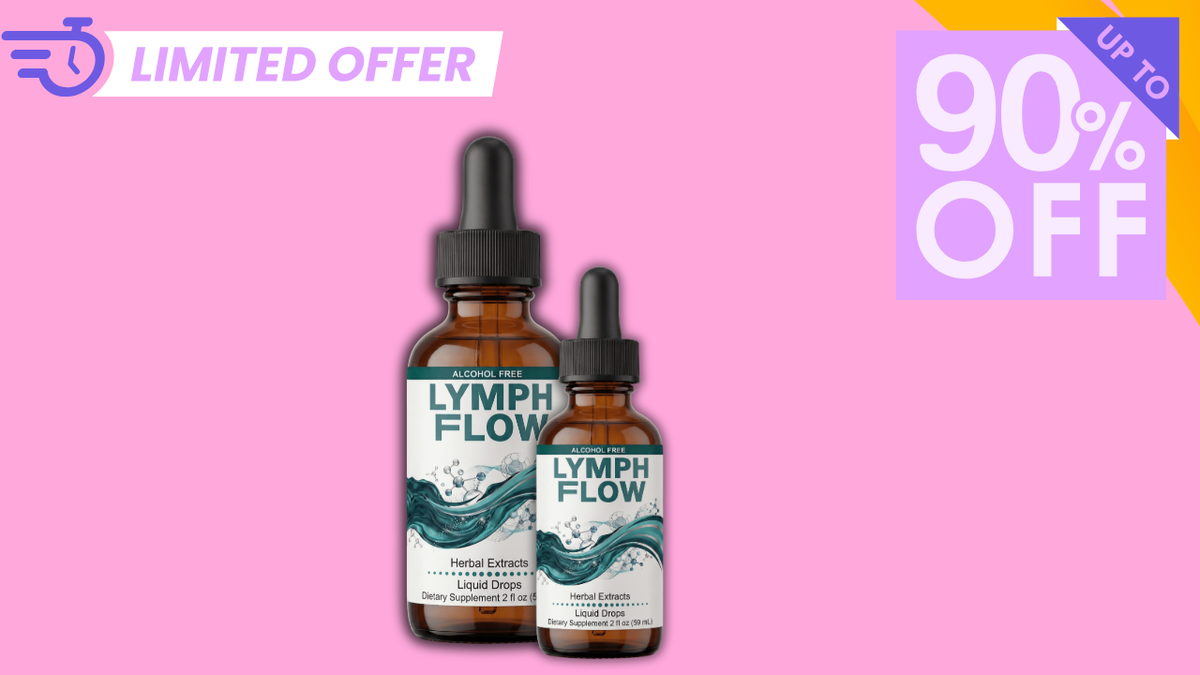
⭐ Editorial Rating: 4.1/5 ⭐⭐⭐⭐☆
📝 Verified Review Count: No independently confirmed total was provided
💵 Original Price: Verify on the live official checkout page
💵 Usual Price: May vary according to package and promotion
💵 Current Deal: Check the final amount, shipping and quantity before paying
⏰ Results Begin: No universal or scientifically guaranteed timeline
📍 Made In: USA, according to the supplied sales-page information
🧘♀️ Core Focus: Supporting normal lymphatic drainage, circulation and fluid balance
✅ Who It’s For: Adults seeking an alcohol-free liquid botanical supplement
🔐 Refund: Advertised 60-day money-back guarantee; complete terms should be checked
🟢 Our Say? Interesting and potentially convenient. Not an overnight miracle, not proven for everyone—and no, stars alone do not settle the argument.
There is something almost hypnotic about the headline:
“I’m 18 and tried Lymph Flow for the first time… this happened.”
It creates an itch in the brain.
What happened?
Did puffiness disappear? Did energy suddenly return? Did the person wake up feeling lighter, brighter lymph-flows and somehow surrounded by birds singing outside the bedroom window?
The wording is intentionally unfinished. A small open door. You click because the mind hates an incomplete story.
And supplement marketers understand that psychology very, very well.
That does not mean Lymph Flow is automatically bad. It also does not mean every person promoting it is dishonest. What it means is that the wellness industry has become extremely talented at blending product facts with emotional theatre until the border between them looks like fog on a bathroom mirror.
You can see the bottle.
But everything around it is blurry.
People searching for Lymph Flow Reviews and Complaints 2026 USA are usually not searching because they enjoy reading Supplement Facts labels for entertainment. They have probably encountered the product name through an advertisement, social post, affiliate page or online recommendation.
Now they want answers.
Is Lymph Flow reliable?
Does it actually contain useful ingredients?
Is it safe for an 18-year-old adult?
Are the reviews genuine?
Is the product legitimate—or merely another attractive bottle dressed in leafy graphics and urgent promises?
Fair questions. Necessary ones.
According to the sales-page material provided, Lymph Flow is an alcohol-free liquid herbal supplement manufactured in the USA. It contains a 600 mg proprietary blend made from 13 botanical extracts and bio-active ingredients. Highlighted components include Boswellia, Gotu Kola, Horse Chestnut and Curcumin.
It is promoted for people dealing with ordinary concerns such as puffiness, heavy-feeling legs, stubborn bloating, sluggish circulation and low-energy afternoons.
That sounds neat.
Maybe too neat.
Because those symptoms can arise for many different reasons, and the phrase “supports lymphatic function” is not the same as diagnosing the cause of someone’s discomfort. A general wellness product cannot tell an 18-year-old why one ankle appears swollen after a flight, why fatigue keeps returning or whether recurring bloating has anything to do with lymphatic function at all.
That is where grounded thinking enters the room—late, carrying coffee, slightly irritated by all the hype.
The following five myths are not merely innocent misunderstandings. They shape purchases, expectations and sometimes lymph-flows health decisions. They can cause buyers to quit too soon, spend too much or treat a serious symptom as a trendy wellness inconvenience.
Let’s pull them apart.
Slowly. Properly.
Myth #1: “If I’m Only 18, My Body Will Respond Faster and I’ll See Dramatic Results in Days”
This belief sounds logical at first.
Young body. Faster metabolism. Better recovery. Therefore, a botanical supplement should act almost instantly.
Except biology is not a delivery app.
Age alone does not determine whether a person will notice a particular effect from a multi-ingredient herbal product. An 18-year-old may sleep four hours a night, consume heavily processed food, spend ten hours sitting, barely drink water or have a medical issue that has never been identified.
Another 18-year-old may walk daily, sleep consistently and have no meaningful puffiness or circulation concern in the first place.
Same age.
Different universe.
Why this myth keeps spreading
Fast-result language performs well online.
“After three days” attracts more attention than “individual results may vary over an uncertain period.”
One sounds like an adventure.
The other sounds like something written beside a barcode.
Marketers also know young buyers are familiar with immediate digital feedback. Tap a button, get a notification. Upload a video, see views. Place an order, watch the delivery vehicle move across a map.
The body does not offer that kind of dashboard.
You cannot open an app and see:
Lymphatic support: 37% complete.
Would be convenient though.
Instead, people interpret ordinary daily fluctuations as evidence. One morning the face looks less puffy. Great—the drops worked. Two days later, the face looks puffy again. Terrible—the drops stopped working.
Meanwhile, sodium intake, menstrual changes, sleep, temperature and hydration are standing quietly in the corner pretending they had nothing to do with it.
Why the belief is misleading
The sales-page wording describes Lymph Flow as a product that supports the body’s natural lymphatic drainage and circulation.
Support does not mean:
- Guaranteed visible transformation
- Immediate weight reduction
- Treatment of diagnosed swelling
- Removal of “toxins” on command
- The same result for every user
- A substitute for medical evaluation
The body’s lymphatic system is a genuine network of vessels, tissues, nodes and organs involved in fluid balance and immune function. But a person cannot reliably conclude that every instance of bloating, fatigue or puffiness is caused by “sluggish lymph.”
That explanation is lymph-flows appealing because it is simple.
Reality often refuses to be simple.
What happens when people follow this myth
First, they create a private deadline.
Day three.
Day seven.
Day fourteen.
The mirror becomes a courtroom. Every sock mark is evidence, every normal stomach curve a disappointment. That kind of hyper-observation can make a person feel worse, not better.
Second, some users increase the amount.
They think, “Two droppers did not create a dramatic result, so maybe four will.”
No.
The appropriate serving is the serving given on the actual product label—not an amount invented during an impatient Tuesday evening.
Third, rapid-result expectations can delay proper care. Sudden, painful, one-sided or persistent swelling should not be treated as a casual supplement experiment. Nor should swelling accompanied by redness, warmth, breathing difficulty, chest discomfort or fever.
A bottle cannot evaluate those symptoms.
The grounded truth
An 18-year-old should begin with one question:
What exact outcome am I trying to achieve?
Not “I want to detox.”
That word is often so vague it floats away when examined.
A more useful goal might be:
- I want to observe whether ordinary evening puffiness changes.
- I want to know whether the liquid routine is convenient.
- I want to see whether my heavy-leg sensation after sitting feels different.
- I want to evaluate whether any benefit is meaningful enough to justify the price.
Track the experience once or twice a week, not every fifteen minutes.
Keep other major lifestyle changes limited during the evaluation. Starting a supplement, joining a gym, changing the diet, eliminating caffeine and drinking three extra liters of water on the same day creates chaos. You may feel completely different, but you will not know why.
And accept the least glamorous answer:
Some people may notice something.
Others may not.
A product can be real while its effects remain subtle, variable or absent for certain users. That is not a catchy TikTok ending. It is how individual response works.
Myth #2: “Thirteen Herbal Ingredients Means Thirteen Powerful Benefits”
Thirteen botanicals.
It sounds abundant.
Almost royal.
The number creates an impression that every drop contains an entire forest working together in perfect harmony. Boswellia marches in first, Curcumin follows wearing bright gold, Gotu Kola enters quietly, and Horse Chestnut presumably does something heroic near the back.
Nice picture.
But ingredient counting is not evidence.
What the label information actually tells us
According to the supplied sales-page content, Lymph Flow delivers a 600 mg proprietary blend per two-dropper serving.
It also highlights several recognizable botanicals:
- Boswellia
- Gotu Kola
- Horse Chestnut
- Curcumin
The full formula reportedly contains 13 extracts and bio-active ingredients.
The unresolved issue is individual quantity.
A proprietary blend commonly reveals the total combined amount while not showing how much of each ingredient is present. Therefore, the 600 mg figure does not automatically tell a buyer:
- The milligrams of Curcumin
- The quantity of Horse Chestnut
- Which ingredient dominates the blend
- Whether extracts are standardized
- What plant parts were used
- Whether the amounts resemble those studied in research
- Whether certain components appear only in very small quantities
This does not prove that the formula is weak.
It means outsiders cannot fully evaluate ingredient-level dosing from the total number alone.
Why this myth persists
People use ingredient familiarity as a shortcut.
They have heard good things about turmeric, so a product containing Curcumin feels credible. They have seen Horse Chestnut discussed in circulation-related contexts, so the entire product begins to inherit that reputation.
But evidence concerning an individual ingredient cannot automatically be transferred to every completed formula containing that ingredient.
The extract may differ.
The dose may differ.
The ingredient combination may differ.
The people using it may differ.
Even the manufacturing method can change the finished product.
The National Center for lymph-flows Complementary and Integrative Health advises consumers that supplements sold commercially may differ from products examined in scientific research, and that evidence varies considerably between ingredients and formulations.
That distinction is not exciting enough for the front of a bottle.
Still matters.
A practical example
Imagine two fruit drinks.
The first says:
Contains 13 premium fruits.
The second tells you:
40% orange, 30% mango, 20% pineapple and 10% other ingredients.
The first might be delicious.
But perhaps twelve of its fruits appear in quantities resembling polite introductions.
“Hello, blueberry.”
Goodbye, blueberry.
Likewise, a long supplement list can be impressive, useful or primarily decorative. Without precise amounts and extract details, consumers cannot confidently separate those possibilities.
The consequences of believing the myth
Buyers may choose the formula based on ingredient quantity rather than ingredient transparency.
They may also repeat exaggerated statements:
- “Curcumin removes lymph blockage.”
- “Horse Chestnut cures swelling.”
- “Thirteen herbs clean the entire lymphatic system.”
Those are not responsible conclusions from the product information supplied.
A dietary supplement can make limited claims about supporting normal bodily structure or function, but it is not automatically a drug or proven treatment.
The FDA states that dietary supplements are not approved for safety and effectiveness before being marketed in the United States. Companies are responsible for complying with applicable safety and labeling requirements, but the existence of a product on the market is not equivalent to FDA approval.
Yes, even in 2026.
A bottle saying “made in the USA” does not transform every marketing sentence into a verified scientific conclusion.
The reality-based truth
The number of ingredients is only one characteristic.
A more meaningful evaluation considers:
- Exact ingredient quantities
- Extract standardization
- Complete allergen information
- Other inactive ingredients
- Quality-control procedures
- Independent identity and purity testing
- Batch consistency
- Evidence related to the completed formulation
Lymph Flow may contain a sensible collection of botanicals for its intended wellness positioning. That is possible.
But the responsible description is:
A multi-ingredient herbal support formula.
Not:
Thirteen guaranteed benefits in a dropper.
The difference may feel irritatingly cautious. Caution is sometimes the only adult in the room.
Myth #3: “A 5-Star Rating and Thousands of Glowing Reviews Mean It Is 100% Legit”
People trust stars.
Five yellow shapes can perform a tiny miracle inside the brain. Suddenly the product feels tested, accepted and surrounded by happy customers who apparently never experienced shipping delays or disliked the taste.
A large review number makes the effect stronger.
“Over 20,000 glowing reviews.”
Powerful statement.
But where are they?
How were purchases verified?
What percentage gave one, two, three or four stars?
Were customers offered discounts or incentives?
Were negative reviews removed?
If those questions cannot be answered, the number is not necessarily false—but it is not independently established either.
What we can responsibly say about Lymph Flow reviews
The supplied sales-page material shows five-star “Verified Purchase” sections.
It does not provide, within the content supplied here:
- An independently confirmed total review count
- A named third-party review platform
- A complete rating distribution
- Detailed complaint records
- A transparent verification method
- Dates and usage periods for each reviewer
Therefore, claiming “over 20,000 verified reviews” as an established fact would be irresponsible unless a checkable source is provided.
Same with a perfect 5/5 rating.
An editorial rating can reflect a reviewer’s assessment. A customer rating should represent actual, countable customer feedback.
Do not mix the two because the stars look similar.
Why review hype works so well
Social proof reduces uncertainty.
A crowded restaurant feels safer than an empty one. A product with thousands of reviews seems less risky than one with twenty-seven.
This is not stupidity.
It is efficient human behavior. We cannot personally investigate everything we buy, so we look at the experiences of others.
The problem begins when marketers manufacture the crowd.
Fake reviews, copied testimonials, artificial ratings and vague “verified customer” badges can imitate genuine social proof. The FTC’s Consumer Reviews and Testimonials Rule took effect on October 21, 2024, addressing deceptive conduct involving fake or false consumer reviews. Knowing violations can expose businesses to civil penalties.
That update matters for affiliate publishers in the USA.
A fictional testimonial is not made lymph-flows safe by adding an attractive headline.
“I’m 18 and tried Lymph Flow” should only be presented as a personal account when the writer is actually 18 and genuinely used the product.
Otherwise, frame it as a search topic, hypothetical scenario or investigation—exactly as this article does.
The consequences of trusting star counts blindly
A buyer begins expecting the most dramatic testimonial to become normal.
Someone says their rings felt loose in four days. Now four days becomes the benchmark.
Someone claims their stomach looked completely different. Now the product quietly becomes a weight-loss solution, even though that may not be its stated purpose.
Someone describes “toxins leaving the body.” The phrase spreads because it sounds vivid, despite offering no measurable explanation.
Testimonials are persuasive partly because they skip complexity.
No dosage analysis.
No confounding factors.
No boring conversation about hydration or medication.
Just a beginning, a product and a happy ending.
Reality contains more middle chapters.
How to read reviews without becoming cynical
Do not ignore testimonials completely.
Use them differently.
Look for details such as:
- How long the reviewer used the product
- Whether other lifestyle changes occurred
- Whether the review discusses taste and convenience
- Whether shipping and support are mentioned
- Whether the outcome is realistic
- Whether negative and neutral experiences appear
- Whether the review is hosted independently
- Whether affiliate compensation is disclosed
Read three-star feedback first.
It often sounds like this:
“I found it easy to take and may have noticed a small difference, but it was not dramatic.”
That sentence is less profitable than “Life-changing miracle!”
It may be far more useful.
The absence of complaints is not always comforting either. Real products generate mixed experiences because real humans are inconsistent, impatient, enthusiastic, distracted and occasionally furious about cardboard packaging.
A spotless review wall can feel like a hotel lobby where every plant is plastic.
Myth #4: “Natural and Alcohol-Free Means Completely Safe for Every 18-Year-Old”
Natural.
Gentle.
Clean.
Three words that make people lower their guard.
Lymph Flow is described as alcohol-free, which may be a genuine advantage for adults who want to avoid alcohol-based tinctures. But alcohol-free does not mean interaction-free, allergy-free or universally appropriate.
The product contains multiple active botanical ingredients.
That is the purpose of the formula.
It is also why the complete label matters.
Why the myth is dangerous
Many people mentally separate supplements from medication.
Prescription tablet: serious.
Herbal drop: harmless.
But biologically active compounds do not care which aisle they came from.
NCCIH advises people to tell healthcare providers about every supplement and medication they use because combinations can produce harmful interactions. Interactions may involve prescription drugs, over-the-counter products and dietary supplements.
An 18-year-old may use:
- Prescription acne treatment
- Hormonal contraception
- Allergy medicine
- Medication for anxiety or attention disorders
- Pain relievers
- Sports supplements
- Other herbal products
A new multi-herb formula becomes one more variable.
Often it is fine.
Sometimes it isn’t.
Guessing is not a strategy.
“But it’s made in the USA…”
Made in the USA can be an appealing manufacturing statement.
It does not mean the FDA personally evaluated and approved the completed product before sale.
The FDA reiterated in May 2026 that dietary supplements are not approved by the agency for safety and effectiveness before marketing. Many can enter the market without prior FDA notification.
“FDA-registered facility,” when such wording is used, is also not the same as “FDA-approved supplement.”
That little language switch is one of the supplement industry’s favorite optical illusions.
Registered sounds like approved.
It is not.
The sensory trap
Herbal formulas often smell earthy, spicy or slightly medicinal. The liquid may appear brownish-gold. The dropper, amber bottle and plant imagery create a feeling of ancient wisdom meeting modern wellness.
It can feel safe before a single label line is read.
Packaging speaks emotionally.
Ingredients speak biologically.
Listen to both, but trust the second one more.
Who should be especially careful
An 18-year-old—or any adult—should seek professional advice before use when they:
- Take prescription medicines
- Use multiple supplements
- Have allergies or sensitivities
- Have a bleeding or clotting disorder
- Are preparing for surgery
- Are pregnant, breastfeeding or trying to become pregnant
- Have a diagnosed heart, liver, kidney, vascular or lymphatic condition
- Have persistent or unexplained swelling
This is not fear marketing.
It is basic risk management.
The grounded truth
“Natural” describes where an ingredient comes from.
It does not guarantee that every dose, combination and user circumstance is harmless.
Water is natural.
So is poison ivy.
One hydrates you. The other can ruin an otherwise pleasant afternoon.
Respecting botanicals does not require being afraid of them. It requires reading the label, checking interactions lymph-flows and refusing the lazy assumption that plants cannot create unwanted effects.
That is mature wellness.
Even at 18.
Especially at 18, perhaps, when online confidence can be loud and medical history still feels like something older people have.
Myth #5: “Lymph Flow Can Fix Puffiness, Heavy Legs and Bloating Without Any Lifestyle Changes”
Here comes the myth everybody secretly wants to believe.
Buy product.
Take product.
Change nothing.
Receive results.
No walking. No hydration effort. No sleep adjustments. No examination of diet or sitting habits. Just a dropper doing heroic work while the rest of the routine remains exactly the same.
Beautiful.
Also deeply unrealistic.
Why this narrative sells
Lifestyle advice is repetitive.
“Move regularly.”
“Sleep properly.”
“Eat a balanced diet.”
People have heard it so many times that the words begin to sound like elevator music.
A supplement offer is more exciting. New bottle, new hope, maybe a discount timer flashing in the corner.
There is also emotional relief in outsourcing the problem. If the solution is inside a bottle, then the person does not need to examine their routine.
Except the body does not negotiate with checkout pages.
Why daily behavior still matters
Normal fluid balance and circulation are influenced by movement, hydration, nutrition, sleep and underlying health.
Someone who sits through school, gaming, work and late-night scrolling may spend most of the day almost motionless.
Another person may walk several miles, exercise and take movement breaks.
Their bodies experience different conditions even before either uses a supplement.
Consider two hypothetical 18-year-olds.
Person A:
- Takes Lymph Flow only when remembered
- Sleeps around five hours
- Eats highly salty convenience meals
- Drinks little water
- Remains seated most of the day
- Expects visible results in one week
Person B:
- Follows the label consistently
- Keeps hydration reasonable
- Walks most days
- Tracks symptoms without obsessing
- Has realistic expectations
- Seeks medical advice when symptoms appear unusual
Same bottle.
Completely different approach.
The product may still affect neither person, one person or both differently. The point is that lifestyle context changes how the experience is interpreted.
The consequence of supplement-only thinking
People may spend increasing amounts of money without addressing obvious habits.
One bottle becomes three bottles. Then another product is added—perhaps a tea, powder, gummy or red-light device.
The kitchen shelf slowly becomes a wellness archaeology site.
Labels facing forward.
Dust gathering behind them.
The buyer keeps searching for the missing product when the missing element may be sleep, movement, medical guidance or realistic expectations.
That is not always the case, of course. Sometimes people do everything “right” and still deal with uncomfortable symptoms. Bodies are not morality tests.
But refusing to consider lifestyle at all is another form of misinformation.
The reality-based approach
Use a supplement as one optional part of a wider plan.
A practical routine might include:
- Following the labeled serving
- Walking or moving regularly
- Breaking up long sitting periods
- Maintaining appropriate lymph-flows hydration
- Eating a balanced diet
- Sleeping consistently
- Monitoring unusual symptoms
- Seeking qualified medical advice when needed
Do not force excessive water intake because an influencer said more water automatically means more “drainage.” More is not always better. Appropriate is better.
Do not begin aggressive massage techniques because a short video promised instant detoxification. Individuals with diagnosed lymphatic conditions may require guidance from trained professionals.
And do not assume normal body variation means failure.
The human body changes across the day.
A stomach after dinner does not look like a stomach before breakfast. Socks may leave temporary lines. Hot weather can alter how people feel.
Not every ordinary fluctuation needs a supplement. Sometimes it needs perspective.
What Lymph Flow Gets Right
After all that myth-smashing, it would be easy to sound as though nothing about the product is appealing.
That would be unfair.
Several aspects may genuinely interest USA buyers.
1. The liquid delivery format is convenient
Many people dislike capsules.
They stick in the throat, smell strange or turn a morning routine into a small pharmaceutical ceremony.
Lymph Flow’s dropper format can reportedly be mixed with water or juice. That may make consistent use easier.
Convenience is not a minor feature.
A beautifully formulated supplement provides little practical value while sitting unopened in a drawer.
2. The formula is alcohol-free
Some herbal tinctures use alcohol as a solvent.
People who prefer to avoid alcohol may appreciate an alcohol-free option.
Still, buyers should check all “other ingredients” on the actual bottle rather than assuming alcohol-free means ingredient-free.
3. The product identifies its intended purpose
The sales copy positions Lymph Flow around general lymphatic, circulation and fluid-balance support.
That is more responsible than claiming it cures a disease—provided affiliates and advertisements maintain the same boundary.
4. Several recognizable botanicals are included
Boswellia, Gotu Kola, Horse Chestnut and Curcumin are identifiable ingredients rather than mysterious trademark names alone.
Exact amounts would strengthen transparency, but naming ingredients is still useful.
5. A 60-day guarantee is advertised
A refund period may lower purchase risk.
However, shoppers should verify:
- Whether opened bottles qualify
- Whether returns are required
- Whether shipping is refunded
- How to contact support
- The exact deadline
- Whether the offer is one-time or recurring
A guarantee badge feels reassuring.
The written policy determines what actually happens.
Lymph Flow Complaints 2026 USA: The Issues Buyers Should Investigate
Because no independently verified complaint history was supplied, it would be dishonest to manufacture specific customer complaints.
Instead, prospective buyers should look for recurring evidence concerning:
Taste
Botanical liquids can taste earthy, bitter, spicy or medicinal.
One person’s “pleasant herbal flavor” is another person’s “wet tree bark with ambition.”
Taste matters because it affects consistency.
Dropper accuracy
Does the dropper clearly show the intended serving?
Does it leak?
Can a two-dropper serving be measured consistently?
Small packaging problems can become irritating over thirty or sixty days.
Shipping
Which USA packages qualify for free shipping?
How long does delivery take?
Is tracking provided?
Are delays communicated clearly?
Billing
Is the transaction one-time?
Are additional offers presented?
Does the final amount lymph-flows match the advertised package?
Is a subscription preselected?
Read before clicking the glowing button.
Refunds
Does support respond promptly?
Are customers required to return bottles?
Who pays return shipping?
Is the “60-day” period counted from purchase or delivery?
These details often matter more than the dramatic homepage.
Results
Do customers describe realistic, gradual or mixed experiences?
Or does every testimonial sound as though one person wrote it while drinking five cups of coffee?
Authentic feedback usually contains variation.
Is Lymph Flow a Scam or 100% Legit?
Based only on the sales-page information supplied, there is not enough evidence to label Lymph Flow a scam.
It is described as a defined herbal liquid product with a Supplement Facts-style formula, USA manufacturing claim and refund policy.
Those are positive signals.
However, “100% legit” is too broad to establish from marketing copy alone.
Full legitimacy includes several questions:
- Does the delivered bottle match the advertised label?
- Are ingredient quantities accurate?
- Is manufacturing performed according to applicable standards?
- Are reviews authentic?
- Are billing terms clear?
- Does customer service respond?
- Are refunds honored?
- Are benefit claims presented responsibly?
- Is independent quality testing available?
A product can be legitimate without producing noticeable results for every buyer.
A product can also be real while some of its promotions are exaggerated.
Again, two truths at once. Mildly inconvenient but important.
The most defensible verdict is:
Lymph Flow appears to be a real botanical supplement offer, but its effectiveness, suitability and value must be judged individually.
That does not sound like fireworks.
It sounds like adulthood.
Final Verdict: Is Lymph Flow Worth Trying at 18?
Possibly.
But age alone is not a reason to buy it.
An 18-year-old who simply saw a viral “lymphatic drainage” video does not automatically need a 13-herb supplement. Puffiness, bloating and tiredness can be influenced by food, sleep, stress, hormones, activity or medical factors.
The first step is identifying the actual concern.
The second is deciding whether a supplement is appropriate.
Lymph Flow may suit adults who:
- Prefer liquid herbal products
- Want an alcohol-free option
- Understand the limits of supplement claims
- Have reviewed the complete ingredient label
- Have realistic expectations
- Are not using it to replace necessary healthcare
- Have checked relevant medication interactions
It may be less suitable for people who:
- Expect guaranteed weight loss
- Want treatment for a diagnosed disease
- Are buying only because of a countdown timer
- Have not checked the full lymph-flows formula
- Are experiencing unexplained or serious symptoms
- Believe “natural” means no precautions are necessary
So, do we love the product?
The concept is appealing.
The liquid format is practical. The ingredient direction makes sense for its stated wellness category. The alcohol-free feature may be valuable for certain buyers.
Do we highly recommend it to everyone?
No responsible reviewer should recommend any multi-ingredient supplement to absolutely everyone.
Do we see proof that it is a scam?
Not from the information supplied.
Do we see enough evidence to call it a guaranteed life-changing solution?
Also no.
That middle answer may annoy people who want either applause or outrage.
But it protects readers.
Reject the fake personal diaries.
Reject invented review totals.
Reject claims that thirteen herbs equal thirteen guaranteed outcomes.
And reject the idea that being 18 makes every supplement harmless or instantly effective.
Use facts.
Check labels.
Track outcomes.
Evaluate value.
Ask for professional advice when appropriate.
A results-driven wellness approach is not built on overexcited promises. It is built on clear goals, realistic timelines, sensible routines and the courage to admit when something does—or does not—work for you.
The real surprise may not be what happens after using Lymph Flow.
It may be how much money and confusion you avoid once you stop believing every myth surrounding it.
Frequently Asked Questions
1. Can an 18-year-old take Lymph Flow every day?
An 18-year-old is legally an adult in the USA, but that does not automatically make every supplement suitable. Follow the actual bottle directions and check the complete ingredient list. Anyone using medication, managing a health condition or experiencing unexplained swelling should consult a qualified healthcare professional before starting it.
2. How quickly does Lymph Flow start working?
There is no verified universal timeline. Some users may report subtle changes, others may need longer to evaluate the routine and some may notice nothing meaningful. Any page guaranteeing an identical dramatic change within a fixed number of days is oversimplifying biology—rather enthusiastically.
3. Is Lymph Flow FDA-approved because it is made in the USA?
No. Made in the USA does not mean FDA-approved. The FDA does not approve dietary supplements for safety and effectiveness before they are marketed. Manufacturers remain responsible for meeting applicable safety and labeling requirements.
4. Are the Lymph Flow five-star reviews trustworthy?
Some customer experiences may be genuine, but the supplied material did not establish a complete independently lymph-flows verified review total. Check where reviews are hosted, how purchases are verified, whether negative feedback is visible and whether affiliate relationships are disclosed. Stars are useful. They are not laboratory equipment.
5. Is Lymph Flow worth buying in the USA in 2026?
It may be worth considering for an informed adult who wants alcohol-free botanical drops and understands that the product provides general wellness support rather than medical treatment. Verify the current price, final checkout amount, full ingredient label and refund process before purchasing. Do not let a countdown timer make the decision for you.
Related Hastags
#LymphFlow #LymphFlowReview #LymphFlowReviews2026 #LymphFlowAppReview2026 #LymphFlowBonus #LymphFlowProduct #LymphFlowPrice #LymphFlowOffers #LymphFlowBonuses #LymphFlowBuy #LymphFlowWebsite #LymphFlowSite #LymphFlowApp #LymphFlowHonestReviews #LymphFlowLatestReviews #LymphFlowUsersExperience #LymphFlowUsersReview #LymphFlowDemo #LymphFlowTutorial #LymphFlowPurchaseOnline #LymphFlowBuyit