Lymph Flow Reviews & Complaints USA: 5 Terrible Pieces of Advice, 3 Price Traps—and the One Truth Nobody Likes Hearing
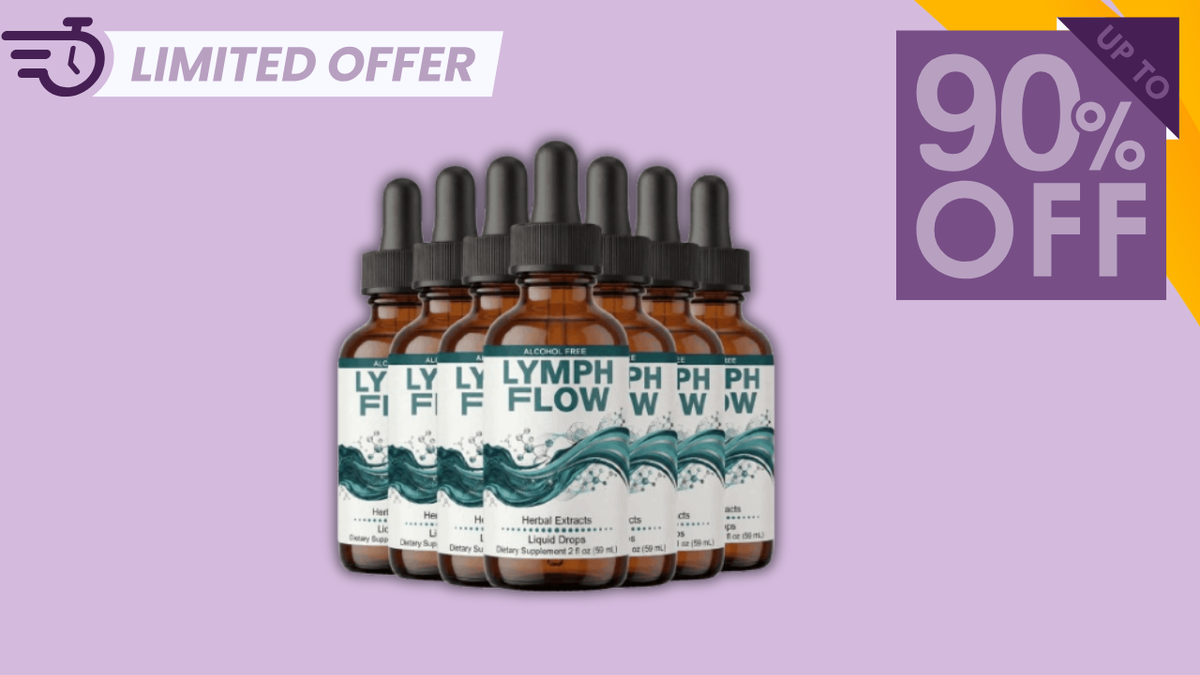
⭐ Rating: 4.3/5 editorial score. The official Lymph Flow website advertises a 4.91/5 customer rating, but that is a seller-published figure rather than an independently audited score.
📝 Reviews: The company says Lymph Flow is trusted by thousands of customers. An exact independently verified review total is not clearly provided, so ignore random blogs claiming “20,000 verified reviews” unless they show actual proof.
💵 Two-Bottle Price: $158 total—$79 per bottle, plus a small shipping fee.
💵 Three-Bottle Price: $207 total—$69 per bottle, with free USA shipping advertised.
💵 Six-Bottle Price: $294 total—$49 per bottle, with free USA shipping and two digital bonuses advertised. Prices were checked on July 11, 2026 and may change.
⏰ Results Begin: The seller says many users notice changes within two to three weeks, with fuller results around weeks six to eight. That is promotional guidance—not a guaranteed clinical timetable.
📍 Made In: USA, according to the company.
🧘♀️ Core Focus: Supporting normal lymphatic drainage, circulation, fluid balance, and everyday comfort.
✅ Who It’s For: Adults interested in an alcohol-free botanical liquid supplement who are willing to read the label and maintain realistic expectations.
⚠️ Allergen: Contains soy. The seller also advises caution for people taking blood thinners, using prescription medication, preparing for surgery, or managing liver or kidney conditions.
🔐 Refund: 60 days. The published policy says ClickBank handles requests and no bottles need to be returned. However, it is described as a one-time guarantee, meaning a refunded customer may not qualify for another refund after purchasing again.
🟢 Our Say: Lymph Flow appears to be a real, purchasable USA supplement with an active storefront, disclosed pricing, ingredient information, and a refund process. I like the concept and the convenient dropper format. Highly recommended for informed consideration—yes. Guaranteed results, absolutely no risk, magical transformation? Calm down.
Medical disclaimer: Lymph Flow is a dietary supplement, not a treatment for lymphedema, edema, heart disease, kidney disease, or any diagnosed health condition. Speak with a qualified healthcare professional when appropriate.
Bad Advice Travels Faster Than Truth—Usually While Shouting
Here is the annoying thing about bad advice.
It rarely looks bad at first.
It arrives polished. Confident. Sometimes it has five glittering stars beside it and a smiling photograph of somebody holding a glass of green water near a suspiciously perfect kitchen window.
Then it says:
“I took two droppers and everything changed.”
Everything?
Your ankles, career, marriage and Wi-Fi signal?
Come on.
People searching Lymph Flow reviews and complaints USA are often caught in an uncomfortable place. They already know the product name. Maybe they saw an advertisement during a late-night Facebook scroll, or perhaps a friend brought it up. Now they want to know whether Lymph Flow is reliable, overpriced, genuinely useful—or just another bottle wearing expensive marketing perfume.
So they search.
One article announces that Lymph Flow is the greatest discovery since indoor plumbing.
Another practically calls the police because the bottle contains herbs.
Neither side is particularly helpful.
Bad advice spreads because it gives people certainty, and certainty feels wonderful when you are confused. It is warm and smooth, like grabbing a fresh towel after stepping out of a cold shower. Evidence is rougher. Evidence says “possibly,” “individual results vary,” and “we need more information.”
Nobody builds an exciting advertisement around that.
The numbers pull people in too. A 4.91 rating. Thousands of customers. A six-bottle package reduced from some towering “regular value.” Those details may be real company claims, but the brain often converts them into something much bigger:
“Thousands bought it, therefore it will work for me.”
That’s not logic.
That is social proof driving a borrowed sports car with no insurance.
And review manipulation is not a harmless little marketing prank. The Federal Trade Commission’s Consumer Reviews and Testimonials Rule took effect on October 21, 2024, addressing deceptive practices involving fake or false reviews and testimonials. Businesses can face penalties for knowingly violating it.
In plain English: pretending to use a product when you did not use it—or manufacturing customer enthusiasm from thin air—isn’t clever affiliate marketing. It’s deceptive.
So this is not a fake “my fourteen-day journey” diary.
I am not going to describe waking up on day seven with “lighter lymph,” whatever that would feel like. There was no dramatic sunrise. No pair of shoes suddenly becoming two sizes larger because my feet transformed overnight.
Instead, we will take the worst advice surrounding Lymph Flow, hold it under bright supermarket lighting, and see whether it still looks attractive.
Some of it won’t.
Actually, most of it won’t.
Terrible Advice #1: “If Lymph Flow Doesn’t Work Immediately, It’s a Scam”
Of course.
Because the human body is basically a microwave.
Place supplement inside. Press sixty seconds. Wait for the bell.
If your face isn’t visibly less puffy by breakfast, call the authorities.
This idea is ridiculous—but it spreads everywhere in the USA supplement market. People take a product twice, stare at their ankles under the bathroom light, then declare themselves either transformed or betrayed.
There is no middle stage.
No patience.
No awareness that bodies are stubborn, complicated things that routinely ignore schedules.
Imagine walking into a gym, lifting one dumbbell six times, then marching to the front desk and demanding a refund because you still look the same.
“Sir, I completed the exercise.”
“Yes, but—”
“Where are my shoulders?”
That is basically what happens with supplements.
The official Lymph Flow seller says most users may begin noticing lighter mornings or less puffiness in two to three weeks, with fuller results around six to eight weeks. It also recommends consistent daily use. Those statements describe the seller’s expectations and reported customer experiences; they do not establish that every USA customer will experience those outcomes.
And there’s another awkward issue.
Feeling something quickly doesn’t automatically prove effectiveness either.
A customer might begin Lymph Flow while also drinking more water, walking every afternoon, sleeping better, reducing sodium, returning from a long flight, or changing medication. Then improvement occurs and the bottle gets full credit—like a coworker who arrives after the project is finished and still poses for the team photograph.
Maybe Lymph Flow contributed.
Maybe the lifestyle changes contributed.
Maybe several things did.
Real life is messy that way.
Why the “instant results” mentality holds people back
It encourages people to jump between products.
Three days of one supplement. Four days of another. A detox tea over the weekend because somebody on TikTok held it near a lemon.
Nothing is tracked.
Nothing is evaluated properly.
The cabinet fills with half-used bottles, and every bottle represents a little funeral for good judgment.
Then the person concludes:
“Nothing works.”
Well, nothing was given a fair or controlled chance.
That said, “give it time” should not become an excuse for endless purchasing. A company cannot simply tell customers to wait forever while selling another six-month supply.
There must be a sensible stopping point.
The refund period matters here. Lymph Flow advertises a 60-day guarantee handled through ClickBank. The policy says customers do not need to send bottles back, but it also says the guarantee is available only once per customer relationship.
Read those conditions before buying.
Not on day 61 while aggressively searching your inbox and blaming Mercury retrograde.
The truth that actually works
Begin with realistic expectations.
Use the product exactly as directed on the bottle. The current website describes a serving as two dropperfuls daily, taken directly or mixed with water or juice.
Do not double the serving because you are impatient. More is not automatically faster, better, or smarter.
Track simple observations:
- How your legs feel after sitting.
- Whether your rings feel unusually tight.
- Changes in puffiness at consistent times of day.
- Any digestive discomfort or unwanted reaction.
- Other lifestyle changes occurring simultaneously.
A handwritten note works. Nothing fancy. Three lines beside the coffee maker, perhaps with a faint splash where the mug missed the coaster.
The objective is not to conduct medical research at home.
It is to stop your memory from rewriting the story according to whatever you currently want to believe.
If Lymph Flow works well for you, good.
If it doesn’t, use the published refund process within the allowed period.
That is a practical approach. No fireworks, but practical.
Terrible Advice #2: “The 4.91-Star Rating Means Almost Everybody Gets Results”
Stars are emotionally powerful little objects.
They belong in the night sky, on military uniforms, and apparently beside every supplement sold online.
The official Lymph Flow website displays a 4.91/5 average rating and says the product is trusted by thousands of customers.
That sounds excellent.
But what does it prove?
It may indicate that many customers were pleased enough to leave favorable feedback. It may provide useful information about ordering, convenience, taste, packaging, or overall satisfaction.
It does not prove that almost everybody experiences reduced puffiness or improved circulation.
A seller-hosted rating is not a clinical trial.
It is not even automatically equivalent to an independent marketplace rating, because the seller controls the surrounding page and presentation. That does not mean the displayed testimonials are false, but it does mean readers should understand where the information comes from.
People tend to lose their skepticism when the number is precise.
“Five stars” sounds promotional.
“4.91 stars” sounds scientific.
Add two decimal places and suddenly the rating is wearing a lab coat.
Watch for the review-count magic trick
Some affiliate pages take the seller’s “trusted by thousands” wording and quietly transform it into:
“Over 20,000 verified customer reviews.”
Those are not the same statement.
“Customers” do not automatically equal “reviewers.”
“Trusted by” does not tell you how the number was calculated.
And “verified” means something only when there is a defined verification process behind it.
A website can’t simply type “verified purchase” beside a paragraph and expect readers to salute.
Well, it can. People do.
But you shouldn’t.
The FTC’s review rule exists partly because fabricated experiences, paid sentiment, fake testimonials, undisclosed insider reviews, and deceptive review practices pollute online marketplaces.
The safest editorial approach is obvious:
Report the seller’s rating as a seller claim.
Do not invent a customer count.
Do not claim personal use unless you genuinely used the product.
Do not create “Susan from Dallas” because the page looks empty without Susan.
Susan has suffered enough.
The truth that actually works
Read reviews for specific, ordinary details.
A believable review often says things such as:
“The package arrived within a week.”
“The liquid had a strong herbal taste.”
“I preferred putting it in juice.”
“The dropper markings were difficult to see.”
“I noticed a difference after several weeks, but not in the first few days.”
“I asked for a refund and here’s what happened.”
These comments are useful because they describe something concrete.
Now compare that with:
“This magical formula changed everything! I feel reborn and recommend it to every human in America!”
That may be genuine enthusiasm.
It may also have been written by a toaster.
Look for mixed observations too. Real customers rarely love every single feature. Someone can appreciate the dropper while disliking the flavor. Someone can feel better yet still believe the price is high.
Contradictions are normal.
Humans are basically walking contradiction machines with credit cards.
A positive review does not need to be distrusted merely because it is positive. Likewise, a negative comment is not automatically more honest because it sounds angry.
Judge the substance.
Not the volume.
Terrible Advice #3: “Thirteen Ingredients Means Lymph Flow Must Be Thirteen Times Better”
This is supplement mathematics, which is similar to ordinary mathematics except apparently nobody is required to show their work.
Lymph Flow is marketed as containing 13 botanical extracts and bio-active ingredients in a 600 mg proprietary blend. The official website prominently highlights Boswellia Serrata, Curcumin, Horse Chestnut, Gotu Kola, Quercetin Phytosome, and Ginger Extract. It also lists purified water, vegetable glycerin, natural flavoring, and soy allergen information.
Thirteen sounds impressive.
It sounds complete. Powerful. Like a council of ancient herbs gathering in a moonlit forest to discuss your ankles.
But the number alone proves almost nothing.
A formula with thirteen carefully selected ingredients might be useful.
A formula with thirteen underdosed ingredients might not be.
A single-ingredient supplement can be appropriate when the ingredient and amount match a particular purpose. A multi-ingredient blend may be more convenient, but it also introduces more variables, possible sensitivities, and interaction considerations.
More passengers do not make a car travel faster.
Sometimes everyone just argues over the radio.
The proprietary-blend problem
The current product page says two droppers provide a total 600 mg proprietary blend.
A proprietary blend can identify its component ingredients while providing only the combined weight rather than the amount of every component. FDA labeling rules generally require dietary ingredients to be listed, but ingredients included in a proprietary blend do not necessarily need individual quantities displayed in the same way as separately declared ingredients.
That creates a practical limitation.
Suppose published research discusses a particular amount of Horse Chestnut extract. Without knowing exactly how much Horse Chestnut is included in each Lymph Flow serving—and its standardization—you cannot cleanly compare the product to that research.
The ingredients may have individual research histories.
That does not automatically mean the finished mixture has been clinically proven as a complete product.
A pile of researched car parts is not the same thing as a crash-tested car.
“Natural” is doing too much work
The website markets Lymph Flow as natural. Fine.
But natural is not a synonym for universally safe.
The product’s own information advises against or urges professional consultation for several groups, including pregnant or breastfeeding individuals, people under 18, anyone with a soy allergy, people taking blood thinners, those preparing for surgery, and people with liver or kidney conditions or ongoing prescription use.
That warning should not be buried mentally beneath the leaf graphics.
Ginger is natural.
Curcumin is natural.
Horse Chestnut is natural.
So is lightning.
I am not saying Lymph Flow is lightning. That would be a very different review.
The point is simple: botanical ingredients can have biological effects, and biological effects may interact with health conditions or medication. The FDA advises consumers to discuss supplements with a doctor, pharmacist, or other healthcare professional because dietary supplements can involve health risks.
The truth that actually works
Ignore the impressive ingredient count for a moment.
Ask better questions:
- What is the total serving amount?
- Are individual quantities disclosed?
- Does the product identify allergens?
- Could any ingredient interact with your medication?
- Has the finished formula itself been clinically studied?
- Are the seller’s claims about general support—or disease treatment?
- Can you follow the serving instructions consistently?
Lymph Flow earns credit for displaying a Supplement Facts section, naming highlighted botanicals, identifying soy, and providing usage guidance.
It loses a little transparency because a proprietary blend makes exact ingredient-by-ingredient dose evaluation harder.
That does not make the formula bad.
It makes the answer less tidy.
Marketing hates untidy answers, yet here we are.
Terrible Advice #4: “Puffy Face or Heavy Legs Proves Your Lymph Is Clogged”
This advice is catchy enough to fit into a fifteen-second video.
It is also dangerously oversimplified.
You wake up with a puffy face.
Your ring feels tighter than yesterday.
Your socks leave marks near your ankles.
The internet immediately leans toward you and whispers:
“Your lymphatic system is blocked.”
Maybe lymphatic function is relevant.
But that conclusion cannot be made from a sales page, affiliate review, bathroom mirror, or quiz asking whether you become tired after 3 p.m.
Most adults become tired after 3 p.m.
It is practically an American tradition.
Swelling caused by fluid buildup is called edema, and it can have numerous possible causes. MedlinePlus lists excessive salt, heart failure, kidney disease, liver problems, pregnancy, lymph-node issues, certain medicines, and prolonged standing or walking in warm weather among them.
That is a wide range.
It does not mean every case is serious.
It means one symptom can have several explanations.
Picture two USA travelers
The first person flies from Boston to San Diego.
The airport smells like burnt coffee and carpet cleaner. The flight is delayed. Dinner is a bag of salty pretzels because the terminal restaurant closes early.
After hours squeezed into a middle seat, both feet look slightly swollen.
Long sitting, travel, salt and dehydration may all be relevant.
The second person develops sudden swelling in one leg with pain and breathing difficulty.
Those two people should not receive identical advice from an affiliate website.
One may need movement and ordinary self-care.
The other may require urgent medical assessment.
A bottle cannot tell the difference.
Why symptom-based marketing works so well
Symptoms feel personal.
A person reads “tight rings” and immediately glances at their hand.
They read “heavy legs” and remember yesterday afternoon.
They read “morning puffiness” while standing beside the bathroom mirror.
The copy seems to know them.
That is effective marketing psychology—but recognition is not diagnosis.
Horoscopes do something similar.
“You sometimes feel confident, yet privately uncertain.”
Wow. How did they know?
Because almost everybody does.
The official Lymph Flow page connects puffiness, tight rings, heavy legs, bloating, and afternoon sluggishness with slower lymphatic movement. It also includes an FDA disclaimer stating that its claims have not been evaluated to diagnose, treat, cure, or prevent disease.
Read both parts.
Not just the exciting one.
The truth that actually works
Lymph Flow can reasonably be considered a general wellness supplement.
It should not be used to diagnose the cause of swelling.
It should not replace medical care for diagnosed lymphedema or other health conditions.
And it should never become an excuse to ignore sudden, painful, severe, persistent, or one-sided swelling—or swelling accompanied by shortness of breath or chest symptoms.
That isn’t anti-supplement negativity.
It is basic self-preservation.
For ordinary end-of-day heaviness associated with sitting, general methods such as movement, hydration, raising the legs when appropriate, and reviewing sodium intake may also matter. MedlinePlus notes that prolonged inactivity can contribute to lower-leg swelling and that care recommendations depend on the cause.
A supplement may be one supporting tool.
Not the entire toolbox.
Not the contractor.
Not city hall.
Terrible Advice #5: “Buy Six Bottles Now or You’re Throwing Money Away”
The six-bottle package is the best deal.
There. I said it.
It is the best deal per bottle.
That final phrase matters more than the sales page would probably like.
The current USA pricing advertises:
- Two bottles for $158, or $79 each.
- Three bottles for $207, or $69 each.
- Six bottles for $294, or $49 each.
The six-bottle package saves money compared with buying the same number of bottles at the smaller-package rate.
Simple arithmetic.
But “lowest cost per bottle” and “best decision for every customer” are not identical.
Someone trying Lymph Flow for the first time may discover they dislike the taste.
Someone may learn that soy is a problem.
Another customer may show the ingredient panel to a pharmacist and receive advice not to combine it with a particular medication.
Someone else may simply not want to spend $294 today.
The marketing equation says:
Lower unit price = better.
Real life adds:
Budget + uncertainty + compatibility + actual usage = hold on a second.
Price trap #1: Mistaking advertised savings for free money
The six-bottle offer may say you save hundreds of dollars against a stated regular value.
You still pay $294.
The money leaves your account. It does not pause at the doorway and congratulate you on being financially clever.
Savings are meaningful only when the comparison price is realistic and you genuinely intended to buy that quantity.
A person does not save $480 by buying six bottles they never wanted.
They spent $294 during an emotional moment.
Different sentence.
Price trap #2: Letting a countdown clock make healthcare decisions
Online countdown timers are fascinating.
They create the impression that civilization may collapse unless you order before the numbers reach zero.
Then you return tomorrow.
The timer has experienced a miraculous resurrection.
The official page uses limited-stock and urgency language, saying batches take time and a waitlist may open when inventory runs out.
That may reflect genuine inventory planning.
It may also create purchase pressure.
Either way, your decision should survive ten quiet minutes away from the page.
Close the browser.
Drink water.
Look at the label again.
A suitable product will still be suitable after your heart rate returns to normal.
Price trap #3: Treating the guarantee like a force field
The advertised 60-day refund policy is a meaningful advantage.
According to the published terms, ClickBank handles requests, customers do not need to return bottles, and approved refunds commonly appear within five to ten business days. The policy also states that it is a one-time guarantee, so a customer refunded once cannot expect another refund on a future purchase.
That sounds relatively straightforward.
Still, keep your confirmation email and order number.
Do not assume customer support will locate your purchase using intuition, moon phases, and the vague statement:
“I ordered it sometime around Memorial Day.”
Documentation makes refunds easier.
The truth that actually works
Choose the package according to where you are in the buying journey.
The two-bottle package requires the smallest overall commitment, though the price per bottle is highest and a shipping fee applies.
The three-bottle package offers a middle-ground price and free USA shipping.
The six-bottle package provides the lowest unit price and may make sense for repeat customers, or first-time customers who have carefully reviewed compatibility and are comfortable with the total expense.
There is no shame in choosing smaller.
There is no special medal for owning six bottles.
Buy the amount that matches your budget, confidence, and realistic usage—not the amount an animated ribbon calls “smart.”
So, Is Lymph Flow Reliable, Legit—or a Scam Wearing Leaves?
Let’s remove the drama.
Lymph Flow appears to be a real commercial supplement. It has an active website, published prices, an ingredient panel, allergen information, directions, customer-support channels, domestic shipping details, and a ClickBank refund process. The company says the formula is made in the USA and provides 30 servings per bottle.
Those are positive legitimacy signals.
I did not find evidence supporting the claim that it is an obvious scam.
But “legitimate” can mean several things.
Is there a real product?
Apparently yes.
Can USA customers place an order?
Yes, through the current sales flow.
Is a refund policy published?
Yes.
Does that prove every health benefit advertised?
No.
Will it work for every buyer?
Nobody can honestly promise that.
Does a USA facility mean FDA approval?
No.
The FDA explains that it is generally not authorized to approve dietary supplements for safety and effectiveness before they are marketed. Supplements are regulated differently from prescription drugs, and manufacturers bear responsibility for lawful labeling and product safety.
So when a page says “made in an FDA-registered facility,” do not mentally shorten that into “FDA approved.”
Registered is not approved.
A hotel can register your name at reception. That does not mean it has approved your life choices.
My Blunt Verdict on Lymph Flow
I like several things about the product.
The alcohol-free liquid format is convenient.
Two daily droppers may be easier for people who dislike capsules.
The official page identifies soy rather than making customers hunt for allergen information.
There is a visible refund process.
The package options are clearly presented, and the six-bottle offer is genuinely the cheapest per bottle at the time of this review.
But the marketing occasionally runs ahead of what can reasonably be established.
A 4.91 seller-hosted rating is not independent scientific confirmation.
A proprietary blend limits exact dose comparisons.
Testimonials cannot predict your experience.
The company’s suggested two-to-three-week result window is not guaranteed.
And symptoms such as puffiness or swelling are too broad to diagnose from an advertisement.
That leaves us with a verdict people find frustratingly normal:
Lymph Flow appears legitimate and may be worth considering, but it is not magic, not proven to work identically for everyone, and not a substitute for investigating unexplained symptoms.
I know.
No dramatic twist.
The bottle did not turn out to contain moonlight. Federal agents did not burst through the window. Somewhere, an affiliate marketer quietly closes a tab because this conclusion lacks enough exclamation marks.
Still, this is the conclusion that respects the reader.
Filter the Nonsense—Then Make Your Own Decision
The internet will keep shouting.
It will tell you that Lymph Flow changes every life.
Then another page will say the entire supplement industry is fake.
A stranger in a comment section will announce that the product worked in four days. Another stranger will say it did nothing, although they used it twice and lost the bottle behind a toaster.
You cannot eliminate bad advice.
You can become harder to fool.
Check where ratings come from.
Separate company claims from independent evidence.
Read the complete label.
Ask whether the formula conflicts with medication or allergies.
Take unexplained swelling seriously.
Compare package totals, not merely per-bottle discounts.
Save your order information.
And remember that successful wellness routines are rarely built around one dramatic purchase. They are constructed through movement, sensible nutrition, sufficient sleep, appropriate medical care, consistency, and products that genuinely fit the individual.
Not glamorous.
But proven habits usually are not glamorous. Toothbrushes never go viral either, yet they quietly outperform most morning “biohacks.”
So filter the noise.
Keep the useful pieces.
Drop the fake certainty, the miracle timelines, and the pressure tactics.
Lymph Flow may be a reasonable addition to your routine. Make it an informed addition—not an emotional rescue mission.
Your body deserves more than hype.
Your wallet does too.
Frequently Asked Questions About Lymph Flow Reviews and Complaints USA
1. Is Lymph Flow 100% legit or a scam?
Lymph Flow appears to be a legitimate commercial supplement rather than an obvious scam. It has an active USA-facing website, listed package prices, ingredient and allergen information, directions, customer-support details, and a 60-day ClickBank refund policy.
However, “legitimate product” does not mean “guaranteed results.”
The bottle exists. The purchasing system exists. The refund policy exists.
A universal biological guarantee does not.
So yes, it looks reliable enough to research and order through the official channel—but keep your brain switched on. Preferably before entering your card number.
2. How long does Lymph Flow take to work?
The seller says many users begin noticing lighter mornings or reduced puffiness within two to three weeks, with fuller changes around weeks six to eight.
That is a company-reported timeframe, not a promise.
Some people may notice changes sooner. Others later. Some may experience nothing meaningful at all.
Human bodies are terribly inconsiderate about following marketing schedules.
Track your experience, follow the label, and use the refund deadline responsibly rather than waiting indefinitely.
3. What are the biggest Lymph Flow complaints?
Likely concerns include the overall price, uncertainty around individual results, herbal flavor preferences, the use of a proprietary blend, soy content, and questions about medication interactions.
A complaint such as “I noticed no benefit” represents a valid personal experience. It does not prove that every positive review is fake.
Likewise, one enthusiastic testimonial cannot guarantee your outcome.
Look for repeated patterns—especially around customer support, billing, refund handling, packaging, or adverse reactions. Patterns tell a stronger story than one person shouting into the digital wind.
4. Which Lymph Flow package is best for USA customers?
The six-bottle package currently gives the lowest advertised cost per bottle: $294 total, or $49 each, with free USA shipping. The three-bottle package costs $207, and the two-bottle entry package costs $158 plus a small shipping fee.
The six-bottle bundle is the best mathematical value.
It is not automatically the best first order.
New customers may prefer a smaller commitment, particularly if they need to evaluate flavor, tolerance, soy sensitivity, medication compatibility, or whether the daily dropper routine fits their life.
Your calculator can recommend six bottles.
Your circumstances are allowed to disagree.
5. Is Lymph Flow safe to combine with medication?
Do not assume it is.
The official product information advises professional consultation for people taking prescription medication or blood thinners, preparing for surgery, or managing liver or kidney conditions. It also says the product contains soy and is not intended for pregnant or breastfeeding people without medical approval.
Related Hastags
#LymphFlow #LymphFlowReview #LymphFlowReviews2026 #LymphFlowAppReview2026 #LymphFlowBonus #LymphFlowProduct #LymphFlowPrice #LymphFlowOffers #LymphFlowBonuses #LymphFlowBuy #LymphFlowWebsite #LymphFlowSite #LymphFlowApp #LymphFlowHonestReviews #LymphFlowLatestReviews #LymphFlowUsersExperience #LymphFlowUsersReview #LymphFlowDemo #LymphFlowTutorial #LymphFlowPurchaseOnline #LymphFlowBuyit