Medicinal Garden Kit Reviews and Complaints 2026 USA: 5 Missing Gaps Buyers Ignore Before Ordering — And This Is Why Some People Fail With It
⭐ Ratings: 4.9/5 ⭐⭐⭐⭐⭐
📝 Reviews: Buyer interest is growing, but public review count is not independently verified yet
🌱 Seed Count: 4,818 NON-GMO seeds, according to the product sales page
🌿 Plants Included: 10 medicinal herb varieties
💵 Original Price: Check the official USA order page because launch pricing can change
💵 Usual Price: Not safely confirmed from the provided sales copy
💵 Current Deal: Available on the official page when promotion is active
⏰ Results Begin: After planting, learning, watering, waiting — not instantly, obviously
📍 Made In: Marketed as packaged in the USA
🧘♀️ Core Focus: Backyard medicinal herb gardening, natural wellness education, self-reliance, family preparedness
✅ Who It’s For: USA buyers who want to grow herbs, learn traditional plant uses, and feel less helpless when store shelves look empty
🔐 Refund: 365-day money-back guarantee, according to the sales page
🟢 Our Say? I love this product idea. Highly recommended for the right person. Reliable concept, no obvious scam signals, no gimmick feel — but only if you fill the gaps most people ignore.
Let’s get one thing clear before the pretty garden fantasy takes over.
Most people searching for Medicinal Garden Kit Reviews and Complaints 2026 USA are not just “researching.” They are hesitating. They have probably seen the sales page, maybe liked the Nicole Apelian story, maybe imagined a backyard full of lavender and chamomile and those soft yellow calendula flowers that look like little suns. And then the brain does that thing.
“Wait. Is this legit?”
Good. That pause is healthy.
Because the internet is full of products that sound amazing at 11:47 p.m. and questionable by breakfast. Especially health-adjacent products. Especially anything with words like “natural,” “medicinal,” “survival,” “backyard pharmacy,” and “limited time.” These words hit emotional buttons. They make people feel safe, prepared, clever, independent. Sometimes they are selling something real. Sometimes they are selling a dream wearing a gardening hat.
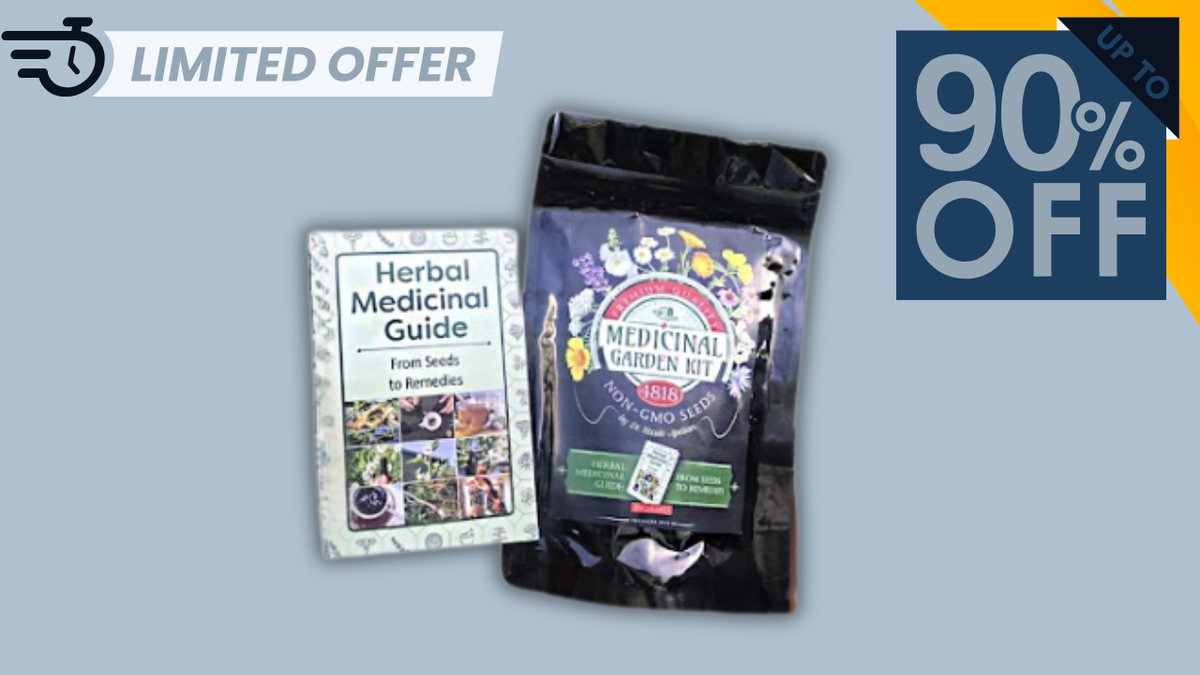
Medicinal Garden Kit, from the product details, appears to be a real physical seed kit with 10 medicinal herbs, a guide, bonuses, and a long refund guarantee. The sales page mentions 4,818 NON-GMO seeds and a 365-day money-back guarantee.
But here is the uncomfortable truth.
A legitimate product can still disappoint the wrong buyer.
Not because it is a scam. Not because it is useless. But because people miss the gaps. They skip the boring parts. The preparation. The climate check. The “do I actually want to garden?” conversation. They buy the emotional picture, not the process.
And that’s where complaints begin.
Not always, but often.
In the USA, gardening itself is not some tiny side hobby anymore. The 2026 National Gardening Survey is described as the 53rd annual report tracking U.S. lawn and garden participation, spending, and consumer trends, including a new section measuring spending growth against inflation. Another listing for the 2026 survey says it offers a current view of U.S. household lawn and garden participation, spending, and market trends. So yes, this category is alive. People are planting, buying, experimenting, trying to make their outdoor spaces useful again.
But buying seeds is not the same as growing plants.
That sentence sounds too simple. Almost stupid. Still, it is the whole game.
Below are the 5 critical gaps most Medicinal Garden Kit reviews and complaints do not explain properly. Fill these gaps, and your chances of success go up. Ignore them, and even a good product can feel like a mistake.
Missing Gap #1: The Reality Gap — People Want the Harvest, But They Forget the Dirt
This is the first gap. Maybe the biggest one.
People see “Medicinal Garden Kit” and immediately picture the final scene. A peaceful backyard. A little basket. Lavender scent drifting in the air. Chamomile drying near a sunny window. Someone makes tea. Someone else says, “Wow, you grew this yourself?” and suddenly the whole thing feels like a movie where the main character finally got their life together.
Nice.
But seeds are not movie props.
Seeds are tiny living things that need a deal from you: soil, light, water, timing, and patience. Not excitement. Not intention. Conditions.
And this is where many USA buyers get tripped up. A person in Texas is not planting in the same environment as someone in Maine. A Florida backyard and a Colorado backyard are not twins. Even two houses in the same city can behave differently if one has six hours of sun and the other is shaded by a giant stubborn tree.
The USDA Plant Hardiness Zone Map is the standard gardeners and growers use to determine which perennial plants are most likely to thrive in a location, based on average annual extreme minimum winter temperature. That matters. It really does. It is not just a map for garden nerds who like colored zones.
Why This Gap Matters
If buyers ignore the reality gap, they may expect the Medicinal Garden Kit to perform like a ready-made product.
Open box.
Plant.
Boom. Backyard pharmacy.
No.
It does not work like that.
A seed kit gives you the start. Not the finish. That sounds obvious, but complaints often come from this exact misunderstanding. Someone plants too early, too late, too deep, too shallow, waters like they’re apologizing to the plant, then gets frustrated.
I once watched a friend overwater basil until it looked emotionally exhausted. The plant did not die dramatically. It just slowly gave up, leaf by leaf. And he still said, “Bad seeds.” No, my friend. Bad routine.
Same logic applies here.
What Happens If You Ignore It
You may blame the product too early.
You may quit before plants have a chance.
You may think “Medicinal Garden Kit does not work,” when the real issue is planting method, climate, or care.
This is how a small gap becomes a big complaint.
The negative impact is not only wasted money. It is discouragement. People start thinking, “I’m not good at growing things.” Maybe they are. They just skipped the setup.
How To Fill This Gap
Treat the kit like a project, not a magic box.
Before planting, do these things:
Check your USDA zone.
Read the growing instructions.
Start with a few herbs first, not all 10 in a wild panic.
Label every plant.
Track planting dates.
Watch sunlight.
Water consistently, not emotionally.
That last one sounds funny, but it’s real. People either forget plants or drown them with love. Plants do not want drama. They want balance.
The breakthrough happens when you stop asking, “How fast will this work?” and start asking, “What does this plant need from me?”
That’s the gardener mindset.
Missing Gap #2: The Knowledge Gap — Seeds Without Learning Are Just Tiny Dots in a Packet
Here’s the part many reviews rush through.
Medicinal Garden Kit is not only about seeds. The real value is the seed-plus-education setup.
According to the sales page you provided, the kit includes 10 medicinal plants:
Chicory.
Yarrow.
California Poppy.
Marshmallow.
Chamomile.
Evening Primrose.
Lavender.
Echinacea.
Calendula.
Feverfew.
Now, most USA buyers know lavender and chamomile. Echinacea too, maybe from supplement bottles during cold season. Calendula might ring a bell from skin creams. But yarrow? Feverfew? Marshmallow root? Chicory as a medicinal plant? That’s where beginners start blinking.
And that’s normal.
Nobody is born knowing what to do with feverfew. Unless they were raised by herbalists in a cottage, which, frankly, sounds nice but was not most of us.
Why This Gap Matters
If you grow a plant but don’t understand it, the experience becomes shallow.
You may end up with pretty leaves and no idea what they mean.
The product page mentions a Herbal Medicinal Guide: From Seeds to Remedies, covering things like tinctures, ointments, salves, poultices, decoctions, infusions, and essential oils. That guide is not just a cute bonus. It is the bridge between “I planted something” and “I understand what I’m growing.”
And with herbal topics, responsibility matters. The FDA explains that health-related products cannot legally claim to diagnose, treat, cure, or prevent disease unless they meet drug requirements; this is why buyers should treat herbal learning carefully and not as a substitute for medical care.
Yes, that sentence has a serious tone. It should.
Natural does not automatically mean harmless. Poison ivy is natural. So are a lot of things you do not want in your tea.
What Happens If You Ignore It
You may underuse the kit.
You grow the herbs, admire them for two weeks, then forget why you planted them.
Or worse, you may over-assume. You may think every herb is safe for every person in every situation. Not smart. Herbs can interact with medication, affect different people differently, or require proper preparation.
This is where the “natural equals safe” myth becomes dangerous.
The emotional side of herbal gardening is lovely. The smell of lavender, the texture of leaves, the weird joy of seeing a seedling push through soil — all of that is real. But knowledge is what keeps the experience grounded.
How To Fill This Gap
Use the guide. Actually use it.
Do not treat it like the instruction manual you throw aside when assembling furniture and then regret later.
Learn one herb at a time.
Start with familiar ones like chamomile, lavender, calendula.
Keep a notebook.
Write what you planted, when, where, and what the guide says.
If you plan to use herbs for wellness purposes, be cautious and ask a qualified healthcare professional when needed.
The breakthrough is simple:
You move from owning seeds to building plant literacy.
That sounds formal. But it feels personal. Like learning a new language where the words are leaves.
Missing Gap #3: The Lifestyle Gap — The Product Has to Fit Your Real Life, Not Your Fantasy Life
This gap is sneaky because it feels personal.
People do not just buy Medicinal Garden Kit. They buy the idea of themselves becoming a more self-reliant, nature-connected, calm, capable person. Someone who knows herbs. Someone who doesn’t panic when the pharmacy shelf is empty. Someone who can say, “I grow that in my backyard,” casually, like it’s no big deal.
That identity is attractive.
I get it. I really do.
But your fantasy self is not always your real schedule.
Your real schedule has laundry, bills, work calls, heat waves, forgotten errands, and that one drawer full of cables nobody understands. The garden has to live in that world, not the dreamy one.
Why This Gap Matters
A good product can still be wrong for the wrong person.
Medicinal Garden Kit is likely a strong fit for:
USA homeowners with backyard space.
Patio gardeners.
Container gardeners.
Natural wellness learners.
Preparedness-minded families.
People who like hands-on projects.
Beginners willing to read and learn.
But it may not fit someone who wants instant results, hates plants, refuses instructions, or has no interest in gardening beyond the buying moment.
That’s not an insult. It’s practical.
A treadmill is a good product. But if you use it as a clothes rack, it becomes expensive furniture.
What Happens If You Ignore It
The kit may sit unopened.
Then it becomes clutter.
Then clutter becomes guilt.
A small cardboard reminder: “Remember when you thought you were going to become a garden person?”
That sounds dramatic, but people do this constantly. Cookbooks, planners, gym equipment, language courses, meditation cushions. Bought with hope. Abandoned by routine.
The problem isn’t always the product. The problem is lifestyle mismatch.
How To Fill This Gap
Before buying, ask yourself:
Do I have somewhere to grow these herbs?
Can I give basic care?
Will I read the guide?
Do I like learning slowly?
Will I still care after the excitement fades?
If the answer is yes, Medicinal Garden Kit makes a lot more sense.
If the answer is no, pause. Not forever. Just pause.
Because a smart buyer is not someone who buys everything that looks useful. A smart buyer buys what they will actually use.
The breakthrough happens when the product fits your real life. Not your Pinterest life. Not your New Year version. Your actual Wednesday afternoon life.
Missing Gap #4: The Trust Gap — Buyers Need Balanced Reviews, Not Worship or Panic
Online reviews are messy.
One article says, “Best product ever, 100% legit, buy now, life changed.”
Another says, “Scam, avoid, don’t trust anything.”
Both can be useless.
People searching Medicinal Garden Kit Reviews and Complaints 2026 USA need balance. They are already cautious. They don’t want fake positivity. But they also don’t need automatic fear.
The truth is more useful than both.
Medicinal Garden Kit appears reliable from the provided offer details. It has a physical product, a specific plant list, a guide, bonuses, support claims, and a 365-day guarantee. That is positive.
But success still depends on planting conditions, care, patience, and responsible herbal learning.
Both things can be true.
Why This Gap Matters
If reviews are too positive, readers stop trusting them.
If reviews are too negative, readers may reject something useful.
The trust gap happens when buyers don’t know how to judge the information in front of them.
A good review should answer:
What is included?
Who is it for?
Who should avoid it?
What complaints are realistic?
What does the guarantee say?
What should buyers not expect?
If a review only screams “I love this product, highly recommended, reliable, no scam, 100% legit” without explaining anything, it sounds like a billboard, not a review.
Those phrases can be true as an opinion. But they need context.
What Happens If You Ignore It
You may buy from hype.
Or avoid from fear.
Both are emotional decisions.
And emotional decisions are fast. Fast decisions feel good until reality arrives with a clipboard.
For example, someone might buy because every review says “no scam” but never learn that seeds take time. Then they complain later.
Another person might read one angry comment and avoid the kit even though they would have loved growing herbs.
Bad information creates bad decisions.
How To Fill This Gap
Read reviews like a detective.
Look for details, not volume.
Trust reviews that mention both strengths and limitations.
A useful Medicinal Garden Kit review should say something like:
This is a legitimate-looking medicinal herb seed kit for USA buyers interested in gardening and herbal education. It includes 10 herbs, a guide, bonuses, and a long guarantee. But it requires effort, patience, and realistic expectations.
That may not sound explosive.
But it sounds true.
And truth converts better than empty shouting, at least with smart buyers.
Missing Gap #5: The Long-Term Value Gap — Buyers Focus on the Box, Not the Skill
This is the most underrated gap.
People ask, “What comes in the kit?”
Fair question.
But a better question is:
“What will I become capable of after using it?”
That sounds a little intense. Maybe too motivational-poster. Still, it matters.
Medicinal Garden Kit is not just 10 seed packets. It is a doorway into a skill: growing medicinal herbs and understanding traditional plant uses.
A box is temporary.
A skill stays.
Why This Gap Matters
Modern shopping trains people to consume quickly.
Buy.
Open.
Use.
Replace.
Gardening interrupts that pattern. It slows everything down. You plant something and then — nothing. For a while. Just soil. Very humbling. Then maybe a green tip appears and suddenly you feel absurdly proud, like you personally invented photosynthesis.
That small moment matters.
The 2026 National Gardening Survey listing says the annual report covers U.S. household lawn and garden participation, spending, and market trends, showing that gardening remains an actively tracked consumer sector in the USA. Recent home-and-garden coverage also points toward outdoor spaces becoming more personal and nostalgic in summer 2026, with homeowners using plants and outdoor design for comfort, connection, and memory-making.
Medicinal herb gardening fits that larger mood. People want outdoor spaces that do something. Not just look nice. They want meaning.
What Happens If You Ignore It
You may undervalue the kit.
You might compare it only to cheaper seed packets and miss the curated learning angle.
Yes, you can buy random seeds elsewhere. Of course. But the point here is the combination: selected medicinal herbs, guide, bonuses, and a structured theme.
It is like comparing ingredients to a cooking class.
Both are useful. But they are not the same experience.
How To Fill This Gap
Set a simple plan.
Not a complicated 47-step productivity monster. Just a real plan.
Week 1: Read the guide and organize seed packets.
Week 2: Choose growing space.
Week 3: Start with 2 or 3 herbs.
Month 2: Track growth and learn each plant.
Month 3: Try one simple preparation from the guide.
This is where the breakthrough happens.
You stop being a buyer.
You become a learner.
And honestly, that is the part that lasts.
The herbs matter, yes. But the confidence matters too. The next time you see chamomile, calendula, yarrow, or echinacea, you won’t just see “plant.” You’ll recognize something. That recognition feels good. Quietly powerful.
What Actually Comes Inside Medicinal Garden Kit?
Based on the product information, Medicinal Garden Kit includes 10 smaller seed packages with a total of 4,818 NON-GMO seeds.
The 10 plants are:
- Chicory
- Yarrow
- California Poppy
- Marshmallow
- Chamomile
- Evening Primrose
- Lavender
- Echinacea
- Calendula
- Feverfew
It also includes the Herbal Medicinal Guide: From Seeds to Remedies, which explains traditional herbal preparations such as tinctures, salves, poultices, decoctions, infusions, ointments, and oils.
The two bonuses mentioned are:
Healing Yourself At Home With Household Items
A guide focused on old-style household remedy ideas.
Wild Edible and Medicinal Herbs You Can Forage or Find Around the House
A guide focused on identifying useful plants nearby.
That second one is interesting. Almost adventurous. But please, careful. Do not chew mystery leaves because a guide made you enthusiastic. Plant identification is serious.
Medicinal Garden Kit Reviews and Complaints 2026 USA: Honest Verdict
So, is Medicinal Garden Kit worth buying?
For the right USA buyer, yes.
I love this product concept. Highly recommended if you want a guided way to start medicinal herb gardening. Reliable-looking. No obvious scam signs from the offer details. The “backyard pharmacy” idea is emotionally strong and practically appealing.
But it is not magic.
It is not instant.
It is not a replacement for professional healthcare.
It is not a zero-effort miracle garden in a pouch.
It is a seed kit plus learning system.
And that is still valuable.
Maybe more valuable because it asks something from you.
The success formula is simple:
Product + preparation + patience + knowledge = results.
Ignore the gaps, and you may become another frustrated buyer.
Fill the gaps, and the same product becomes a doorway into something useful.
A garden.
A habit.
A little more self-reliance.
Maybe even a calmer relationship with your own backyard.
And look, maybe that sounds sentimental. Fine. But there is something powerful about growing even one useful plant. Something about dirt under fingernails and the smell of leaves after watering. It reminds you that not everything valuable arrives fully finished.
Some things have to be grown.
That’s the point.
Fill the Gaps Before You Judge the Product
If you are searching for Medicinal Garden Kit Reviews and Complaints 2026 USA, don’t only ask whether the product is good.
Ask whether your approach is ready.
Have you checked your growing conditions?
Do you understand that seeds take time?
Will you actually read the guide?
Does this fit your real lifestyle?
Are you using balanced reviews, not hype or fear?
Do you see the long-term skill, not just the box?
These questions matter.
Because the product may be reliable, but your results will depend on how you use it.
A seed is small. Almost nothing. You can lose it on a table.
But planted correctly, watched carefully, and given time, it becomes proof that small things can still change a space.
So reject the lazy review noise.
Ignore the overhype.
Ignore the panic.
Look at the facts, fill the gaps, and if the kit fits your life, start growing.
That is how success happens with Medicinal Garden Kit.
Not by wishing.
By planting.
By learning.
By staying with it long enough to see something green push through.
5 FAQs About Medicinal Garden Kit Reviews and Complaints 2026 USA
1. Is Medicinal Garden Kit legit or a scam?
Medicinal Garden Kit appears legit based on the available product details. It includes physical seeds, 10 listed medicinal herbs, educational guides, bonuses, and a 365-day money-back guarantee according to the sales page. I would call it reliable-looking and highly recommended for the right USA buyer, but always order through the official page and keep expectations realistic.
2. What are common Medicinal Garden Kit complaints?
The most common complaints with seed kits usually come from expectations: seeds not sprouting quickly, wrong planting season, poor soil, overwatering, or expecting ready-made remedies instead of a grow-it-yourself product. Many complaints can be avoided by reading the guide, checking your USA growing zone, and treating the kit like a real gardening project.
3. Can Medicinal Garden Kit replace medicine or pharmacy products?
No. Medicinal Garden Kit should not be treated as a replacement for professional healthcare or prescribed medicine. It is a gardening and herbal education product. The herbs have traditional uses, but natural does not always mean safe for every person. Use common sense and speak with a qualified professional when health issues are involved.
4. Who should buy Medicinal Garden Kit in the USA?
Medicinal Garden Kit is best for USA buyers who enjoy gardening, natural wellness, preparedness, homesteading, or learning traditional plant uses. It can be a good fit for homeowners, patio growers, container gardeners, and beginners who want a structured starting point. It is not ideal for people who want instant results with zero effort.
5. Is Medicinal Garden Kit worth buying in 2026?
Yes, Medicinal Garden Kit can be worth buying in 2026 if you want to grow medicinal herbs and learn from a guided system. The value is not just the seed count. It is the combination of 10 selected herbs, educational material, bonuses, and the long-term skill you build. Buy it like a beginning, not a miracle.
Related Hastags
#MedicinalGardenKit #MedicinalGardenKitReview #MedicinalGardenKitReviews2026 #MedicinalGardenKitAppReview2026 #MedicinalGardenKitBonus #MedicinalGardenKitProduct #MedicinalGardenKitPrice #MedicinalGardenKitOffers #MedicinalGardenKitBonuses #MedicinalGardenKitBuy #MedicinalGardenKitWebsite #MedicinalGardenKitSite #MedicinalGardenKitApp #MedicinalGardenKitHonestReviews #MedicinalGardenKitLatestReviews #MedicinalGardenKitUsersExperience #MedicinalGardenKitUsersReview #MedicinalGardenKitDemo #MedicinalGardenKitTutorial #MedicinalGardenKitPurchaseOnline #MedicinalGardenKitBuyit