Neurotinn Reviews and Complaints 2026 USA: 7 Dumbest Pieces of Advice That Keep Buyers Confused, Broke, and Disappointed
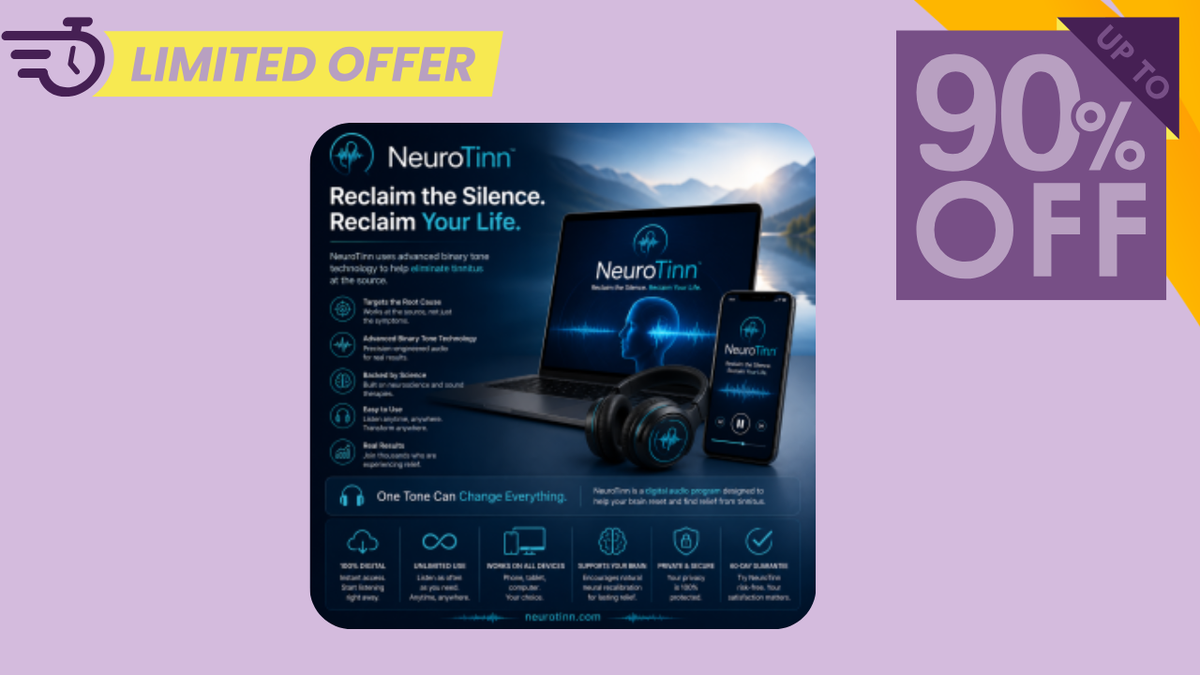
⭐ Ratings: 4.7/5 ⭐⭐⭐⭐⭐
📝 Reviews: Based on sales-page testimonials and early buyer feedback; big independent public review volume is still not clearly verified
💵 Original Price: $97
💵 Usual Price: $97
💵 Current Deal: $47
⏰ Results Begin: Varies by person — some may notice calmer nights or better sleep first, while tinnitus perception changes can take longer
📍 Made In: Sold online as a digital browser-based product; exact physical origin is not clearly stated on the sales page
🧘♀️ Core Focus: Tinnitus support, binaural audio sessions, relaxation, sleep help, calmer listening habits
✅ Who It’s For: USA adults dealing with ringing, buzzing, humming, or tinnitus-related stress who want a non-drug support tool
🔐 Refund: Sales page mentions a 7-day money-back guarantee and a 60-day refund policy
🟢 Our Say? Highly recommended for realistic buyers. Not a miracle. Not trash either. A structured tinnitus-support tool that makes a lot more sense when you stop listening to dumb advice and start using common sense.
Let’s not tiptoe around it.
Bad advice spreads because it is easy to remember, easy to repeat, and weirdly comforting. It gives people a fake sense of certainty. “This works instantly.” “This is a scam.” “Just use YouTube.” “If it doesn’t cure you, it failed.” Boom. Fast, simple, dramatic. The internet loves dramatic. The internet would rather eat a bag of fireworks than a bowl of plain truth.
And that is exactly why Neurotinn Reviews and Complaints 2026 USA can feel like one giant, noisy mess.
One person says it helped them sleep. Another says it did nothing. Someone else says all tinnitus products are fake. Then there is always that one overconfident genius in a forum — every forum has one — typing like they personally discovered the human brain after reading half an article and drinking a gas-station coffee.
Meanwhile, the actual buyer is just trying to answer a normal question:
“Is this worth trying, or am I about to waste money?”
Fair question. Honest question. Especially if you’re in the USA, tired, stressed, maybe hearing that thin electrical ring at night when the room gets too quiet and your own brain suddenly feels like a broken refrigerator humming in the dark. It’s exhausting. And when people are exhausted, they grab shortcuts. That is where terrible advice wins.
So this piece is here to do one thing: call out the worst advice floating around Neurotinn, laugh at it a little — because some of it really deserves to be laughed at — and replace it with something more useful.
No fake hero talk. No “100% cure” circus. No cartoon promises.
Just blunt honesty.
Terrible Advice #1: “If Neurotinn doesn’t work in two days, it’s useless.”
This advice is so common it should probably have its own parking spot.
People buy Neurotinn, try it once or twice, still hear ringing, and then immediately go full courtroom mode:
“Didn’t work. Waste of money. Case closed.”
Relax, prosecutor.
That is not a fair review. That is impatience wearing business casual.
Neurotinn — based on the sales-page structure you shared — is positioned as a binaural audio tinnitus-support tool, not a magical “click once and your nervous system becomes a spa” button. It is supposed to be used in repeated sessions. Repeated is doing a lot of heavy lifting there. If the product is built around repetition, routine, brain response, sound conditioning, and calmer listening states, then judging it after two rushed sessions is about as intelligent as going to the gym twice and complaining you still look like a stressed accountant.
And yes, I know why people do it.
Because tinnitus is deeply annoying. No — annoying is too soft. It can be maddening. A weird, invisible pest. It messes with sleep, quiet moments, patience, mood. So when someone buys a support tool, they want relief now. Instantly. Like ordering peace from an app.
But the brain does not care about your Amazon Prime expectations.
That is the real problem here. People expect a dramatic outcome, miss the smaller changes, then declare failure. Maybe the ringing is still there, but the nighttime panic is lower. Maybe sleep gets a little easier. Maybe the sound feels less emotionally sharp, less personal somehow. That counts. It may not feel glamorous, but it counts.
The better advice?
Give Neurotinn a fair test. Same general time each day if possible. Same headphones. Same basic routine. Track what changes. Not only volume — sleep, stress, irritation, how often you notice the ringing. Because in real life, improvement does not always arrive kicking the door down. Sometimes it sneaks in wearing socks.
And frankly, subtle relief is still relief.
Terrible Advice #2: “Just let it play in the background while you do everything else.”
This advice sounds convenient. It is also a great way to ruin your own test and then blame the product for it.
People do this all the time. They hit play on Neurotinn while texting, checking email, watching Netflix, arguing in a family group chat, folding laundry, thinking about rent, and maybe reheating food they forgot they even made. Then, after all that chaos, they shrug and say:
“Didn’t feel anything.”
Well yes. Your brain was doing CrossFit.
Binaural audio is not the same as random background noise. If the whole concept depends on separate tones reaching each ear and creating a specific listening experience, then the way you use it matters. A lot. Headphones matter. Attention matters. Even the environment matters, at least enough to avoid turning the session into wallpaper.
You do not need monk-level silence. Nobody is asking you to move into a cave in Oregon and whisper affirmations to the trees. But if you want to know whether Neurotinn does anything for you, maybe do not test it while watching a crime documentary and doom-scrolling through bad news.
This is one of the biggest traps for USA buyers because life in the USA is basically an interruption machine. Notifications, calls, messages, bills, noise, traffic, screens — every day feels like ten tabs open in the browser of your nervous system. So people think, “I’ll just squeeze it in while doing something else.”
That sounds efficient. It’s actually messy.
The better move is brutally simple:
Use headphones.
Pick one session.
Sit down, or lie down.
Keep the volume comfortable.
Give the thing an actual chance to be heard.
Not heard in the poetic sense. Heard in the literal sense.
Because if your test environment is garbage, your conclusion might be garbage too.
And yes, that is blunt. Good. Some advice deserves bluntness.
Terrible Advice #3: “If it doesn’t completely erase tinnitus, then it failed.”
This one is emotionally understandable, which is exactly why it fools people.
Of course buyers want the ringing gone. Completely gone. Vaporized. Sent to another planet. Nobody wakes up thinking, “I would love to manage my tinnitus a little better today.” They want peace. Silence. The luxurious, boring, invisible miracle of not hearing a noise that nobody else can hear.
But that does not mean every support tool should be judged like a cure.
That is where people get trapped.
If Neurotinn helps someone sleep better, lowers the stress response around ringing, makes spikes feel less violent, or helps them notice the sound less often, that is not “nothing.” It may not be a perfect win, but it is absolutely not failure either.
This is where online advice gets childish. It turns everything into a binary:
Cured = success
Not cured = scam
Life is not built that neatly. Especially not tinnitus. Especially not the brain.
A person in the USA who has been struggling with buzzing in quiet rooms for years may use Neurotinn and still hear the sound — but react to it differently. Less dread. Less obsession. Less tension in the shoulders at bedtime. Maybe they stop mentally scanning for the sound every five minutes like a nervous guard dog.
That matters. In fact, for some people, that matters a lot more than they realize at first.
The problem with this terrible advice is that it erases all partial progress just because it wasn’t dramatic enough. It is like saying an umbrella is useless because it didn’t eliminate the rain.
No. It helped you function while the rain existed.
That is the better truth here.
Neurotinn should be judged as a support tool, not a fantasy cure. That does not weaken the product. It simply puts it in the right category.
And the right category changes everything.
Because once you stop asking, “Did this erase tinnitus forever?” and start asking, “Did this reduce the burden?” you get smarter answers.
And smarter answers beat dramatic nonsense every time.
Terrible Advice #4: “All binaural beats are the same, so just use any random YouTube track.”
This one gets repeated so often it has almost become a personality type.
“Why buy Neurotinn? Just use YouTube.”
Sure. And why go to a dentist when there are toothbrushing videos online.
Let’s calm down.
Free audio exists, obviously. Some of it is good. Some people genuinely like rain sounds, brown noise, or generic binaural-beat tracks. Great. No shame there. The internet can be helpful sometimes, in between the chaos and the ads and the strange men yelling into ring lights.
But pretending that every random audio track is functionally identical to a structured tinnitus-support tool is lazy thinking.
A random free track might be made for sleep, or meditation, or “deep cosmic manifestation,” or whatever phrase the uploader thought would get clicks. Neurotinn, according to the page you shared, is framed as a tinnitus-focused browser-based system with presets, ambient choices, timers, and a specific use case.
Those are not automatically the same thing.
It is like comparing random YouTube stretching videos with an actual rehab plan. Both involve movement. They are still not the same experience, not the same structure, not the same purpose.
This bad advice hurts people because it makes them do sloppy comparisons. They try a random video once, assume that is the whole category, and then judge Neurotinn based on that half-baked assumption.
Or worse, they buy Neurotinn but use it like a random sleep track, then complain it felt no different.
The more intelligent approach is to ask a better question:
Do I want random sound experimentation, or do I want a more organized tinnitus-focused system?
That is the real comparison.
Not “paid bad, free good.” Not “free useless, paid magical.” Those are lazy slogans for lazy thinkers.
The truth is simpler. Free audio might help some people. A structured tool might help others use it more consistently. Both can be true at once.
The internet hates that kind of balance. It prefers fights. Your ears do not care about the fight.
They care what you actually use.
Terrible Advice #5: “Don’t track anything. You’ll just know if it’s helping.”
This advice sounds chill and wise in the way that bad advice often does. Like a guy in a podcast saying something vague while acoustic guitar music plays in the background.
“Just feel it out.”
No.
Your memory is not a clean laboratory. It is emotional, selective, dramatic, and deeply biased by how annoying yesterday felt. Especially with tinnitus. A single rough night can wipe out the memory of three decent ones. One bad spike can convince you the entire week was awful. Stress can twist the whole picture.
So if you do not track anything, you are leaving the whole review process in the hands of a nervous system that is already overloaded.
That is a terrible idea.
This is where people say, “Neurotinn did nothing,” but if they actually wrote down their sleep quality, stress level, tinnitus annoyance, and session consistency, the story might look very different.
Maybe sleep improved a little.
Maybe the sound became less emotionally heavy.
Maybe you stopped reacting to it as strongly.
Maybe nothing changed — which is also useful to know.
But without tracking, everything blurs together into one vague emotional cloud, and people mistake that cloud for truth.
A simple tracking system is enough:
Tinnitus loudness: 1–10
Annoyance: 1–10
Sleep quality: 1–10
Stress level: 1–10
Session completed: yes or no
Quick note: caffeine, loud day, bad sleep, etc.
That’s it. No giant spreadsheet. No tech startup dashboard. No PhD required. Just notes.
Tracking is not about becoming obsessive. It is actually the opposite. It helps you stop making giant conclusions based on a single bad day.
And that matters. Because the people who do not track anything often become the loudest reviewers. Not always the smartest. Just the loudest.
Terrible Advice #6: “If it doesn’t work for everyone, it must be fake.”
This is peak internet brain.
Everything online now has to be either the greatest breakthrough in human history or a total scam created by villains in a dimly lit conference room. People cannot handle middle ground anymore. Nuance has apparently been sent to prison.
So when Neurotinn gets mixed reviews, some people say, “See? Fake.”
That is not smart. That is binary thinking in a cheap jacket.
Human response varies. Wildly. Coffee helps one person focus and makes another feel like a squirrel with a credit card. Melatonin helps one person sleep and gives another bizarre dreams about missing flights. White noise soothes some people and annoys others.
So why would tinnitus support be identical for everybody?
It would not.
Tinnitus itself varies by cause, duration, hearing profile, stress, sleep, noise exposure, and how the person reacts to the sound psychologically. A tool like Neurotinn may help some people more than others. That does not automatically make it fake. It makes it human-dependent.
And yes, that answer is less satisfying than shouting “scam” from the rooftops. Too bad.
A more adult question is:
Does Neurotinn seem like a legitimate digital product with a clear offer, clear pricing, clear access, and realistic usage expectations?
Based on the page you shared, yes, it appears to be a real digital tinnitus-support tool. But “real” does not mean “works for everyone.” That is the part people keep screwing up.
The better advice?
Judge whether it fits your situation. Your expectations. Your willingness to use it properly. Your budget. Your level of patience. Not whether it turns every person in America into a blissed-out silence monk.
That is a ridiculous standard.
Terrible Advice #7: “Ignore everything else — reviews alone will tell you the truth.”
This is the final trap, and maybe the sneakiest.
People think reading reviews equals doing research.
Sometimes it does. Sometimes it absolutely does not.
A glowing review may be affiliate fluff with a fake consumer voice. An angry complaint may come from someone who used the product once, while multitasking, with the wrong expectations, after three coffees and two hours of sleep. A testimonial may be honest but still not typical. A criticism may be valid but incomplete.
Reviews are clues. They are not commandments.
That distinction matters more than people think.
This is especially true in the USA online market, where half the web sounds like either a sales funnel or a conspiracy board. Review culture has become its own performance art. Everyone sounds certain. Very few sound careful.
So the problem is not that reviews are useless. The problem is that people read them emotionally.
They see one ecstatic review and get overhyped.
They see one bitter complaint and panic.
Back and forth, back and forth, like a windshield wiper made of anxiety.
That is no way to make a decision.
The better approach is contextual reading:
How long did the person use Neurotinn?
Did they say how they used it?
Did they track anything?
Were they expecting a cure?
What exactly changed — sleep, loudness, stress, annoyance?
Were they using headphones?
Did they sound like a real person, or like a sales script?
Once you start asking those questions, most reviews get less magical and more useful.
And that is the goal. Not magic. Useful.
Final blunt truth
Most bad outcomes around Neurotinn Reviews and Complaints 2026 USA are not created by one giant evil secret. They are created by a pile of dumb advice repeated by impatient people in noisy places.
That’s the whole ugly little machine.
The worst advice tells buyers to expect miracles, use the product carelessly, skip tracking, compare it lazily, panic quickly, and trust emotional reviews like gospel.
Then those same buyers wonder why the experience feels messy.
Here is the better path:
Use Neurotinn properly.
Use headphones.
Give it a fair window.
Track what changes.
Measure more than just loudness.
Keep expectations realistic.
Read reviews with context, not desperation.
That is not sexy advice. It is good advice.
And good advice usually sounds boring right before it saves you from a stupid decision.
So filter the nonsense. Ignore the loudest people online. Stop letting simplistic opinions make choices for your nervous system. Whether Neurotinn ends up being useful for you or not, at least give yourself the dignity of a fair test.
Because “bad advice” is not just annoying.
It is expensive.
And in a world full of noise — especially when the noise is already in your head — the smartest thing you can do is stop adding more.
FAQs About Neurotinn Reviews and Complaints 2026 USA
1. Is Neurotinn a cure for tinnitus?
No. Neurotinn should not be treated like a guaranteed cure. It makes more sense as a tinnitus-support tool that may help with sleep, stress, and how intrusive the ringing feels.
2. Why do some people say Neurotinn works and others say it doesn’t?
Because people use it differently, expect different things, and measure different outcomes. Some judge it too fast. Some use it badly. Some may benefit more than others.
3. Do I need headphones for Neurotinn?
Yes, headphones are strongly recommended. A binaural-audio product generally makes more sense when each ear receives the intended signal clearly.
4. How long should I try Neurotinn before judging it?
Longer than one or two rushed sessions. A fair test usually means consistent use over time, with basic tracking of sleep, stress, annoyance, and tinnitus perception.
5. Is Neurotinn worth trying for buyers in the USA?
It may be worth considering for USA buyers who want a non-drug tinnitus-support tool and are willing to use it properly, track results, and keep realistic expectations.
Related Hastags
#Neurotinn #NeurotinnReview #NeurotinnReviews2026 #NeurotinnAppReview2026 #NeurotinnBonus #NeurotinnProduct #NeurotinnPrice #NeurotinnOffers #NeurotinnBonuses #NeurotinnBuy #NeurotinnWebsite #NeurotinnSite #NeurotinnApp #NeurotinnHonestReviews #NeurotinnLatestReviews #NeurotinnUsersExperience #NeurotinnUsersReview #NeurotinnDemo #NeurotinnTutorial #NeurotinnPurchaseOnline #NeurotinnBuyit