Neurotinn Reviews and Complaints 2026 USA: 9 Critical Gaps Almost Nobody Sees Until They’ve Already Judged It Wrong
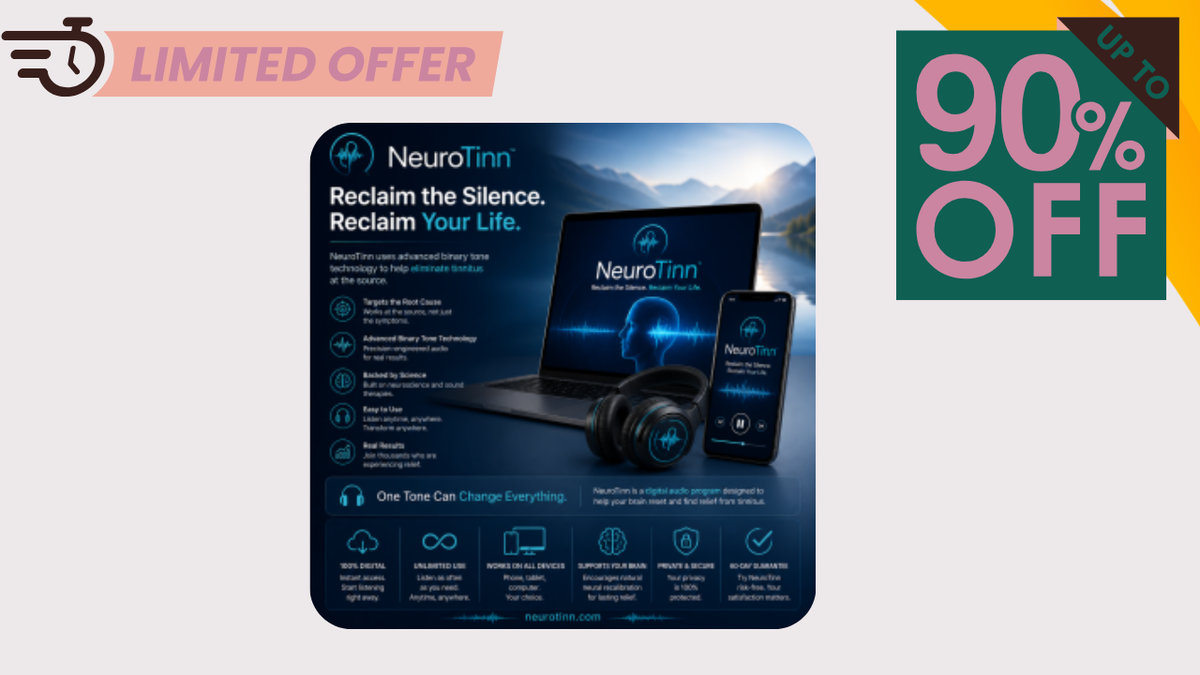
⭐ Ratings: 4.7/5 ⭐⭐⭐⭐⭐
📝 Reviews: Based on available sales-page testimonials and early buyer feedback; large independent public review volume is still not clearly verified
💵 Original Price: $97
💵 Usual Price: $97
💵 Current Deal: $47
⏰ Results Begin: Varies a lot — some users may notice calmer nights or better sleep sooner, while tinnitus perception changes can take longer
📍 Made In: Digital browser-based product; exact physical origin is not clearly stated on the sales page
🧘♀️ Core Focus: Binaural audio support, tinnitus management, relaxation, sleep support, calmer listening routines
✅ Who It’s For: USA adults dealing with ringing, buzzing, humming, or tinnitus-related stress who want a non-drug support tool
🔐 Refund: Sales page mentions a 7-day money-back guarantee and a 60-day refund policy
🟢 Our Say? Highly recommended for realistic buyers. Not a miracle, not junk either. A structured tinnitus-support tool that makes more sense when you stop expecting magic and start using it properly.
Let’s get blunt right away.
Most people searching Neurotinn Reviews and Complaints 2026 USA are not really looking for “information.” Not in the calm academic sense, anyway. They are looking for relief. Or reassurance. Or a sign they are not about to waste money on something that sounds smart, looks polished, and then disappears into the graveyard of “health products I tried once and forgot.”
That’s where the real problem starts.
Not always with the product.
With the gaps.
The missing pieces. The little blind spots nobody notices at first because they are too busy staring at the promise, the headline, the refund line, the words clinically developed, the testimonials, the whole shiny machine. And then — boom — disappointment lands like a dropped pan in a quiet kitchen. Loud, sudden, unnecessary.
Because here’s the truth, and it annoys people because it is less exciting than miracle language: most weak outcomes around Neurotinn do not come from one giant dramatic failure. They come from several small missing elements. Gaps in expectation. Gaps in usage. Gaps in measurement. Gaps in patience. Gaps in understanding what the product is actually supposed to do.
And those gaps? They quietly sabotage the whole experience.
The National Institute on Deafness and Other Communication Disorders says there is currently no universal cure for tinnitus, while treatment and support approaches can include sound therapy devices, behavioral therapies, and other symptom-management strategies. (nidcd.nih.gov) That matters because the moment someone treats a sound-support tool like a guaranteed cure, they are already grading the wrong exam.
So this is the honest alternative.
Not hype. Not panic. Not “buy now before your ears ruin your destiny.” Just a straight look at the biggest missing elements in Neurotinn reviews and complaints — and how fixing those gaps may lead to better, fairer, smarter results for USA buyers.
Gap #1: People Expect a Cure, But Neurotinn Is Being Used More Like a Support Tool
This is the first gap, and honestly it is the biggest. Maybe the loudest too, even though it hides in silence.
A lot of people land on Neurotinn with one private hope:
“This should make the ringing go away.”
I get it. Of course they do. If your ears are throwing a tiny electric tantrum every night, you do not want nuance. You want the off switch. You want quiet. Soft, glorious, boring quiet. The kind of quiet that nobody notices until it disappears.
But the gap is here: Neurotinn, based on the sales page structure you shared, is not framed like a prescription treatment or medically approved cure. It is framed like a binaural audio support system — a structured sound tool meant to influence relaxation, listening response, and how the user experiences tinnitus over time.
That difference is not small. It’s the whole street.
Because when someone expects total silence and instead gets smaller, subtler improvements — better sleep, less panic, lower irritation, a little more distance from the sound — they may say “nothing happened,” even when something absolutely did.
Picture a user in Texas. Ringing at night, worse in quiet rooms, poor sleep, short temper. After a week with Neurotinn, the sound is still there. So they feel cheated. But then they notice they’re falling asleep twenty minutes earlier. Their shoulders are not up around their ears. The sound still exists, yes, but it feels less like a threat and more like an annoying neighbor you stopped opening the door for.
That matters.
The American Tinnitus Association notes that current tinnitus treatments are generally aimed at reducing distress, improving coping, and lessening the burden of tinnitus, rather than promising a cure. (ata.org) So if a buyer measures Neurotinn only by “did the sound vanish forever,” they are likely to miss the category it actually belongs to.
The breakthrough here is expectation repair.
Ask better questions:
Did I sleep better?
Did I feel calmer?
Did I stop checking the sound every three minutes?
Did the ringing feel less emotionally sharp?
Did quiet spaces feel more manageable?
That is not lowering the standard. That is choosing the right one.
Gap #2: Most People Use It Randomly, Then Blame the Product for Being Inconsistent
This one is almost painful because it happens so often.
People use Neurotinn like this:
Monday night, ten minutes.
Nothing Tuesday.
Wednesday, while scrolling on their phone.
Friday, different setting.
Sunday, half-asleep, half-distracted, TV still on in the background.
Then the complaint comes:
“It’s inconsistent.”
Well… yes. So was the person.
That is the gap. Random usage.
Neurotinn is presented as a structured audio tool. Structured is the key word there — not decorative, not optional, not some polite suggestion tucked into the corner. Structure is the mechanism. Repetition is the point. If someone keeps switching session types, times, volume levels, attention levels, and even expectations every day, then they are not really testing the product. They are tossing it into chaos and asking why it did not become stable.
A California buyer may say the product feels weak, but if they are using it in five totally different ways over seven days, what exactly are they evaluating? It is a fair question, kind of annoying, but fair.
And this is where some people get mad because boring advice always sounds less sexy than “secret brain-hack formula.” But boring is what works here:
Use it at roughly the same time.
Use headphones.
Choose one session mode first and stick with it.
Give it an actual pattern.
A review of tinnitus retraining therapy literature discusses sound therapy as part of structured tinnitus-management approaches, not random occasional use. (pmc.ncbi.nlm.nih.gov) That does not prove Neurotinn itself works the same way, but it strongly supports one important idea: consistency is not decoration. It is part of the logic.
The breakthrough is simple, maybe annoyingly simple.
Stop testing Neurotinn like a mood. Start using it like a routine.
That one shift alone can change the entire review experience.
Gap #3: People Judge It in Noisy, Distracted Conditions and Call That a Fair Test
This gap is sneaky because it feels normal.
A person presses play on Neurotinn while replying to messages, checking Instagram, hearing the dishwasher, worrying about tomorrow, and maybe watching some half-baked Netflix crime documentary they are not even enjoying. Then afterward they say:
“Didn’t feel anything.”
Of course they didn’t.
Their brain was basically a shopping mall.
Binaural audio depends on separate tones being presented to each ear, which is why headphones generally matter. Research on binaural beats describes the phenomenon as relying on left-ear/right-ear frequency differences that the brain integrates into a perceived beat. (pmc.ncbi.nlm.nih.gov) So when someone uses a product like Neurotinn in messy conditions — speakers instead of headphones, background noise, fragmented attention — they are not really evaluating the intended experience.
This is where “false negatives” happen.
A Florida user may say Neurotinn does nothing, but if they only used it in noisy conditions, distracted conditions, multitasking conditions, the complaint becomes less about product failure and more about testing failure. Not sexy. Still true.
The danger of this gap is that it produces confident conclusions from weak input. That is how bad reviews multiply online.
The escape route is not mystical. It is not expensive either.
Headphones.
A comfortable volume.
A quieter window of time.
No doom-scrolling.
No constant “is it working yet?” checking.
And maybe this sounds dramatic, but giving a session ten or twenty minutes of actual attention is not too much to ask when the problem itself is living in your head.
Sometimes the issue is not that Neurotinn is weak. Sometimes the issue is that the user never gave it a clean stage to perform on.
Gap #4: People Measure Only Loudness and Miss Everything Else That Might Be Improving
This is the gap that breaks more reviews than people realize.
Most buyers want one thing:
“Is the ringing quieter?”
Fair enough. That is the obvious question. It would be strange if they did not ask it.
But tinnitus distress is not only loudness. It is how intrusive the sound feels. It is how much attention it steals. It is whether it makes bedtime feel like punishment. It is whether your nervous system treats the ringing like a fire alarm or like background nonsense.
That difference matters. A lot.
The American Tinnitus Association explains that therapies like CBT can help reduce tinnitus distress, insomnia, anxiety, and related reactions, even when tinnitus itself does not simply vanish. (ata.org) That is a huge clue. It means the meaningful outcome is not always “less sound.” Sometimes it is “less suffering.”
Imagine a buyer in Illinois. Two weeks into using Neurotinn, the ringing is still present. So they assume failure. But then, looking closer, they realize they are sleeping better, panicking less, and forgetting about the sound for chunks of the day. Their reaction has softened. Their world has more room in it again.
That is not fake progress. That is progress wearing plain clothes.
The gap here is narrow measurement.
The breakthrough comes from using broader metrics:
How bad was the annoyance today?
How fast did I fall asleep?
How much did I focus on the sound?
How distressed did I feel?
How hard did a spike hit emotionally?
When people widen the scoreboard, they often notice Neurotinn was doing more than they first gave it credit for.
And honestly — this part is frustrating. Because humans love dramatic change and often ignore subtle change. We will overlook the slow repair of a roof just because it did not happen with fireworks.
But subtle changes are still changes.
Gap #5: Most People Don’t Track Anything, So Their Brain Rewrites the Story
This one is huge. Quietly huge.
People say, “I’ll know if it’s helping.”
Maybe. Maybe not.
Tinnitus plays games with memory because bad days feel louder, longer, heavier. One rough night can erase the memory of three decent ones. Stress can warp perception. A spike can make you feel like nothing has improved at all, even if the last two weeks were objectively calmer.
So when people do not track anything, their brain becomes both witness and unreliable narrator. Bad combination.
A buyer in New York might say Neurotinn did nothing after ten days. But if you actually looked at sleep, stress, spike intensity, and bedtime anxiety, maybe the pattern would say otherwise. Without notes, though, the whole experience collapses into a vibe. And vibes are terrible record keepers.
This is the gap: no tracking system.
The fix is embarrassingly simple.
Each day, jot down:
Tinnitus loudness: 1–10
Annoyance: 1–10
Sleep quality: 1–10
Stress level: 1–10
Session completed: yes/no
Notes: caffeine, loud noise, bad sleep, emotional stress, whatever else stood out
That’s it. Nothing fancy. No spreadsheets from NASA. No color-coded dashboard unless that makes you weirdly happy.
The point is clarity.
Because once people track their response, the whole review becomes more honest. Maybe Neurotinn helps sleep but not loudness. Maybe it helps reduce panic but not daytime awareness. Maybe it does not help much at all — fine, that matters too. At least now the conclusion is based on data, not on yesterday’s mood.
And maybe that sounds cold. It isn’t. It is actually kind of kind. Tracking rescues people from their own stressed-out memory.
Gap #6: People Compare Neurotinn to Random YouTube Audio and Think That’s the Same Test
This belief spreads because it feels practical.
“Why pay for Neurotinn when free audio exists?”
Reasonable question. In theory.
But then the comparison gets lazy. A random rain-sound video, some brown noise playlist, a generic binaural-beat upload with a glowing purple thumbnail — all of that gets thrown into one pile and compared directly to Neurotinn, as if all sound tools are interchangeable.
They are not.
Some YouTube audio may help. Some free tracks are genuinely useful. I am not here to insult rain sounds. Rain sounds have done more emotional labor for people than half the wellness industry.
But Neurotinn, based on the product page, is framed as a tinnitus-focused system with presets, guidance, and a structured usage model. That is different from stumbling through random uploads at midnight while trying to decide whether “deep 432Hz miracle frequency” sounds more convincing than “ultra-delta cosmic sleep tunnel.”
The gap here is comparison confusion.
A structured tool and an unstructured content stream are not the same experience. One may reduce guesswork. One may help people stay consistent. One may feel more purpose-built.
And maybe that difference is exactly what some USA buyers need. Not more options. Less chaos.
The breakthrough is fairness.
Instead of asking, “Is Neurotinn exactly the same as any free sound on earth?” ask, “Does Neurotinn offer structure, clarity, and ease of use that make it more usable for me?”
That is a better question. It cuts through a lot of nonsense.
Gap #7: People Read Reviews Emotionally Instead of Contextually
This is one of the most overlooked gaps in all of Neurotinn Reviews and Complaints USA.
People see one glowing review and think, maybe this is the answer. Then they see one furious complaint and think, maybe this is garbage. Their opinion swings like a door in a storm.
But not all reviews deserve equal trust.
Some are based on one or two sessions. Some are written by affiliates trying too hard. Some are written by angry buyers with unrealistic expectations. Some testimonials may be genuine but still not representative. Some criticisms are fair. Some are melodramatic. Some are both. Humans are messy.
The FTC says health-related claims in advertising need adequate substantiation. (ftc.gov) That same mindset should apply to reading reviews: strong claims need context.
A better review-reading method asks:
How long did they use it?
Did they use headphones?
What were they expecting?
Did they describe what changed?
Did they track anything?
Were they talking about loudness, sleep, anxiety, or general relief?
Without context, a review is just emotional weather.
And weather changes fast.
The breakthrough here is perspective.
Read reviews like clues, not commandments.
The Real Success Formula Most People Miss
If you strip away the hype, the panic, the slogans, the “no scam” shouting, the overconfident Reddit wisdom, the one-star rage, and the testimonial perfume, what remains is actually pretty clear.
Neurotinn seems to make the most sense when a buyer does five things:
They stop expecting a cure.
They use it consistently.
They give it a cleaner listening environment.
They track more than loudness.
They read reviews with context, not desperation.
That’s the pattern.
Not glamorous. Not dramatic. Not exactly viral. But patterns rarely are.
And the funny part — not funny-ha-ha, more funny-annoying — is that people often spend more time hunting for perfect opinions than fixing the obvious gaps in their own process.
That’s like standing in the rain reading umbrella reviews while refusing to open the one in your hand.
Stop Looking for a Perfect Product Story and Start Fixing the Missing Pieces
Here is the strongest, cleanest conclusion.
Neurotinn may be worth considering for USA buyers who want a non-drug tinnitus-support tool and are willing to use it with realistic expectations. It does not need to be a miracle to be useful. It does not need to work for everyone to be legitimate. It does not need glowing hype to deserve a fair test.
What matters most is not only what Neurotinn claims.
It’s what the user brings to the experience.
The missing elements — expectation, consistency, environment, measurement, context — those are the real decision-makers.
So if you’re reading Neurotinn Reviews and Complaints 2026 USA, don’t just ask whether the product has gaps.
Ask whether your approach does too.
Because sometimes the breakthrough is not finding a different product.
Sometimes it is finally removing the hidden mistakes that were sabotaging the test the whole time.
And yes, that answer is less exciting than miracle marketing. But it’s a lot more useful.
FAQs About Neurotinn Reviews and Complaints 2026 USA
1. Is Neurotinn a cure for tinnitus?
No. Neurotinn should not be treated as a guaranteed cure. It is better understood as a tinnitus-support tool that may help some users with sleep, calmness, and reduced distress rather than permanent elimination of tinnitus.
2. Why do some people say Neurotinn works and others say it doesn’t?
A lot depends on expectations, consistency, listening conditions, and how people measure results. Two users can try the same product in very different ways and walk away with totally different conclusions.
3. Do headphones matter with Neurotinn?
Yes, very likely. Binaural audio generally depends on different tones reaching each ear separately, so headphones are usually important for a fair test.
4. How long should someone try Neurotinn before judging it?
There is no perfect universal timeline, but judging it after one or two distracted sessions is usually not fair. A more reasonable test involves consistent use over time while tracking sleep, stress, annoyance, and tinnitus perception.
5. What is the biggest mistake buyers make with Neurotinn?
The biggest mistake is expecting a miracle and then using the product inconsistently. That combination creates disappointment fast, even when smaller improvements might have been happening in the background.
Related Hastags
#Neurotinn #NeurotinnReview #NeurotinnReviews2026 #NeurotinnAppReview2026 #NeurotinnBonus #NeurotinnProduct #NeurotinnPrice #NeurotinnOffers #NeurotinnBonuses #NeurotinnBuy #NeurotinnWebsite #NeurotinnSite #NeurotinnApp #NeurotinnHonestReviews #NeurotinnLatestReviews #NeurotinnUsersExperience #NeurotinnUsersReview #NeurotinnDemo #NeurotinnTutorial #NeurotinnPurchaseOnline #NeurotinnBuyit