Pattern Trader's Atlas Reviews 2026 USA: Full Review, Features, Price & Truth
⭐ Rating: 4.8/5 ⭐⭐⭐⭐⭐
📝 Review Focus: Features, limitations, price, learning method, and trader suitability
💵 Original Listed Price: $149
💵 Current Listed Deal: $67 one-time payment
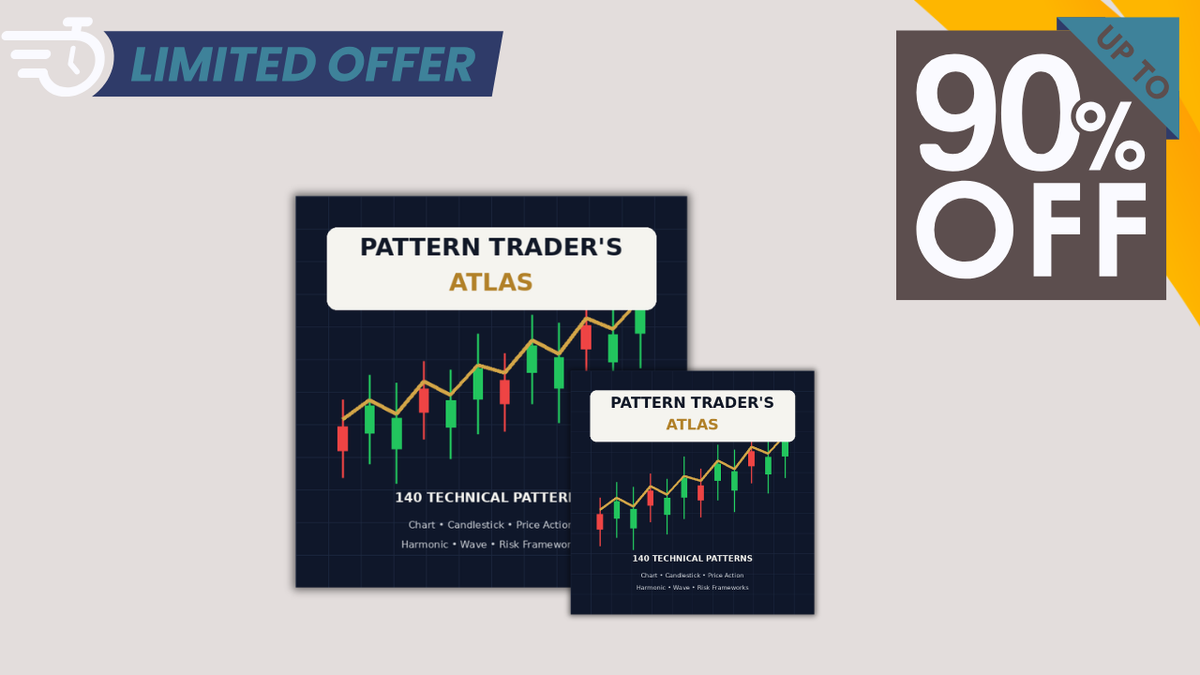
📘 Format: 159-page digital PDF guide
📊 Patterns Included: 140 technical analysis patterns
⏰ Learning Results: Depend on study, practice, and chart experience
📍 Delivery: Digital PDF access after purchase
🧠 Core Focus: Chart patterns, candlesticks, price action, confirmation, and risk planning
✅ Best For: Beginner and intermediate traders who want structured learning
🔐 Refund: Available according to current ClickBank purchase terms
🟢 Our View: A structured learning resource, not a guaranteed profit system
The first thing a serious Pattern Trader's Atlas review should admit is simple.
This guide cannot make someone a successful trader by itself.
No PDF can remove market risk.
No pattern library can predict every price movement.
No educational product can replace practice.
That is the strongest point a skeptic can make.
And that point is correct.
Many trading products create unrealistic expectations.
They show perfect charts.
They highlight winning examples.
They make difficult markets look simple.
A careful buyer should question those claims.
They should ask:
Does this guide teach a real process?
Does it explain risk?
Does it discuss mistakes?
Does it help traders think better?
Those questions matter more than promises.
Pattern Trader's Atlas Reviews 2026 USA should be judged by what it actually provides.
The guide focuses on chart study.
It focuses on pattern recognition.
It focuses on confirmation.
It focuses on risk awareness.
The real question is not:
"Can this guide guarantee profits?"
The better question is:
"Can this guide help traders build a better learning process?"
Pattern Trader's Atlas Review 2026: What Is This Trading Guide?
Pattern Trader's Atlas is a technical analysis learning manual.
It helps traders study chart patterns in a structured way.
The guide includes:
- 159-page digital PDF manual
- 140 technical analysis patterns
- Visual chart examples
- Pattern study methods
- Trade planning concepts
- Risk management ideas
The main purpose is education.
The guide does not work as a trading robot.
It does not send automatic signals.
It does not place trades for users.
Instead, it works as a reference tool.
Many beginners face the same problem.
They collect information from many sources.
They watch videos.
They save screenshots.
They read articles.
But they still struggle to connect everything together.
Knowing a pattern name is not enough.
A trader also needs to understand:
- When the pattern matters
- What confirms the setup
- When the idea fails
- Where targets come from
- What mistakes to avoid
This is the area where Pattern Trader's Atlas focuses.
Is Pattern Trader's Atlas Worth It?
Pattern Trader's Atlas may be useful for traders who want organized technical analysis study. The guide combines 140 patterns with recognition, confirmation, invalidation, target planning, and risk concepts. It provides education and structure, but results depend on personal practice and trading discipline.
Why Traders Misunderstand Chart Patterns
Many new traders treat patterns like formulas.
They think the process looks like this:
- Find a pattern.
- Enter a trade.
- Wait for profit.
Real markets do not work that way.
A triangle pattern can break upward.
It can also fail.
A hammer candle can show buying pressure.
It can also appear before another decline.
The pattern itself is only one part.
Market context changes the meaning.
Traders need to study:
- Trend direction
- Price location
- Confirmation
- Risk level
- Market conditions
A chart pattern does not predict the future.
It helps traders study possible outcomes.
That difference is important.
Technical analysis works through probabilities.
It does not create certainty.
A good trader understands this difference.
Pattern Trader's Atlas Features: What Does It Include?
Pattern Trader's Atlas organizes 140 patterns into major groups.
This makes the learning process easier.
Instead of studying random setups, traders can follow categories.
The guide covers:
- Classical chart patterns
- Candlestick patterns
- Price action structures
- Gap patterns
- Advanced trading formations
Each section focuses on understanding market behavior.
The goal is not only recognizing shapes.
The goal is understanding decisions.
Classical Chart Patterns Explained
Classical patterns are some of the most common technical analysis structures.
Pattern Trader's Atlas covers examples such as:
- Head and Shoulders
- Double Tops
- Double Bottoms
- Triangles
- Wedges
- Flags
- Pennants
- Rectangles
- Channels
These patterns help traders study market structure.
A double top may show repeated selling pressure.
A double bottom may show buyer support.
A flag may show a short pause after a strong move.
However, the pattern alone is not enough.
Confirmation remains important.
A trader should study what happens after the pattern appears.
They should also understand when the pattern fails.
Candlestick Patterns Inside Pattern Trader's Atlas
Candlesticks show short-term price behavior.
They help traders understand buying and selling pressure.
The guide includes:
- Doji patterns
- Hammer patterns
- Engulfing candles
- Star formations
- Harami patterns
- Multi-candle setups
A single candle rarely tells the complete story.
A hammer after a strong market decline may have meaning.
A hammer inside random price movement may mean less.
Location matters.
Trend matters.
Confirmation matters.
This is why experienced traders avoid using candles alone.
Price Action And Gap Pattern Analysis
Price action is another important section.
The guide covers:
- Inside bars
- Outside bars
- Pin bars
- False breaks
- Break and retest setups
- Gap structures
- Range breaks
Many traders struggle with price action.
They see movement.
But they do not understand the message behind it.
A breakout can create opportunity.
A false breakout can trap traders.
The difference comes from analysis.
Traders need to study:
- Why price moved
- Where price moved
- Whether buyers or sellers confirmed the move
Pattern Trader's Atlas connects these ideas together.
Advanced Trading Structures Inside Pattern Trader's Atlas
Pattern Trader's Atlas also covers advanced technical structures.
These patterns usually require more experience.
They are not designed as shortcuts.
They are tools for deeper chart study.
Examples include:
- Gartley patterns
- Butterfly patterns
- Bat patterns
- Crab patterns
- AB=CD patterns
- Wyckoff structures
- Wave formations
These concepts can look complex at first.
That is why gradual learning matters.
A beginner does not need to master everything immediately.
Strong basics often create better results than weak knowledge of many topics.
A trader who understands five patterns deeply may perform better than someone who knows fifty patterns poorly.
The goal is not collecting names.
The goal is improving decision quality.
The Five-Step Pattern Trader's Atlas Framework
The strongest feature of Pattern Trader's Atlas is the framework.
The guide uses the same learning process across different patterns.
This creates consistency.
Instead of only asking:
"Do I see this pattern?"
The trader learns to ask:
"Does this setup make sense?"
The framework focuses on five areas.
1. Pattern Recognition
The first step is understanding the pattern structure.
Traders learn what the setup should look like.
This helps avoid forced analysis.
Many beginners see patterns everywhere.
They search for shapes that support their opinion.
Clear definitions help reduce this problem.
A valid pattern needs specific conditions.
Random price movement does not automatically create a setup.
2. Pattern Confirmation
Recognition is only the beginning.
A pattern needs evidence.
A breakout needs follow-through.
A reversal needs signs of changing market behavior.
Confirmation helps traders avoid emotional entries.
Many poor trades happen because traders enter too early.
They see a possible pattern.
They act before the market confirms it.
A confirmation step creates patience.
3. Pattern Invalidation
Every trade idea needs a failure point.
This is one of the most important parts of trading.
Without invalidation, traders may hold losing positions too long.
They may continue hoping for recovery.
A clear invalidation level creates discipline.
It answers a simple question:
"When is this idea no longer valid?"
That question can protect traders from emotional decisions.
4. Target Planning
Good traders do not choose targets randomly.
They study price structure.
They review previous movement.
They consider realistic market behavior.
A target should connect with the chart.
It should not only match a trader's desired profit.
Pattern Trader's Atlas focuses on this planning mindset.
5. Common Trading Mistakes
The guide also highlights mistakes that affect many traders.
Examples include:
- Entering too early
- Ignoring market context
- Trading during major events
- Taking unnecessary risks
- Overconfidence
Many traders focus only on finding opportunities.
They forget to study mistakes.
Learning what goes wrong is part of improvement.
Pattern Trader's Atlas Complaints: What Buyers Should Know
A fair review must discuss limitations.
Pattern Trader's Atlas is not for everyone.
Some buyers may have concerns.
The biggest concern is expectations.
Someone looking for instant trading success may feel disappointed.
The guide does not promise guaranteed profits.
It does not provide secret signals.
It does not replace market experience.
Trading requires:
- Practice
- Patience
- Risk control
- Continuous learning
Another possible concern is the number of patterns.
Learning 140 patterns can feel overwhelming.
Trying to learn everything at once may create confusion.
A better approach is gradual learning.
Start with common setups.
Practice them.
Then move toward advanced concepts.
Why The $67 Pattern Trader's Atlas Price May Make Sense
The current listed price of Pattern Trader's Atlas is $67.
The original listed price is $149.
The guide is offered as a one-time payment.
It provides digital PDF access.
Many free trading resources already exist online.
That creates an important question.
Why pay for a guide?
The answer is organization.
Free information is often scattered.
One article explains candlesticks.
Another explains chart patterns.
Another explains risk.
The trader must connect everything.
Pattern Trader's Atlas places these ideas together.
It creates one study reference.
For some traders, that structure saves time.
For others, free resources may be enough.
The value depends on what the buyer needs.
Who Is Pattern Trader's Atlas Best For?
Pattern Trader's Atlas may fit traders who want a structured learning system.
It may help people who want:
- A visual pattern reference
- Better chart study habits
- Technical analysis practice
- A clear learning path
- One organized resource
It may suit beginners.
New traders often struggle with scattered information.
A structured guide can make learning easier.
It may also suit intermediate traders.
They may already know basic concepts.
They may want a cleaner review system.
Who Should Avoid Pattern Trader's Atlas?
Pattern Trader's Atlas may not fit people looking for shortcuts.
Avoid it if you want:
- Guaranteed profits
- Automated trades
- Daily signals
- Personal investment advice
- Instant success
Trading decisions always remain the trader's responsibility.
A guide can provide knowledge.
The trader must apply that knowledge.
The market still involves risk.
A Simple Four-Week Pattern Trader's Atlas Study Plan
Buying a guide is only the first step.
The learning process matters more.
A simple study plan can help.
Week One: Learn Basic Patterns
Start with common setups.
Focus on:
- Head and Shoulders
- Double Tops
- Double Bottoms
- Flags
- Triangles
Learn the structure.
Do not rush into live trades.
The first goal is understanding.
Week Two: Review Historical Charts
Open old charts.
Find examples of each pattern.
Compare them with the guide.
Ask:
- Did the pattern confirm?
- Did it fail?
- What happened afterward?
- Where was the risk?
This builds chart recognition.
Week Three: Study Risk Management
Focus on:
- Entry points
- Stop levels
- Targets
- Invalidations
Many beginners think about profit first.
Experienced traders think about risk first.
A good plan starts with knowing what can go wrong.
Week Four: Practice Current Charts
Review live market charts.
Look for possible setups.
Write down your thoughts.
Do not force patterns.
Wait for evidence.
Compare your prediction with what happens later.
This creates learning from experience.
Can Pattern Trader's Atlas Improve Chart Reading?
Pattern Trader's Atlas can help traders organize their chart study.
The framework encourages better questions.
It moves attention away from simple pattern spotting.
It focuses on:
- Context
- Confirmation
- Risk
- Planning
However, improvement depends on practice.
Reading a PDF alone will not create trading skill.
A trader must review charts.
A trader must study mistakes.
A trader must build experience.
The guide can support learning.
It cannot do the work for the trader.
Pattern Trader's Atlas Reviews 2026 USA: Final Verdict
Pattern Trader's Atlas is not valuable because it contains 140 patterns alone.
Many resources contain trading patterns.
The stronger value comes from the process.
The guide connects patterns with confirmation.
It connects ideas with invalidation.
It connects analysis with risk planning.
That makes it different from simple pattern lists.
The biggest mistake traders make is searching for a perfect setup.
Better traders focus on better decisions.
Pattern Trader's Atlas is best viewed as a learning reference.
It may help traders who want a more organized way to study technical analysis.
It is not a shortcut.
It is not a guarantee.
It is a tool.
If you want a structured chart study method, review the $67 offer and decide if it matches your learning goals.
Frequently Asked Questions About Pattern Trader's Atlas
Is Pattern Trader's Atlas a scam?
Pattern Trader's Atlas is an educational technical analysis guide.
It focuses on chart patterns, price action, confirmation, and risk planning.
It does not claim to guarantee trading profits.
Can Pattern Trader's Atlas make me profitable?
No trading guide can guarantee profits.
The manual can help traders study patterns.
Results depend on practice, discipline, and risk management.
How many patterns are included in Pattern Trader's Atlas?
Pattern Trader's Atlas includes 140 technical analysis patterns.
These cover chart patterns, candlesticks, price action, gaps, and advanced structures.
Is Pattern Trader's Atlas good for beginners?
Yes, beginners can use it as a learning reference.
New traders should practice first.
They should understand risk before using real money.
What is the Pattern Trader's Atlas price?
Pattern Trader's Atlas is available for a $67 one-time payment.
The original listed price is $149.
Related Hastags
#PatternTradersAtlas #PatternTradersAtlasReview #PatternTradersAtlasReviews2026 #PatternTradersAtlasAppReview2026 #PatternTradersAtlasBonus #PatternTradersAtlasProduct #PatternTradersAtlasPrice #PatternTradersAtlasOffers #PatternTradersAtlasBonuses #PatternTradersAtlasBuy #PatternTradersAtlasWebsite #PatternTradersAtlasSite #PatternTradersAtlasApp #PatternTradersAtlasHonestReviews #PatternTradersAtlasLatestReviews #PatternTradersAtlasUsersExperience #PatternTradersAtlasUsersReview #PatternTradersAtlasDemo #PatternTradersAtlasTutorial #PatternTradersAtlasPurchaseOnline #PatternTradersAtlasBuyit